
TU Dublin Researcher to Take Flight for Rare 2026 Total Solar Eclipse
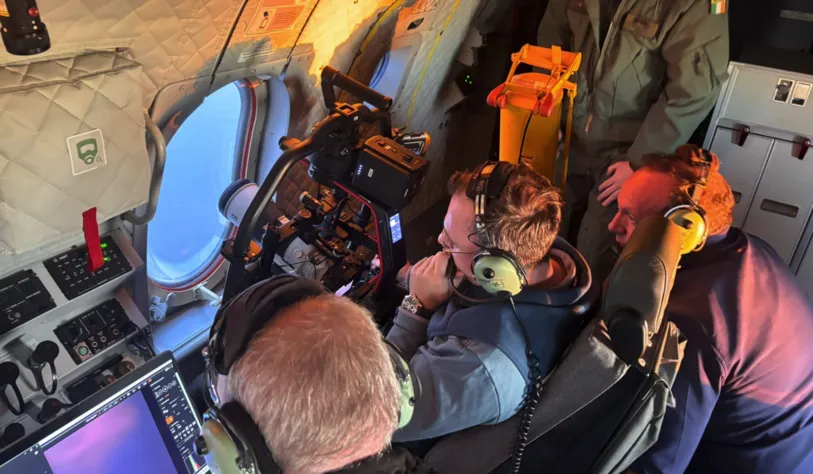
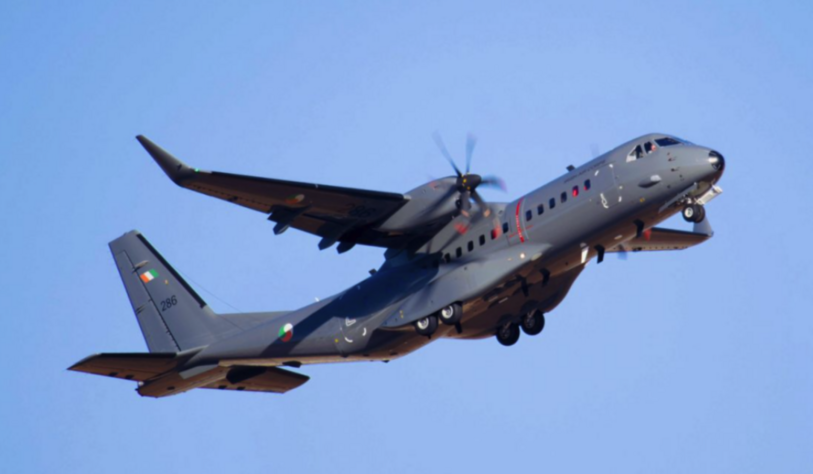
A TU Dublin aviation technology lecturer will join an international team of scientists aboard an Irish Air Corps aircraft to study the Sun’s corona during a rare total solar eclipse on 12 August.
Ciarán O’Callaghan, Lecturer in Aviation Technology in the School of Transport and Civil Engineering at TU Dublin, will take to the skies off Ireland’s west coast as part of an Irish Italian scientific expedition to observe the 2026 total solar eclipse.
The mission will transform an Irish Air Corps Airbus C295 into a flying observatory, giving researchers a unique opportunity to study the Sun’s outer atmosphere, known as the corona, from above the clouds.
The eclipse’s path of totality will pass approximately 350 kilometres west of Ireland. By taking to the air, the research team can position the aircraft within the Moon’s shadow for as long as possible while reducing the risk of cloud cover disrupting observations.
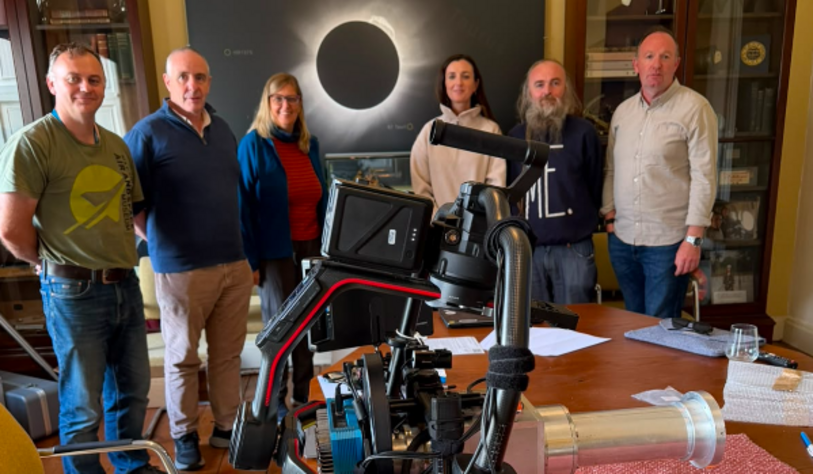
At the heart of the mission is E CorMag, an advanced solar telescope developed by Italy’s National Institute for Astrophysics (INAF). The instrument has been built using spare flight components from two European Space Agency solar missions, Proba 3 and Solar Orbiter.
O’Callaghan will be part of the multidisciplinary team supporting the airborne observation, alongside researchers from the Dublin Institute for Advanced Studies (DIAS), Trinity College Dublin, INAF and members of the Irish Air Corps.
The expedition reflects the increasingly important role of aviation in enabling scientific observation. During the eclipse, the C295’s bubble window will be opened to provide E CorMag with a clear view of the eclipsed Sun, avoiding the distortion that can be caused by standard aircraft windows.
A total solar eclipse provides scientists with a rare natural opportunity to study the corona. As the Moon moves in front of the Sun, it blocks the bright solar disc and reveals the faint, glowing atmosphere surrounding it.
The corona can reach temperatures of around two million degrees Celsius, hundreds of times hotter than the visible surface of the Sun. Despite decades of research, scientists do not yet fully understand how the corona reaches such extreme temperatures.
E CorMag has been designed to investigate this mystery by measuring the magnetic field of the solar corona. These magnetic fields are thought to play a central role in shaping the Sun’s atmosphere and releasing vast amounts of energy into space.
For O’Callaghan, the mission brings together aviation and scientific research in an unusual and highly specialised environment. The aircraft will effectively become part of the scientific instrument, with its flight path carefully planned to maximise the time available for observations during totality.
The Irish Air Corps expedition will complement observations being made by space-based missions including Solar Orbiter and Proba 3. Combining measurements from the aircraft with observations from space will give researchers additional perspectives on the Sun’s dynamic atmosphere and the magnetic processes that influence the space environment throughout the Solar System.
The Irish-Italian team brings together expertise from across aviation, solar physics, engineering, and space science. The expedition team includes researchers from INAF, Lucia Abbo, Gerardo Capobianco and Hervé Haudemand, alongside TU Dublin’s Ciarán O’Callaghan, Joe McCauley from Trinity College Dublin, and Peter Gallagher and Laura Hayes from DIAS, as well as members of the Irish Air Corps.
The mission highlights the role of TU Dublin expertise in supporting ambitious scientific projects at the intersection of technology, aviation and space science.