Real (talk) True (talk): Making space for making
Event Details
- Thursday, 16th April
- 15:00 - 16:30
- Concert Hall, East Quad
- Academics, Students and industry

As Dean of the Faculty of Arts and Humanities in TU Dublin, I am proud to sponsor our Faculty lecture series etc. Focussed through the lens of ethics, technology and culture, (etc.) invites guest speakers from different disciplinary backgrounds to discuss their work as part of an initiative that reflects our enduring commitment to critical inquiry and civic responsibility. These lectures bring together industry professionals, researchers, policy-makers, and members of the public to consider some of the big questions that are shaping our contemporary lives.
The Humanities have long played a central role in helping society interpret change through reflection, creativity and empathy. At a time of rapid technological change, societal transformation and globalisation, connecting people through sustained dialogue that examines the ethical and cultural questions of the day is critical to our collective future. It is important to us in the Faculty of Arts and Humanities that we consistently support opportunities to engage with the wider public as in doing so knowledge becomes more accountable, relevant and transformative for all.
I look forward to welcoming colleagues, students, industry partners, policy makers, and members of the wider community to what promises to be a stimulating and enriching series of conversations.
Dr. Orla McDonagh
Dean, Faculty of Arts & Humanities
Curated and convened by Professor Taha Yasseri, Workday Chair of Technology and Society and sponsored by the Faculty of Arts and Humanities the etc. series serves as a forum for rigorous interdisciplinary inquiry into the evolving relationship between technological innovation and human experience. It seeks to foster substantive reflection on the ethical, cultural, and societal implications of emerging technologies by bringing together scholars, practitioners, policymakers, and members of the wider public. Through this convergence of perspectives, the series aims to illuminate the ethical questions and cultural transformations that accompany technological change, while promoting thoughtful and informed exchange across disciplinary and professional boundaries.
The inaugural lecture presented by Dr. Rilla Khaled will take place on Thursday, 16th April, 2026.
Questions that have occurred to every creative practitioner working in the academy:
Is a creative work like a peer reviewed publication?
Am I meant to be getting my work in front of maximal pairs of eyes?
How do I widely disseminate my work if it is not in easily distributable digital form?
Is force-fitting my practice-based work into traditional academic shape(s) the answer?
In my talk I will grapple with all the above from the perspective of academic design practice. I will present the Method for Design Materialization (MDM), a standardized approach to surfacing design practice logics and reasoning that I have been refining with my research team since 2017. Devised especially for materializing game and interaction design reasoning, and taking inspiration from prototyping theory, reflective practice, interaction design, software development, archival practice, and qualitative research, MDM involves methodical digital archiving and documentation of all stages of design and production, coupled with regular and reflective journaling by the designer.
Although MDM is primarily focused on methodology - how we engage in research - it has sparked reflection on epistemology - what knowledge such engagement results in.
I will draw on close to a decade of MDM to argue why real > true for academic creative practitioners and why our knowledge needs its own space and time.
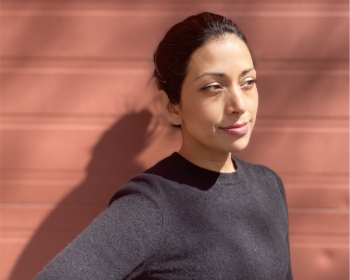 Dr. Rilla Khaled is an Associate Professor in the Department of Design and Computation Arts at Concordia University in Montréal, Canada, where she teaches interaction design, design theory, programming, and more. She is the director of the Technoculture, Art and Games (TAG) Research Centre, Canada’s most well-established games research lab, in the Milieux Institute for Arts, Culture, and Technology. Dr. Khaled’s research is focused on the use of interactive technologies to improve the human condition, a career-long passion that has led to diverse outcomes, including designing award-winning serious games, developing a framework for game design specifically aimed at reflective outcomes, creating speculative prototypes of near-future technologies, working with Indigenous communities to use contemporary technologies to imagine new, inclusive futures, and establishing foundations for materials-based game design research.