
Recent & Upcoming Conferences
Shaping Tomorrow: Navigating Change in Tourism & Hospitality
15–16 January 2026 | Technological University Dublin, Ireland
Welcome to THRIC 2026
Join a broad range of experts and changemakes in Dublin for THRIC 2026, where researchers, industry leaders and policymakers will come together to explore innovation, resilience, and sustainability in tourism, hospitality, and events. This conference is a unique opportunity to reflect, learn, and shape the future of the industry.
Conference call
The world in which we live in is in a state of flux with many fearing what the future holds. According to Hickman et al (2021, p.1) 75% of 16–25-year-olds said that they think ‘the future is frightening’. Such concerns are mirrored across societies and economies and a key outcome of this is a sense of disempowerment.
In a tourism, hospitality and events context, researchers increasingly highlight issues such as climate challenges (Scott and Gossling, 2022), emerging technologies (Chon and Hao, 2025), the impact of economic uncertainty (Wu and Wu, 2021) and the disempowerment of communities (Higgins-Desbiolles and Bigby, 2022). From both business and destination perspectives, challenges involve rising costs, sustainability challenges, meeting changing tourist expectations, adapting to generation Z as employees, economic volatility, protecting scarce resources, engaging with local communities and attempting to disperse tourists by time and space.
But amid these challenges there are also signs of new opportunities and inspiration with the emergence of new paradigms such as regenerative tourism (Bellato and Pollock, 2022), new technologies (Youssef and Zeqiri, 2022), and the new perspectives, goals and strategies that this shift in thinking necessitates. THRIC 2026’s conference "Shaping Tomorrow: Navigating Change in Tourism & Hospitality" creates a space for academics, destination managers, local government decision makers, policy makers, those supporting the sector, and tourism businesses to come together to engage with these challenges and identify how we can best shape tomorrow. It provides an opportunity to take time to reflect on how universities, businesses, communities and organisations can navigate change in terms of their roles, priorities, thinking and responses to create sustainable future strategies.
A key objective of the conference is for every delegate to leave having clearly identified for themselves one thing that they can do to shape tourism’s tomorrow.
(References are listed below)
Key Information
Dates: 15–16 January 2026
Venue: TU Dublin, Grangegorman Campus
Keynotes: Professor Nigel Morgan, Manchester Metropolitan University and Jane Stacey, Head of Tourism Policy and Analysis, OECD.
Abstract Submission: Deadline for submission is 5th Nov 2025, you should email your abstract to thric2026@gmail.com by 5th Nov.
There will be an opportunity for contributors to submit their papers for consideration for publication in the THRIC peer reviewed online journal.
Conference Handbook
The THRIC Handbook is available to view at the link.
Conference Themes
- Navigating and managing change in tourism, hospitality, events and leisure (THEL) in turbulent times.
- Educating for tomorrow: teaching and learning strategies for a changing world (AI and technologies, transversal skills, Gen Z, managing change, innovation, inclusion etc.)
- SMART technology, AI and digital futures as disruptors and transformers.
- New visions, paradigms and values shaping change (e.g. regenerative tourism, social and cultural justice, future thinking, the role of entrepreneurs / places / leaders / communities, innovation, diversity and inclusion, circular economy, strategies / policies, festivals and events etc.).
- Tourists and guests shaping change: values, agency and impact (e.g. future generations, the future guest: personalisation, loyalty & expectations).
- Festivals, events and places in transition: shaping identity, belonging, environmental legacy and inclusive cultural experiences.
- New tourism in everyday places: navigating environmental, cultural, and spatial change in local and under-explored landscapes.
- Leisure in transition: wellbeing, identity, access and everyday escape in changing social and environmental contexts.
- Building the future of THEL through people (e.g. investing in people, future proofing THEL sectors, human centred strategies for attracting and retaining talent).
- Navigating an aging society: potentials and challenges in THEL.
- Learning from the past: culture and heritage shaping places, communities and visitor experiences.
- Ethical values and practices in THEL: embedding care, inclusion, and environmental responsibility into everyday decisions and leadership.
- The Environment and the Future of THEL: From Sustainability to Regeneration.
- Special Track - RETURN - Regenerative Economic Transfers for Universal Resilience in the North. This special track is organised as part of the Interreg NPA RETURN project which is exploring successful tourism revenue transfer models that support the local community and the environment. It invites contributions presenting theoretical, methodological, and empirical advances in research on the role of revenue transfer models (taxes, levies, fees, donations) for resilient communities and regenerative tourism.
Keynote Speakers

Professor Nigel Morgan, Professor of Social Sustainability at Manchester Metropolitan University, will deliver the keynote address. Nigel is Professor of Social Sustainability at Manchester Metropolitan University. He was formerly Head of Surrey University’s School of Hospitality & Tourism Management, Head of the Business Department and Associate Dean in Swansea University’s School of Management and Professor of Tourism Management at Cardiff Metropolitan University. Nigel has an extensive research record in tourism and its intersections with social inclusion, has served on national level advisory boards and delivered expert testimonies at public enquiries, including at the Welsh and European Parliaments. He is a Fellow of the Royal Society of Arts and the International Academy for the Study of Tourism and a Founding Board Member of the International Place Branding Association.

As Head of Tourism Policy and Analysis at the OECD, Jane is responsible for the work of the OECD Tourism Committee, and it’s Working Party on Tourism Statistics and the Global Forum on Tourism Statistics, Knowledge and Policies. The OECD work on tourism helps Member and Partner countries develop integrated policies to address major challenges faced by the sector, engage reforms in tourism building on in-depth policy analysis, improve measurement, analysis and evidence base for tourism decision-making, and enhance international co-operation in tourism, including through support for the G20, G7 and APEC tourism agendas. Jane has over 25 years’ experience working in tourism, in the public, private and academic sectors.
Our Conference Symbol: Colla
 THRIC 2026 is guided by Colla, our conference symbol rooted in the Irish tradition of 'Coll', the hazel tree long revered as the Tree of Knowledge in Celtic, Norse, and Roman cultures. Just as the hazel represents wisdom, insight, and inspiration, Colla embodies our commitment to thoughtful, ethical leadership in tourism and hospitality. Like our Tree of Knowledge logo, Colla reminds us that meaningful innovation grows from deep roots of learning and collaboration. Throughout the conference, Colla's presence will prompt critical reflection and reinforce our core values of inclusive, future-focused practice.
From deep roots, bold futures grow.
Abstract Submission
-
Introduction (Background, context and research question)
-
Methodology
-
Key findings and Analysis
-
Contribution and Implications
-
Conclusion
Conference Fee and Registration
The conference fee will be €200 and this will cover all activities as part of the conference and a conference dinner. Please register at this link.
Venue
The conference will take place at the:
- TU Dublin Grangegorman campus, Dublin 7.
- The campus is easily accessible on both the red and green Luas lines and is just a 20-minute walk from the city centre.
Find us here on Google Maps.
The conference dinner will take place in LMulligan Grocer in Stonybatter https://www.lmulligangrocer.com/
Accommodation Options
Wrens Hotel (4★)
Sustainability: Ireland’s first net carbon hotel; BER A rated
Rates: From €94/night
Notes: Discount: 15% with booking code CORP15 (contact Emma: sales@wrenhotel.ie).
Hendrick, Smithfield (4★)
Sustainability: LEED Gold Certified
Rates: €90 single / €103 double (15 Jan) and €120 single / €133 double (16 Jan, incl. continental breakfast & taxes)
Hampton by Hilton, Chancery Street (3★)
Sustainability: Hilton ‘Travel with Purpose’ sustainability programme
Rates: €129 single per night (rate carries through weekend)
€139 double/twin per night (rate carries through weekend)
- Book Hilton Hotel (Special Conference Rate)
- Visit Hilton website
- Sustainability Info
Generator Hostel, Smithfield (2★)
Sustainability-focused
Rates:
- Dorm en-suite from €25.50 per person/night
- Single with shared bathroom from €79.27 per room/night
Notes: Group rates are available for 10+ (contact the hostel directly).
References
Bellato, L. and Pollock, A. (2023) ‘Regenerative tourism: a state-of-the-art review’, Tourism Geographies, 27(3–4),
Chon, K and Hao, F (2025) Technological evolution in tourism: a Horizon 2050 perspective. Tourism Review, 80 (1) https://doi.org/10.1108/TR-10-2023-0753
Higgins-Desbiolles, F and Chew, B. R (2022) A local turn in tourism studies. Annals of Tourism Research, 92.
Scott, D and Gossling, S (2022) A review of research into tourism and climate change - Launching the annals of tourism research curated collection on tourism and climate change. Annals of Tourism Research, Vol. 95 https://doi.org/10.1016/j.annals.2022.103409
Youssef, B Zeqiri, A. (2022) Hospitality Industry 4.0 and Climate Change. Circ.Econ.Sust. 2, 1043–1063. https://doi.org/10.1007/s43615-021-00141-x
Wu, T-P and Wu H-C (2022) Economic policy uncertainty and tourism nexus: time and frequency approaches. Journal of Policy Research in tourism, Leisure and Events, 16 (2) https://www.tandfonline.com/doi/full/10.1080/19407963.2021.2016779
Follow us: Instagram, LinkedIn and search #THRIC2026.
Contact us: thric2026@gmail.com
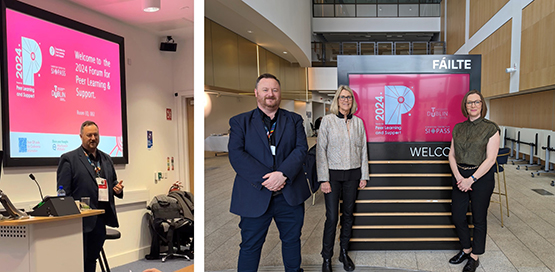
TU Dublin School of Tourism & Hospitality Management hosted the 2024 International Forum for Peer Support at the East Quad, Grangegorman Campus on March 25th.
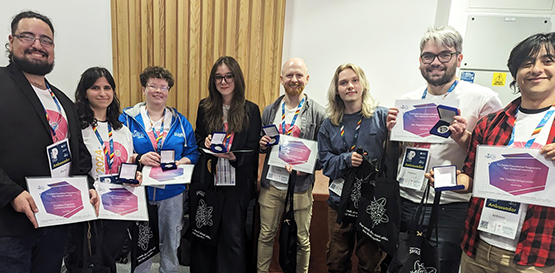
The event gathered educators worldwide to share best practices and research in peer-supported education. Dr Nevan Bermingham of TU Dublin, Dr Catherine McConnell of University of Brighton, and Lise-Lotte Mörner of the European Centre for Supplemental Instruction co-hosted the event. Over 120 delegates from 40 different HE’s across 19 countries attended in person, with 36 more joining via live stream. Presentations and discussions focused on building peer communities, widening access to university, and enhancing student resilience and wellbeing. Former students of TU Dublin’s Access Foundation Programme acted as ‘TU Dublin Ambassadors,’ recognised for their leadership and peer tutoring roles. Dr Orla McDonagh, Dean of the Faculty of Arts & Humanities, inaugurated the event, spotlighting TU Dublin’s Peer Assisted Learning (PAL) initiative.
PAL Expansion and Impact
The expansion of TU Dublin’s PAL programme has seen a notable increase in progression rates across STEM modules seen as “traditionally difficult”. It has also improved progression rates in STEM modules and student wellbeing. This expanded PAL programme was enabled by NTUTORR funding to equip the Student Leaders with technology to help them create a virtual community of practice that improved tutorial delivery and efficiency. This conference event helped highlight and share the data gathered from our students as to its effectiveness for improving wellbeing, understanding of material, retention and sense of belonging.
INPAL Network Launch
The event also saw the launch of the new INPAL network (Ireland Network for Peer Assisted Learning). INPAL will share best practice initiatives and research around student-staff partnership in Higher Education from around the island of Ireland. INPAL is the result of a collaborative effort between TU Dublin, ATU and University of Galway. INPAL has quickly expanded to include nine HE’s across Ireland, initiating new initiatives for student co-creation and partnership benefits in education.
