News
A TU Dublin Biosciences graduate (formerly DIT) who spent 18 years as a NASA scientist inspired the next generation of scientists at TU Dublin’s Grangegorman campus during the Royal Society of Chemistry (RSC) Food Group’s Future of Food Youth Conference.
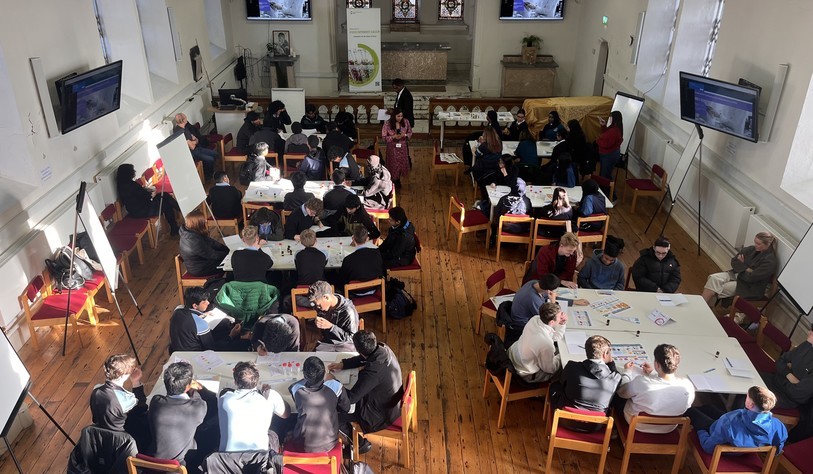
Around 60 Senior Cycle Chemistry students and their teachers visited TU Dublin on Friday, 16 October, for an interactive day exploring how chemistry and food science can help create a sustainable, healthy and secure food system for the future.
Hosted by TU Dublin’s School of Food Science and Environmental Health (SoFSEH), in collaboration with the RSC Food Group, the event introduced students to current challenges in food sustainability, scientific innovation and future career opportunities.
A highlight was the participation of Dr Anthony Heijenga, a DIT Biosciences graduate whose 18-year career at NASA included research into plant growth in space and under low- and microgravity conditions.
Dr Heijenga’s return to TU Dublin followed a chance encounter at the National Ploughing Championships, where he met Dr Julie Dunne, Head of SoFSEH, who has served on the Royal Society of Chemistry (RSC) Committee since 2021 and is an RSC Outreach Grant holder. He learned about the School’s research, including the work of its Centre for Sustainable Food Packaging and Bioproducts. The conversation led to his invitation to join the conference, giving students a first-hand insight into the opportunities a science education can offer.
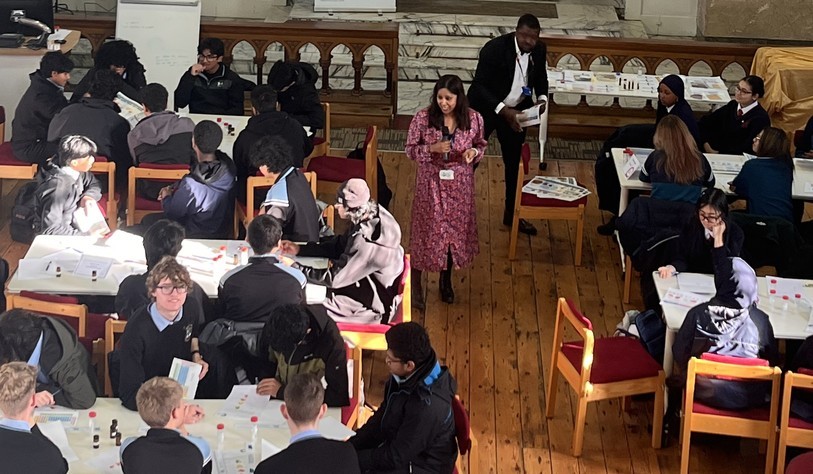
SoFSEH's Dr Graham O'Neill designed and led the day’s main activity, Feeding the Mission to Mars. Students took on the role of Mission Specialists in Food Science, working in teams to develop solutions for feeding a future Martian colony.
With a hypothetical mission involving nine months travelling to Mars, two years on the planet and a nine-month return journey, students considered how food could be transported, preserved and produced in an environment where supplies from Earth would be limited. Their proposals combined chemistry, biology, nutrition, food science and sustainability, and teams presented their ideas at the conference.
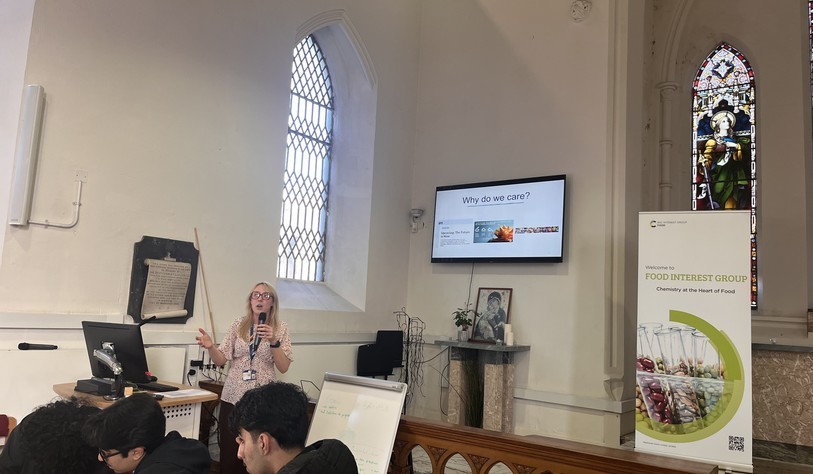
The morning programme featured talks from RSC Food Group members and TU Dublin researchers on alternative proteins, crop sustainability, sustainable packaging, flavour and taste, and future foods. Dr Thelma Egan of SoFSEH also highlighted career opportunities in food science, drawing on her previous experience as RD&A Analytical Principal Scientist at Kerry’s Global Innovation and Technology Centre.
Students attended from Stanhope Secondary School, St Joseph’s Fairview and Coláiste Phádraig CBS, Lucan. The inclusion of boys’ schools supported the initiative’s wider aim of broadening participation in food science and addressing gender imbalances among prospective students.
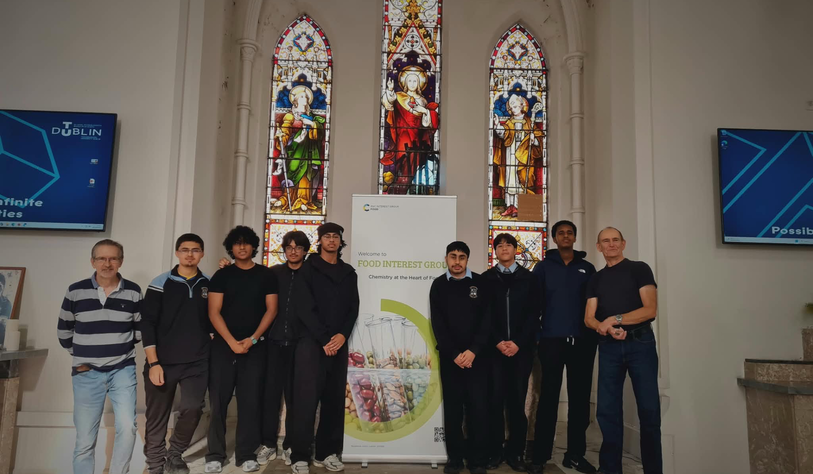
The winning Feeding the Mission to Mars proposal came from Coláiste Phádraig CBS, Lucan. The team received its prizes from Dr Simon Branch, Vice-Chair of the RSC Food Group, and Dr Heijenga.
Supported by the Royal Society of Chemistry Outreach Fund, the Future of Food initiative aims to inspire young people to explore the chemical sciences and understand how food science can address global sustainability challenges.
For TU Dublin, the event also highlighted the value of alumni engagement in inspiring future generations. Dr Heijenga’s journey from DIT Biosciences to NASA offered students a powerful example of where a science education can lead, while the hands-on challenge demonstrated how chemistry can help shape the future of food on Earth and beyond.