
TU Dublin hosts Major All-Island Conference on Self-Employment for Persons with Disabilities
.jpg)
TU Dublin brought together policymakers, entrepreneurs, academics and disability advocates from Ireland, Northern Ireland and internationally for a major all-island conference examining how self-employment can become a more accessible and viable option for persons with disabilities.
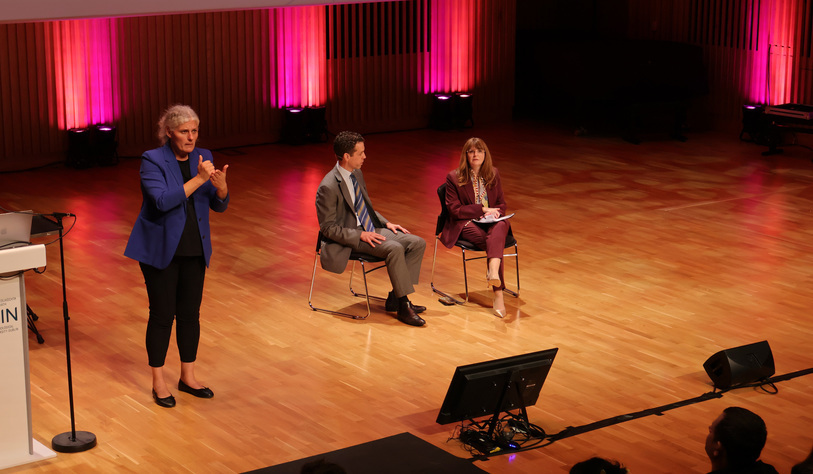
Taking place at TU Dublin’s Grangegorman Campus, the Self-Employment for Persons with Disabilities Conference explored the barriers facing disabled entrepreneurs and considered how government bodies, enterprise agencies, financial and educational institutions and disability organisations can work together to create a more inclusive environment for entrepreneurship.
The hybrid conference is being organised by TU Dublin’s Centre for Entrepreneurial Behaviour, Inclusion and Innovation (CEBII) and is supported by Workday.
The event builds on TU Dublin’s pioneering Self-Employment for Persons with Disabilities programme, established in 2021. Across five cohorts, the programme has supported 100 people and contributed to the establishment of 21 new businesses, while more than 90% of participants reported increased self-confidence and self-empowerment in relation to returning to the labour market. In 2025, the programme was expanded on an all-island basis, opening participation to people in both Ireland and Northern Ireland.
Dr Deirdre Lillis, President of TU Dublin, said:
“At TU Dublin, widening participation is about ensuring people from every background can see opportunities for themselves in education, employment and enterprise. This conference brings together lived experience, international evidence and policymakers to consider how we can remove the barriers that still prevent too many people from turning their entrepreneurial ideas and ambitions into reality.”
Workday is supporting the conference as event sponsor, reflecting its commitment to inclusion, accessibility and creating opportunities for people of all backgrounds to participate fully in the workplace and wider economy. Through its support for the event, Workday is helping TU Dublin bring together entrepreneurs, policymakers, researchers and disability organisations to share experience, identify practical solutions and advance a more inclusive approach to entrepreneurship.
Victoria McKechnie, Director of Corporate Affairs and Operations at Workday, said:
"Creating more accessible pathways to work is key to building a future where everyone can participate and contribute. We’re pleased to support TU Dublin in bringing together the people, perspectives and partnerships that can help widen access to entrepreneurship in Ireland."
The conference featured contributions from entrepreneurs with lived experience of disability alongside policymakers and experts from Ireland, Northern Ireland, the UK, Austria and the United States.
International keynote speakers included Professor Tom Williamson of Anglia Ruskin University and Thorsten Mayer of the Association of Entrepreneurs with Disabilities in Austria, who shared international perspectives on supporting entrepreneurship among persons with disabilities.
Three panel discussions examined the lived reality of entrepreneurship, the role of existing systems and supports, and the future of disability and enterprise policy on an all-island basis.
Participants included Northern Ireland Economy Minister Caoimhe Archibald MLA (pictured), representatives from Belfast City Council, Disability Action, the South-West Mayo Development Company and the Crann Centre, as well as entrepreneurs and disability advocates from across the island.
The conference concluded with a keynote address, ‘Failing to Succeed’, from US entrepreneur, attorney, author and endurance athlete Jason Romero. Blind since 2010, Romero has set more than ten world records and became the first blind person to run across the United States, completing the 3,063-mile journey from Los Angeles to New York.
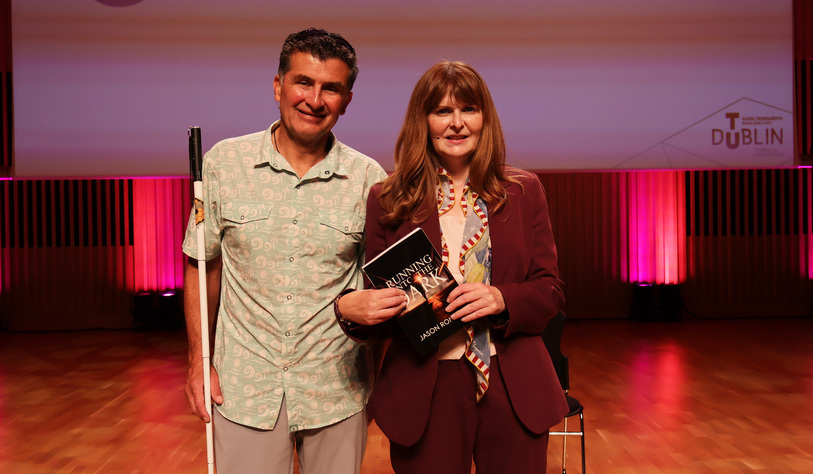
Professor Thomas Cooney of TU Dublin, who leads the University’s work on entrepreneurship for persons with disabilities, said the conference moves the conversation from individual programmes towards wider systemic change:
“We have seen what can happen when people with disabilities have access to entrepreneurship, education and the right supports. This conference is about taking the next step – identifying practical changes to finance, enterprise supports and policy that can make self-employment a realistic choice for many more people.”
TU Dublin has developed a growing body of work in the area of inclusive entrepreneurship. Its research has previously highlighted structural barriers encountered by persons with disabilities seeking to establish businesses and identified potential policy interventions, including accessible finance, inclusive business development services, procurement and supplier diversity initiatives, and greater visibility for entrepreneurs with disabilities.
CEBII was established to further develop this work, with a particular focus on communities whose entrepreneurial potential can be constrained by structural disadvantage, including persons with disabilities, immigrants and refugees, marginalised young people and others underrepresented in enterprise.
The conference recognises the importance of collaboration in developing more inclusive pathways to entrepreneurship, with contributions from organisations working across enterprise, disability, education and Government.