TU Dublin Launches Innovative MSc in Human-Centred AI Technologies
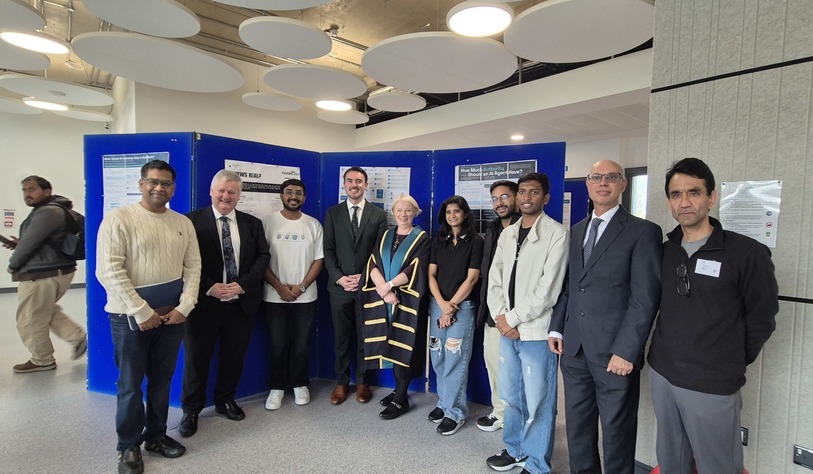
TU Dublin has officially launched its new MSc in Human-Centred AI Technologies, welcoming Naoise Ó Cearúil TD, Chair of the Joint Committee on Artificial Intelligence, to its Tallaght Campus for the occasion.
Developed through the EU-funded PANORAIMA project (Pan-European Network for Responsible Artificial Intelligence Multisector Masters), the programme aims to make AI education more accessible and inclusive, equipping professionals from diverse backgrounds with the knowledge and practical skills to apply AI responsibly in their respective fields.
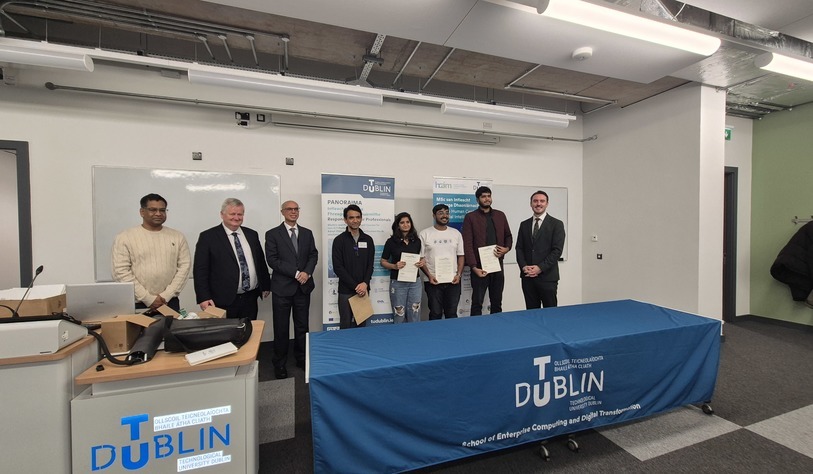
The launch marked an important milestone for TU Dublin and its European partners, highlighting the growing need for collaboration between higher education, policymakers and industry in shaping the future of artificial intelligence.
The event was attended by senior University representatives, including Dr Deirdre Lillis, President of TU Dublin; Dr Dominic Dillane, University Registrar; Professor Pramod Pathak, Dean of the Faculty of Computing, Digital and Data; Dr Barry Feeney, Head of the School of Enterprise Computing and Digital Transformation; and Dr Brian Murphy, Government and Community Advocacy Lead. Also in attendance was Dr Maria Koukouli, an AI researcher and academic at the University of West Attica, Greece.
Welcoming guests, Professor Pathak emphasised the importance of developing educational opportunities that respond to the rapid transformation of society and the workplace through AI, highlighting the value of a multidisciplinary approach to its responsible development and application.
Deputy Ó Cearúil welcomed the PANORAIMA programme, describing it as being ahead of the curve in preparing professionals for the changes AI will bring to the world of work. He also praised its collaborative, pan-European approach, noting that this kind of partnership is essential if Europe and its partners are to meet the global challenges and opportunities presented by AI.
The MSc in Human-Centred AI Technologies addresses the growing demand for AI knowledge and expertise beyond traditional computing disciplines. Designed particularly for professionals from non-ICT backgrounds, the programme places people, ethics and societal impact at the centre of AI education.
Through practical learning and specialist knowledge, graduates will be equipped to evaluate AI technologies and understand how they can be responsibly integrated into their professional environments.
PANORAIMA is also developing specialist learning pathways across sectors including healthcare and life sciences, media and culture, law and compliance, and management and finance. This approach recognises that the future of AI will depend not only on technological expertise but also on the knowledge and experience of professionals across a wide range of disciplines.
The launch formed part of an international PANORAIMA week, held from 26–30 October, bringing together students and participants from TU Dublin and its European partners: Budapest University of Technology and Economics (BME), Hungary, and HU University of Applied Sciences Utrecht, the Netherlands.
A highlight was the Responsible AI Student Exhibition, which showcased projects and creative work developed by students from Dublin, Budapest and Utrecht. The exhibition provided a platform to exchange ideas, explore different perspectives on responsible AI, and demonstrate how emerging technologies can address real-world challenges.
The collaboration reflects PANORAIMA's ambition to establish a connected European learning community, sharing expertise and developing innovative approaches to AI education that respond to the evolving needs of industry and society.
The launch reinforces TU Dublin’s commitment to innovation, interdisciplinary education and international collaboration. Through PANORAIMA, the University and its European partners are helping to make AI education more inclusive, ensuring professionals across diverse sectors have the knowledge and skills to engage with emerging technologies and contribute to a future in which artificial intelligence is developed and applied responsibly, with people at its centre.
PANORAIMA spans universities in eight countries (Ireland, Hungary, Italy, Greece, Bulgaria, Germany, the Netherlands and Ukraine) and includes four research and innovation excellence centres (including CeADAR, Ireland's Centre for AI) as well as three SMEs (including Nathean, Dublin).
Learn more about the MSc in Human-Centred AI Technologies here.
The PANORAIMA project is funded by the European Union through the European Health and Digital Executive Agency (HaDEA), under the Advanced Digital Skills Programme (DIGITAL-2023-SKILLS-05-SPECIALEDU).