
TU Dublin researchers contribute to new book exploring links between housing, health and care
TU Dublin academics Joseph Little, Andy Lundberg, and Gearóid Carvill, a conservation architect and graduate of the MSc in Building Performance, have contributed a chapter to Care, Health and Housing: Crisis, Experiences and Answers, a new book edited by Dr Lidia Katia C. Manzo examining the relationship between housing conditions, health and the well-being of communities.
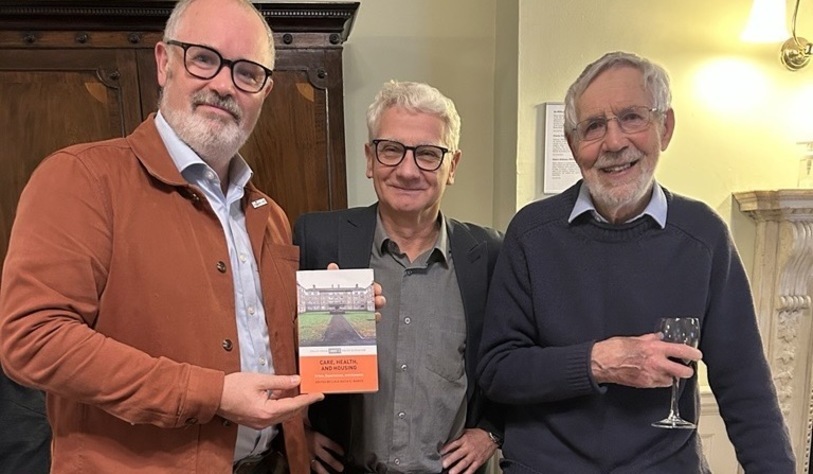
Focusing on Dublin’s Oliver Bond House complex, the book brings together academic research, lived experience and professional expertise to explore housing as an essential infrastructure of care. It considers how housing conditions intersect with health, human rights, community knowledge, public responsibility, building standards, data and public participation.
Published by Bristol University Press and Policy Press, the book is available to purchase in print or download free of charge.
Chapter Six, A Way Forward: Understanding Causes of, and Solutions to, Insanitary Conditions in Oliver Bond House, Dublin, authored by Joseph Little, Gearóid Carvill and Andy Lundberg, examines the causes of persistent mould and poor indoor air quality at Oliver Bond House. The authors identify systemic building-performance failures involving past and present actors, highlighting the risks to residents’ health and the need for practical, evidence-led solutions.
The chapter explains how partial retrofits, inadequate or blocked ventilation, cold thermal bridges and furniture placed against poorly insulated walls can trap moisture, causing condensation and mould. The authors recommend holistic repairs, including continuous insulation, improved ventilation, demand-controlled extraction and externally vented kitchen hoods. They also stress the importance of independent commissioning and post-occupancy monitoring to ensure that improvements work effectively.
Better specified and supervised retrofit works could improve indoor air quality, reduce energy bills and support healthier homes. The authors argue that carefully designed, lower-budget interventions prioritising occupant health could deliver significant energy and carbon benefits more quickly and with less disruption than proposals involving flat enlargements and deep retrofits.
The chapter also highlights opportunities for citizen-science research, enabling residents to contribute their knowledge and experiences. It calls for changes to the Irish annex of a relevant building standard to improve the assessment of heat loss and condensation risk in historic solid-wall buildings, particularly social housing, drawing on approaches already used elsewhere in Europe.
Against the backdrop of Ireland’s housing challenges, the research highlights the importance of addressing the quality and safety of homes alongside housing provision. The introduction of Awaab’s Law in the UK, which requires social landlords to address hazards such as damp and mould, provides a relevant example for Ireland to consider.
By combining building expertise, lived experience, and practical recommendations, the chapter shows how research can inform healthier housing and support collaboration between residents, property owners, architects, and regulatory authorities.
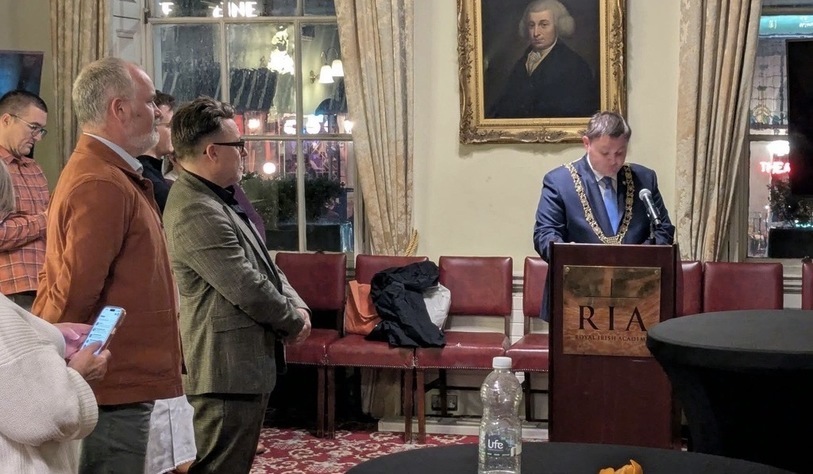
The book was launched at the Royal Irish Academy in Dublin on Thursday 22 October 2026, at an event hosted by the Lord Mayor of Dublin, Daryl Barron.
TU Dublin congratulates Joseph Little, Gearóid Carvill and Andy Lundberg on their contribution to Care, Health and Housing: Crisis, Experiences and Answers, which highlights the impact of research and expertise developed at the University and contributes to wider discussions about housing, health and social responsibility.