
Celebrating the Women of TU Dublin: Dr Emma Robinson
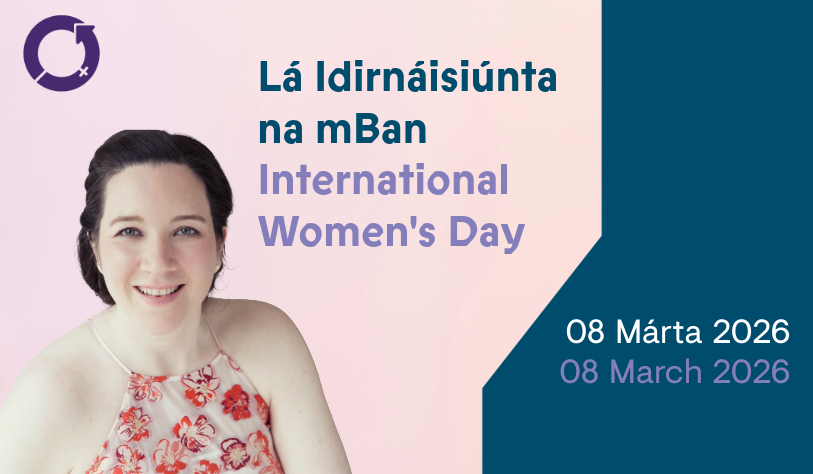
08 March was International Women's Day (IWD), and we are marking the day this month by celebrating the women of TU Dublin, including Dr Emma Robinson, Head of School of Electrical and Electronic Engineering in the Faculty of Engineering, Built Environment & Apprenticeships
For International Women’s Day 2026, the global theme “Rights. Justice. Action. For All Women and Girls” highlights the need not only to recognise inequality but to actively address it. At TU Dublin, Dr Emma Robinson reflects on her leadership journey, the evolving culture of higher education, and the steps still needed to ensure fairness and opportunity for women in academia, particularly in engineering and STEM.
Reflecting on her path to senior leadership, Dr Robinson credits the support and encouragement she received throughout her career. “Excellent, encouraging line managers who understood the requirements for flexibility when responsibilities outside the workplace needed attention made a real difference,” she says. “Equally important was the scaffolding of roles that allowed me to develop my skillset, experience and professional profile in a manageable and meaningful way.”
Now Head of the School of Electrical and Electronic Engineering within the Faculty of Engineering and the Built Environment, Emma leads programmes from undergraduate to postgraduate level while supporting academic staff and helping to shape the future direction of engineering education.
Dr Robinson believes that the theme of rights, justice and action is particularly relevant in the university sector. “Leadership in academia has to recognise the different circumstances and career paths people may have,” she says. “It is important that institutional processes allow those experiences to be considered fairly.”
She points to changes in recruitment and promotion practices at TU Dublin as a positive step. “When I started, it was up to candidates to decide whether they wanted to highlight particular circumstances in their application. Now this information is requested from all candidates at the outset so that it can be considered in a fair and balanced manner.”
While progress has been made, Dr Robinson notes that barriers to women’s advancement into senior leadership roles remain. “Gender equality is a cultural shift that we can support and encourage, but there is a long road of development ahead,” she says. “Looking specifically at women in STEM, this is fundamentally an issue that starts at birth, not at the current focus of second-level education or even primary school.”
Turning commitments to equality into meaningful action is another challenge for universities, she adds. “In many cases, when we look for equity, the burden of work that is borne by female colleagues can actually become unsustainable,” she explains. “Committee representation and panel participation are good examples. Statistics may look better, but in practice, the lived experience for those involved does not.”
For Dr Robinson, the next step is to ensure that institutions find better ways to capture diverse perspectives without overburdening those who represent minority groups. “Looking at how perspectives and opinions might be included in decision making without spreading those colleagues too thin would be a very positive start.”
As International Women’s Day calls for both reflection and action, Dr Robinson believes universities have an important role to play. “By continuing to review our practices and ensuring fairness in opportunity, recognition and leadership, universities can contribute to strengthening rights, justice and opportunity for women and girls across society.”