
Bridging the AI Divide: Age-Friendly AI project wins at Media Literacy Awards 2026
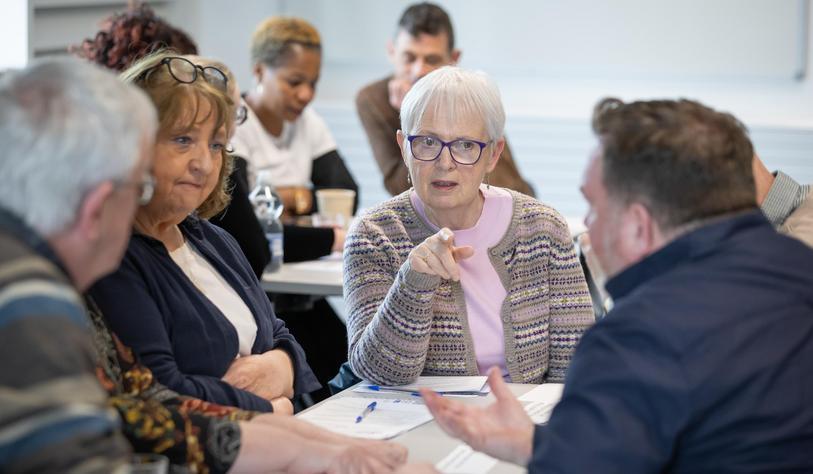
Age-Friendly AI, Ireland’s National Artificial Intelligence Literacy Initiative for Older Adults, has won this year’s Media Literacy Ireland (MLI) Award in the category of Best Media Literacy Initiative for Older People.
The Age-Friendly AI project is being led by Paula Kelly from TU Dublin’s School of Electrical Engineering, with support from the tPOT Research Centre at TU Dublin, co-led by Dr Emma Clarke from the ADAPT Research Centre at DCU and coordinated by Patricia Lucha Farina from TU Dublin. Together, the team has developed a series of hands-on exhibits that help older adults understand how artificial intelligence works and how it is shaping everyday life. Through interactive workshops and co-creation sessions, AI literacy materials are co-designed with older users, ensuring they are relevant and meet their unique needs.
The Media Literacy Ireland Awards recognises initiatives from across Ireland that help people and communities develop the media literacy skills they need to make the best use of media.
The award was presented by Aoife MacEvilly, Commissioner for Broadcasting and Video-on-Demand at Coimisiún na Meán, on 11 November at Virgin Media Studios in Dublin. It was accepted by Paula Kelly, Dr Emma Clarke Co-Lead, Laura Grehan and Patricia Lucha who were joined on stage by Sheila Cullen, coordinator from the University of the Third Age (U3A) Sutton/Baldoyle branch.
The judges' feedback was as follows:
“Age-Friendly AI is an outstanding national initiative that empowers older adults to engage critically and confidently with AI-driven media and services. They felt it successfully combined meaningful co-creation, strong community engagement, extensive partnership working, rigorous evaluation, and demonstrable impact.”
Age-Friendly AI has public engagement and engaged research at its core. That means working with people, not doing research on them. Age-Friendly AI participants engage with AI on their own terms. Their insights have shaped the Age-Friendly AI initiative, and the resulting training programme and will be integral to an Age-Friendly AI Lived Experience and Policy Recommendations report that will be published in 2027.
Since its launch in 2025, Age-Friendly AI has:
- directly engaged over 10,200 people
- participated in more than 140 events nationwide
- partnered with over 20 community organisations
- involved over 80 individual researchers
TU Dublin lecturer Paula Kelly and Age-Friendly AI Team Lead, said:
“This award belongs to every participant who asked a question, every partner who has contributed, every library that hosted an event, every researcher who showed up and the list could go on.”
Dr Emma Clarke, Age-Friendly AI co-lead, said:
“At the Universal Design 2026 conference in Galway last week, we heard the folklore legend of how St Brigid’s cloak kept spreading until it covered the Curragh. That tale is a metaphor for this project. An early Age-Friendly AI workshop took place in 2024, with the University of the Third Age branch in Sutton/Baldoyle in north Dublin. Their coordinator, Sheila Cullen, has been Age-Friendly AI’s biggest champion since, and it meant the world to have her on stage with us to accept the MLI Award for Best Media Literacy Initiative for Older People. From that early workshop in Baldoyle Library, the project has kept on growing, to thousands of participants, and a broad network of community partners and researchers.”