
TU Dublin Hosts International Erasmus+ Event on the Future of Sign Language Education
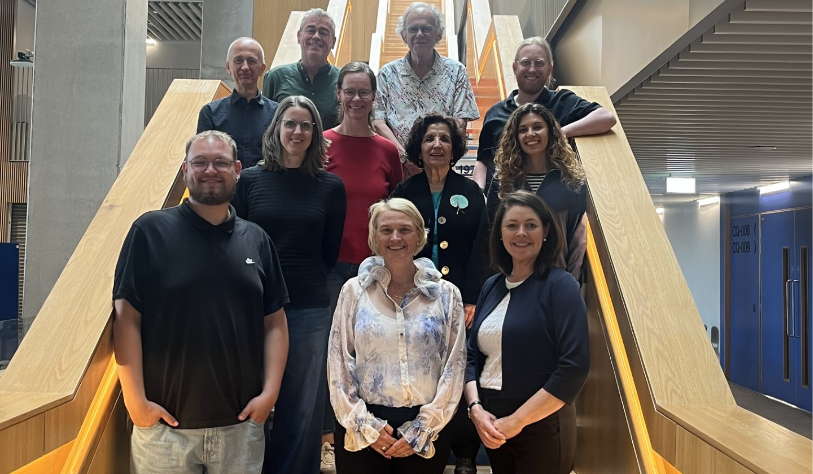
TU Dublin recently hosted the Erasmus+ funded project Visual Interactive System for Teaching and Assessment of Sign Languages (VISTA-SL).
TU Dublin recently hosted an international meeting and workshop on the 28th and 29th of May 2026 for the Erasmus+ funded project Visual Interactive System for Teaching and Assessment of Sign Languages (VISTA-SL).
VISTA-SL is a new European initiative that uses artificial intelligence, augmented reality, and 3D animation to change how sign languages are taught and learned. This project brings together universities, researchers, technologists, and Deaf education specialists from across Europe to develop an interactive e-learning platform for four sign languages: Irish Sign Language (ISL), German Sign Language (DGS), Greek Sign Language (GSL), and Dutch Sign Language (NGT).
The platform offers sign language video lessons taught by Deaf native signers, along with technologies that include:
- Real-time augmented reality feedback on sign accuracy
- AI-supported personalised learning assistance
- 3D signing avatars with controllable playback
- Gamified learning experiences designed to improve engagement and accessibility
Welcoming the international visitors and project partners to TU Dublin’s Grangegorman campus, Dr Dympna O’Sullivan, Vice President for Research and Innovation at TU Dublin, said:
TU Dublin is proud to host this important international event and to contribute to a project that reflects our commitment to inclusive, impactful and interdisciplinary research. VISTA-SL combines technical excellence with deep engagement from Deaf communities and sign language educators to ensure that the resulting system reflects real needs as well as respects linguistic and cultural authenticity.
The technology behind the project covers several research areas, including Artificial Intelligence, Computer Vision, Machine Learning, Natural Language Processing, Deaf Studies, Linguistics, and 3D Graphics. Unlike traditional language-learning platforms, VISTA-SL has been shaped directly by Deaf educators and learners. The team gathered requirements from focus groups that included Deaf communities, educators, and both Deaf and hearing learners to ensure the platform is inclusive, accessible, and practical for real-world learning.
Discussing the collaboration and project goals, Dr Irene Murtagh, Host and organiser at TU Dublin said:
VISTA-SL demonstrates how emerging technologies can support inclusive education and improve access to sign language learning across Europe. By combining expertise in Deaf studies, linguistics and advanced digital technologies, the project is creating tools that respond directly to the needs of Deaf communities and hearing and Deaf learners.
The showcase event will feature live demonstrations, research talks and interactive sessions exploring the future of sign language technologies and inclusive education.
Highlights from the programme include:
- The latest developments and challenges within the VISTA-SL project
- AI-powered tools for sign language processing
- The Digital Dictionary of German Sign Language (DW-DGS)
- Web technologies for generating and visualising sign language animations
- Research on emotion recognition in serious games
- Technology-enhanced learning approaches for Deaf education
The event concluded with a hands-on demonstration session showcasing:
- The VISTA-SL integrated learning system
- Sign language animation pipelines
- Signscape, a sign-language-based educational escape game for children
The VISTA-SL consortium includes University of Patras, Greece, Hellenic Mediterranean University, Greece, University of Hamburg, Germany, Pompeu Fabra University, Spain, Royal Kentalis, Utrecht, The Netherlands and Technological University Dublin, Ireland
Further information about the project is available at: https://vista-sl.eu
This project VISTA-SL has been funded with support from the European Union Erasmus+ Programme, grant number: 2024-1-EL01-KA220-HED-000257847.