
TU Dublin showcases research and innovation on medicinal and aromatic plants for World Wildlife Day 2026
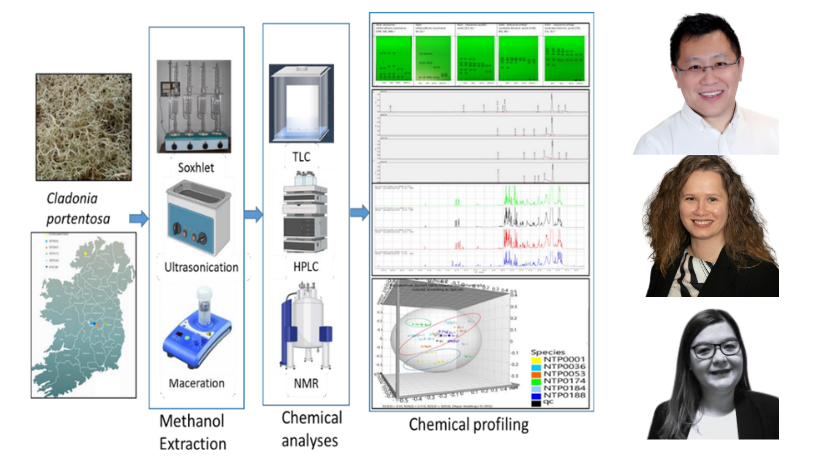
On the 3rd of March each year, the United Nations marks World Wildlife Day (WWD), celebrating wild animals and plants and recognising the vital roles that biodiversity plays in sustaining life on Earth. The 2026 theme, ‘Medicinal and Aromatic Plants: Conserving Health, Heritage and Livelihoods,’ highlights the importance of safeguarding plant species that underpin traditional medicine, modern healthcare and local economies.
At TU Dublin, research led by Tao Zhang; Lecturer and Programme Chair of the Higher Certificate in Science in Pharmacy Technician Studies, exemplifies how scientific innovation can support this global mission. Dr Zhang’s work in natural product science and ethnopharmacology focuses on the chemical profiling of medicinal and aromatic plants, bridging traditional knowledge with advanced analytical techniques to unlock their therapeutic potential.
Dr Zhang’s research explores how biodiversity, particularly traditional Chinese medicinal species and Irish native flora, can contribute to drug discovery, sustainable health solutions and the emerging bioeconomy. Aligned with the World Wildlife Day 2026 theme, his work examines how ecological and environmental factors such as soil composition, altitude, climate, genetic diversity and cultivation practices influence the chemical composition and biological activity of plants.
Within the School of Food Science and Environmental Health, research has examined species such as Lycium barbarum (goji berry), Chrysanthemum indicum, Mentha × piperita, and Cinnamomum verum, with a focus on antimicrobial and anticancer activities. Using chromatographic, spectroscopic and metabolomic approaches, the team studies variations in secondary metabolites and how these affect antimicrobial and anticancer activity, consistency of extracts and potential health applications.
Conducted in collaboration with Dr Elena-Alexandra Alexa, Assistant Lecturer in Food Safety Management and Dr Esen Efeoglu, Assistant Lecturer in Pharmaceutical Chemistry and Principal Investigator in the Nanolab Research Centre, this interdisciplinary research strengthens TU Dublin’s expertise in natural product chemistry and bioactivity evaluation. The work also integrates undergraduate scholarships, with final-year student projects contributing to peer-reviewed publications and presentations at national and international conferences, including the International Congress and Annual Meeting of the Society for Medicinal Plant and Natural Product Research (GA2023) and the national Science Undergraduate Research Experience (SURE) Conference.
By scientifically validating traditional medicinal plants, this research highlights how conserving plant biodiversity is not only an ecological priority but also a foundation for future therapeutic innovation and sustainable development.
A second project led by Dr Zhang demonstrates how Irish wildlife habitats can support both conservation and innovation. Kin Aik Kok, then a final-year BSc (Hons) Pharmaceutical Healthcare student, undertook a research project on the isolation and identification of bioactive compounds from bog myrtle (Myrica gale L.), a native Irish bog species traditionally used for its medicinal and insect-repellent properties.
This work formed part of a wider collaboration with the NatPro Centre (Trinity Centre for Natural Products Research) at Trinity College Dublin, under the initiative ‘Unlocking Nature’s Pharmacy from Irish Bogland Species.’ The project investigates the therapeutic and economic potential of bogland plants within the context of biodiversity conservation and Ireland’s developing bioeconomy.
The collaboration resulted in a peer-reviewed publication in Planta Medica examining the insect-repellent properties of bog myrtle, providing scientific validation of its ethnobotanical use. The findings demonstrate how Ireland’s bog biodiversity can support sustainable natural product discovery while reinforcing the ecological importance of conserving these fragile habitats. The work was also presented at GA2023, highlighting its international relevance and research impact.
Together, this research reflects the theme of World Wildlife Day 2026 by showing how medicinal and aromatic plants connect human health, cultural heritage and sustainable livelihoods. From traditional Chinese medicinal species to Irish bogland flora, Dr Zhang and TU Dublin colleagues are demonstrating that protecting plant biodiversity is not only about preserving ecosystems, but also about safeguarding knowledge, enabling innovation and supporting future bio-economies.