Facilities
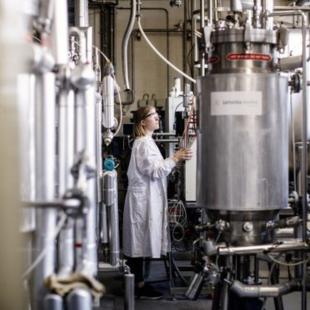
The Centre has a suite of biology, chemistry, engineering, sports science and innovation laboratory spaces for collaborative research. In addition, we have access to the Department of Applied Science Pilot Plant for R&D projects in bioprocessing and process improvements.
Industry clients and researchers from any organisation can take advantage of our facilities and specialist equipment for specific research in collaboration with PIs or for their own business needs.
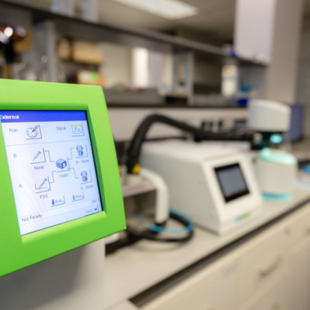
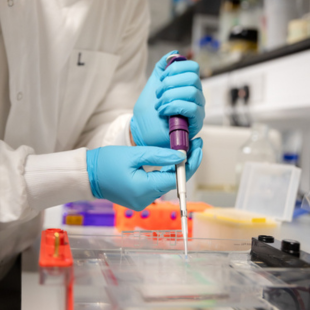
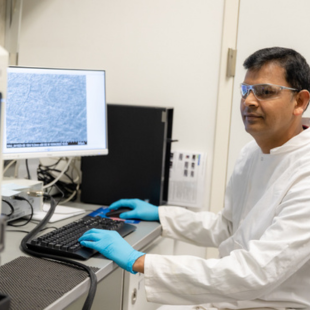
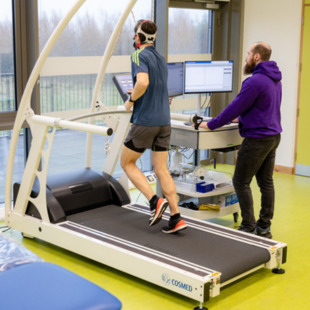
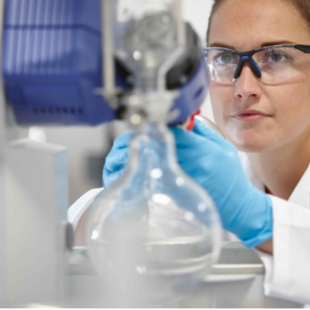
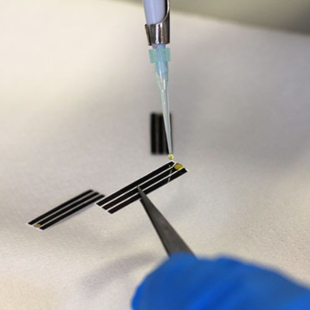
We have two dedicated laboratories; one for scanning electron microscopy with two SEM instruments, one with EDX function, and the second which has 300 MHz and 500 MHz multi-nuclear NMR systems (can do solid state as well).
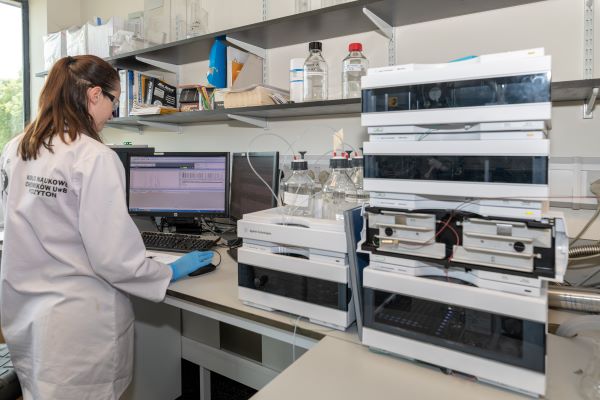
There is a large analytical instrumentation laboratory which houses a suite of spectroscopic and chromatographic equipment including a GC-MS (Agilent Technology); LC-MS Q-TOF Accurate-Mass (Agilent technologies 6530); Shmiadzu uHPLC and preparative LC systems; FT-IR, UV-vis spectrophotometer, and a polarimeter.
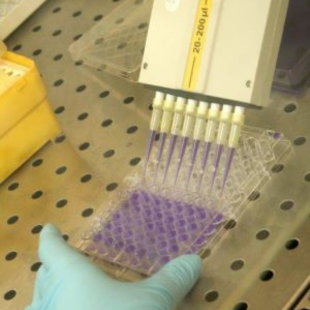
These laboratories have a suite of laminar airflow hoods for cell culture processes, and equipment for biochemical analysis including spectrophotometers and a Mason Technology H1 Hybrid 96 Plate Well Reader and a 7300 Real Time PCR System. There is also a Whithey H35 Hypoxystation for specialist protection experiments, incubators, including a C02 incubator, and a separate lab with a confocal microscope. There is also a dark room attached to the lab.
These are fitted with laminar airflow hoods and are suited to work on DNA extraction and analysis; class one microorganisms and bioanalysis projects. A warm room is attached.
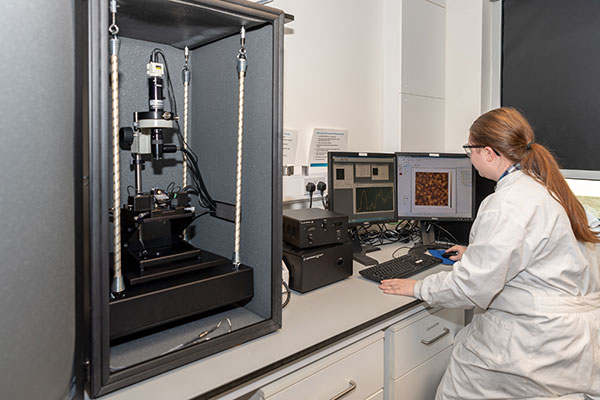
There is one dedicated laboratory for scanning tunneling microscope (STM) and ancillary equipment with a second surface lab which houses an atomic force microscope 5500 AFM; FT-IR with attachments; First Ten Angstroms FTA 1000 C-Class Drop Shape Analyser; First Ten Angstroms DCA-100 Contact Angle Tensiometer; NIMA Technology Langmuir-Blodgett Trough; Alicona MeX SEM 3D Imaging Software.
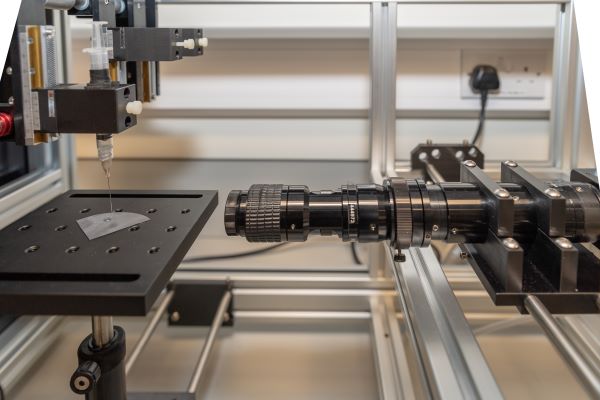
This is used mainly for sensor fabrication and analysis with at least six different potentiostats for cyclic voltammetry, square wave voltammetry.
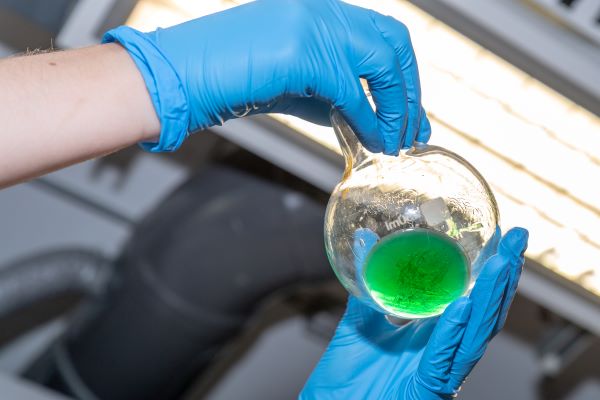
Has benchspace and 11 high specification extraction fumehoods serviced with gases for inert reactions. The laboratory is kitted out with ancillary equipment and glassware for advanced experimental chemical synthesis. It also houses specialist synthesis equipment, including a hyrdogenator, microwave synthesiser and a solid phase peptide synthesiser.
This lab space has an array of screen and laser printing systems, plastics assembly apparatus, dispensing systems and potentiostats for advanced sensor studies.
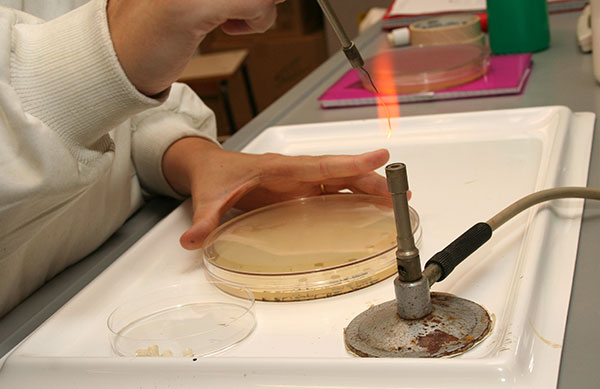
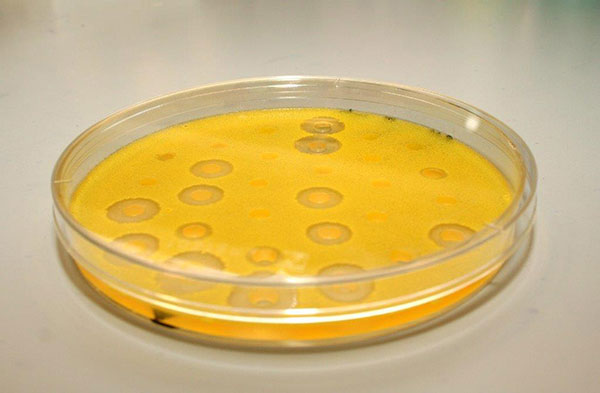
Designed and risk assessed to the highest standards for working with class 2 type microorganisms in a Laminar Flow Hood with a complete suite of protocols and procedures to ensure safe operations, cleaning and contamination control.
Includes a purpose built MTS 858 Bionix® test system with supporting biomechanical subsystems including a hip wear simulator and spinal kinematics system. This servohydraulic system can precisely simulate a full range of joint motions including flexion/extension, lateral bending, axial tension/compression, torsion, X-axis shear and Z-axis shear. Load data from a six-degree-of-freedom load cell and displacement data from a range of transducers throughout the test system are used to evaluate the performance of various orthopaedic treatments such as balloon kyphoplasty and scoliosis correction surgery.
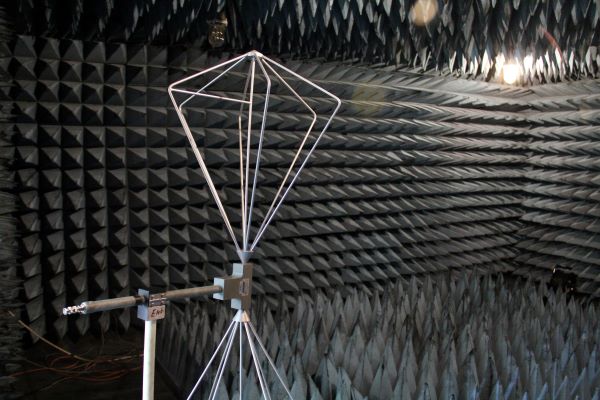
An RF anechoic chamber (ca. 20m2) with a Keysight vector network analyser, vector signal generator / analyser. The chamber includes an Innco Systems CT0500 turntable which can be programmed to work with various EMC test cases. The chamber and associated instruments form a complementary resource to the RFT Lab, located in the Department of Electronic Engineering that provides an environment that is essential for the testing of RF devices and systems. Testing in respect of EMC investigations & pre-compliance, harmonic analysis, low- noise amplification and antenna performance can be performed using the chamber. The Anechoic Chamber is one of only a number within the country and it represents the Research Institute’s commitment to collaborative research and support with local enterprises and sister academic institutions.