
TU Dublin Celebrated World Sight Day 2026 with a Two-Day Showcase of Assistive Technology Innovation
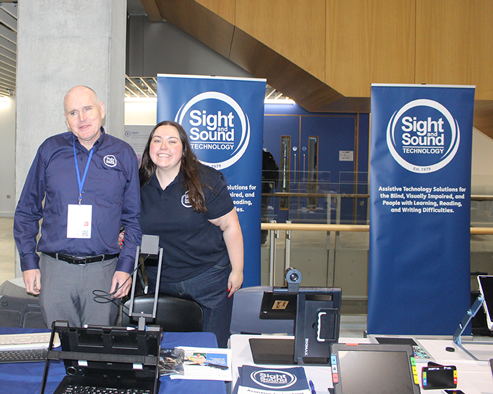
Technological University Dublin (TU Dublin) marked World Sight Day 2026 on 12 and 13 October.
Technological University Dublin (TU Dublin) marked World Sight Day 2026 with a two-day programme of events on 12 and 13 October at the Central Quad on its Grangegorman campus as a recognised Associated Event of the Irish Presidency of the Council of the European Union. Hosted by the Digital Futures Research Hub and the School of Computer Science, in collaboration with Sight and Sound Technology Ireland, the event brought together students, researchers, educators, industry partners, policymakers, disability organisations and members of the wider community to explore the latest developments in assistive technology, accessibility and inclusive design.
The programme formed part of Accessibility in Action @ TU Dublin 2026 and featured an extensive Assistive Technology Exhibition in the Central Quad foyer. Attendees had the opportunity to experience a wide range of technologies designed to support people who are blind, vision impaired or have other accessibility needs. Exhibitors included Sight and Sound Technology, ChildVision, Fighting Blindness, Vision Sports Ireland, DigiCoach.ie, the Anne Sullivan Centre for People Who Are Deafblind, and TU Dublin’s Towards People-Oriented Technology (tPOT) Research Centre.
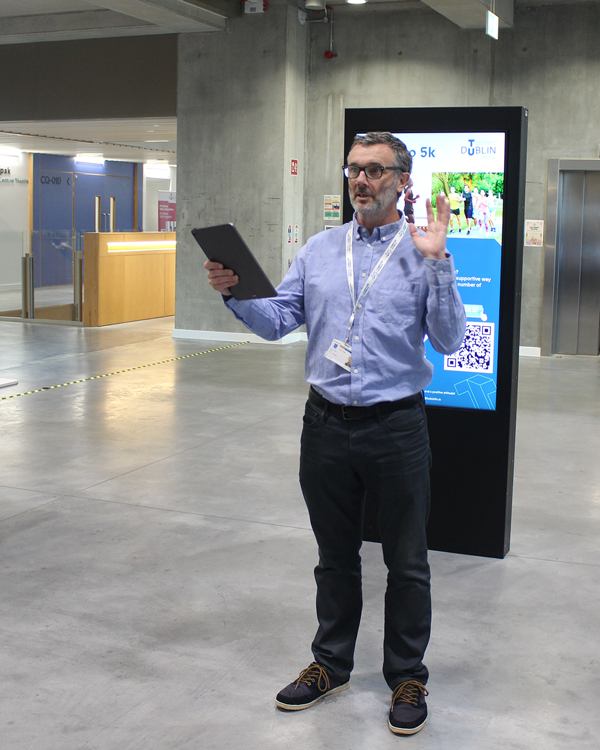
The event was officially opened by Dr Brian Keegan, Head of School of Computer Science, and was followed by a full day of exhibition activities showcasing the role of technology in supporting inclusion, participation and independence. A dedicated group of Computer Science students played an important role in supporting the event, working as trained sighted guides who welcomed participants and assisted them in accessing and navigating the Grangegorman campus, while also actively engaging with exhibitors and attendees.
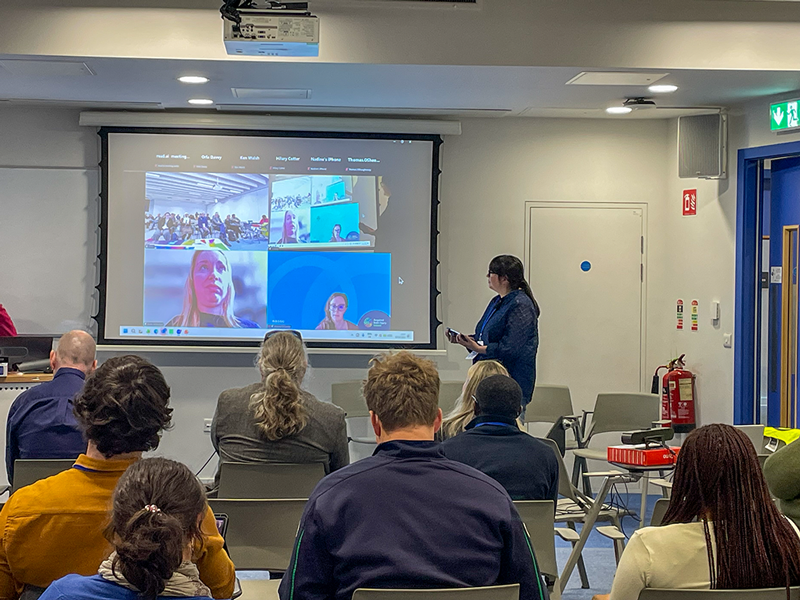
Later that afternoon, participants attended “CHAT – Researching AT, Enabling Research”, which explored both the impact of Assistive Technology (AT) research and how technology can enable more people to participate in research itself. The session brought together national and international contributors, including Satish Mishra (ATscale), Dr Aoife McNicholl (Dublin City University), Dan Eames (National Disability Authority), Dr Emma Smith (University of Limerick) and Christina Cannon (Saint John of God Community Services). Discussions examined national AT policy, educational outcomes, independent living, smart homes, and the translation of research into practice through initiatives such as the ARISE Framework.
The evening concluded with a Fireside CHAT, “From Innovation to Impact: Can Ireland Lead the Next Generation of Assistive Technology?” featuring Dr Dympna O’Sullivan, Director of Research, Innovation and External Engagement at TU Dublin, and Stuart Lawler, Head of Digital Content and Business Development Manager at Sight and Sound Technology Ireland. The fireside CHAT was opened by Dr Dónal Fitzpatrick, , Senior Advisor for the European Accessibility Act with the Centre for Excellence in Universal Design (CEUD) at the National Disability Authority (NDA).
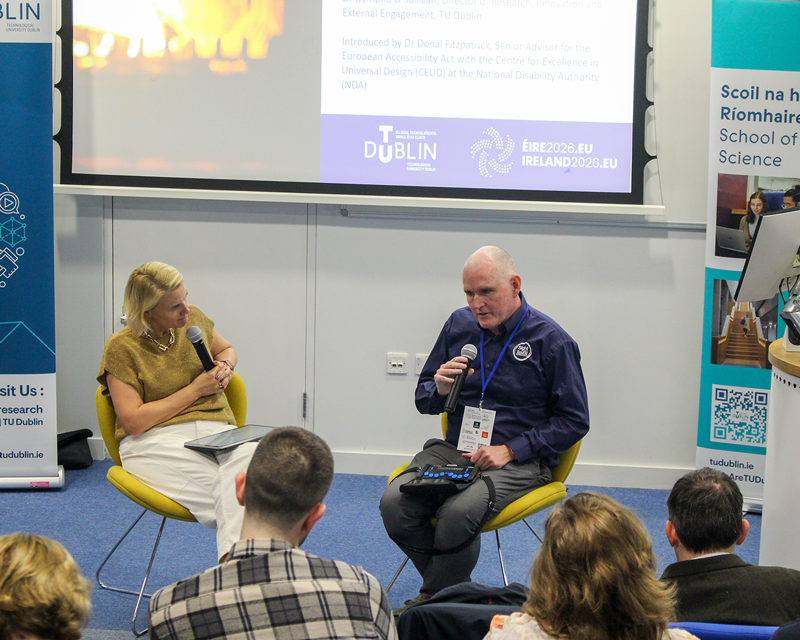
Their wide-ranging conversation explored how advances in artificial intelligence, smart glasses, accessible mainstream technologies and digital inclusion are transforming opportunities for people with disabilities. The discussion also considered how Ireland can build on the findings of the 2026 Assistive Technology Capacity Assessment to create a more coordinated national Assistive Technology ecosystem, strengthen research, and translate innovation into meaningful societal impact.
On Tuesday, the exhibition continued, attracting students, staff, researchers and visitors interested in accessibility, inclusion and emerging technologies. The second day also featured a series of co-design workshops designed to encourage collaboration between researchers, practitioners and people with lived experience.
Workshop sessions included the Access2CS Vision Coding Workshop, led by Declan Meenagh of Fighting Blindness, which explored accessible approaches to computer science education for people with vision impairments. Tara Whelan, Lecturer in Interaction Design at NCAD, shared insights from her work in making creative electronics education accessible to visually impaired students. Patrick Fitzgerald of Saint John of God Community Services led a co-design workshop applying participatory design methods to challenges previously explored by TU Dublin computer science students and SJOG co-designers. The event concluded with a presentation and inclusive discussion on the ALTITUDE Universal Design for Learning (UDL) Charter and Staff Roles, led by Margaret Kinsella of PATH 4 and TU Dublin.
The event highlighted TU Dublin’s commitment to inclusive and engaged research, accessibility, and collaboration with industry, community organisations and people with lived experience. By bringing together diverse voices from across the Assistive Technology ecosystem, Accessibility in Action @ TU Dublin 2026 provided a valuable platform for knowledge exchange, partnership development and innovation, while helping to shape future directions for Assistive Technology research and policy in Ireland.