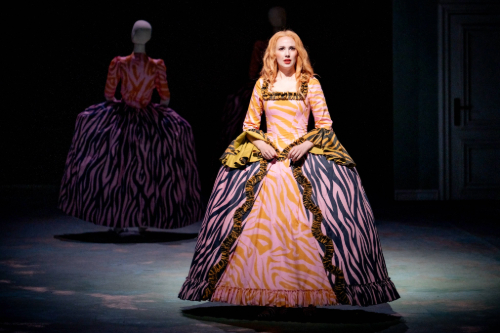
Amy Ní Fhearraigh
Most people don’t pivot from architecture to opera on instinct. Amy did.
What began as a gut decision at TU Dublin has grown into a career shaped by resilience, reinvention and a deep connection to language and storytelling. Now based in Amsterdam and performing on international stages, she reflects on the moments that nearly made her quit, the people who kept her going, and why sometimes the boldest move is simply trusting yourself.
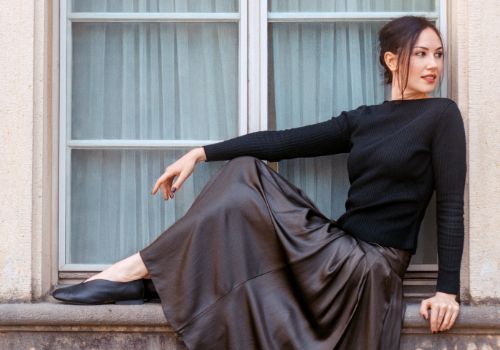
Watch Amy here
I think something I’ve noticed about myself over the years is that while I can be a little impulsive, it’s only ever when the decision feels absolutely right. A handful of times in my life my gut has been screaming at me to take a risk, and this was one of those moments.
"My gut was screaming at me to take the risk, so I did."
Singing has always felt like a vocation, but to the dismay of 13 year old me, becoming a teen pop sensation was unfortunately not on the cards. I had given up on the idea of singing for a living long before opera even became a prospect. So when the opportunity came up to study at TU Dublin, I just took it. I was young, it felt right, and I’m honestly too stubborn to back down from a challenge.
I think it was in my third year at TU Dublin that I really felt not only that this was for me, but that I was for it, if that makes sense.
The course had branched into different strands and I had the chance to really focus on my singing. I chose the pedagogy strand because I was still working on my confidence and anxiety, but it was also the first year I was in at 9am almost every morning just to practice.
I had no real plan, I just sang what I wanted, what felt fun, and it genuinely transformed my development in those early days. It’s so easy in college to get caught up in deadlines and exams and forget that you’re there because you love to make music. Taking that time to just explore my voice helped me stay connected to that.
In the early years I felt like a complete imposter. I had little to no background in music. I couldn’t sight read, I couldn’t read music, I could barely tell you where middle C was on the piano. I wanted to give up so many times.
But I didn’t. I just pushed through. I worked outrageously hard and studying contemporary music forced me to realise that just because I couldn’t do things in the standard way didn’t mean I couldn’t do them at all.
I just had to find a way of learning and studying that worked for me.
That realisation has stayed with me. Just because I didn’t have the typical start doesn’t mean I can’t have the same outcome. It just means I have to work harder and push myself more, but it’s all possible.
At first it didn’t, but as I’ve gotten older I’ve really started to understand the value of speaking your native language and having that true connection to your identity.
We are so lucky to be Irish. We’re adored worldwide, and I have found it genuinely stands to you in the workplace. People really like us.
But the first time I really understood the value of speaking Gaeilge in the context of my career was when I performed some Aloys Fleischmann songs in Irish. It felt like the words came from the core of my being in a way that I never experienced when singing in other languages.
It was a really profound moment for me. Now I have the luxury of knowing that deep connection and applying it to other languages in ways I wouldn’t have before.
They all played their part. One led to the next, and it’s been a steady progression, which has really defined my career.
But the support of INO and of Fergus Sheil in particular has really kept me going even when I was ready to give up.
When Covid hit I was turning 30, and as a soprano you’re often made to feel like your time is running out, which is completely untrue. I felt like I had lost any real chance of a career. But Fergus always saw something in me and stood behind me when I needed it most.
Every step is valid and important, but some really carry you when you need it most, and INO have done that for me multiple times throughout the years.
I think when I started working with my current teacher in 2021, I began to properly understand my voice and the direction it needed to go. Before then I had been singing a lot of contemporary and new opera, and it left a big question mark over what repertoire my voice was really suited to.
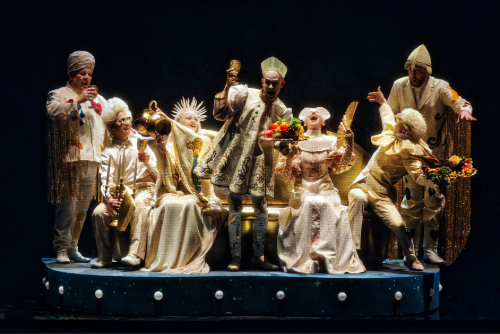
Then in 2024 I sang La Contessa Almaviva in Le Nozze di Figaro at Theater Magdeburg, and it felt like everything clicked.
“That was the moment I finally felt like I knew what I was doing.”
Years of uncertainty suddenly made sense and I knew how to move forward.
I moved to Amsterdam for multiple reasons, but the main one was to be nearer home, to be nearer my teacher who is based in the Netherlands, and to be in a city that makes me happy.
This career is extremely challenging and there will be some moves, literally and figuratively, that you’ll have to make to further your career. Then you reach a point where you get to choose.
"For me, I sing my best when I’m happy."
My work comes from emotional connection rather than technical prowess and understanding. And as mentioned previously, I’m stubborn and impulsive, so if I’m unhappy about something I won’t suffer it much longer than I have to.
Living in Amsterdam gives me that, and so the risk is always worth it. Professionally it also makes sense. I’m close to Germany, I have a strong network in the Netherlands, and the airport is amazing.
I’m actually very introverted and need a lot of alone time to recover from what is a very extroverted career.
My favourite way to switch off is playing video games. I’ve loved them since I was a child and I’m never without them. I’m a total nerd at heart, anything fantastical or otherworldly is right up my alley.
I’d love to say I meditate or go for morning runs, but no. I just turn on my SteamDeck and disappear into another world for a few hours.
The most profound impact TU Dublin had on me, aside from the education itself, was the people. The mentors and teachers I had are still part of my life. I still message them regularly.
Particularly Aoife O’Sullivan and Sinéad Campbell Wallace, who was my singing teacher. I wouldn’t be half the performer I am had it not been for their input and infallible encouragement, not just on my development as a singer, but also as a person.
“You can’t do this alone, you need people who believe in you.”
They showed me the importance of having support around you, people who care and want you to succeed. Those relationships are everything.
If it feels right, just do it.
And if it doesn’t work out, who cares? We live in such extreme and scary times, and I really believe we should commit to living the life that we’re lucky to have.
We’re all just in this mad world doing our best to get by, so embrace your life, be your own no.1 fan and back yourself.
"You’re enough. We all are."