
Eniola Salami
TU Dublin Culinary Arts graduate Eniola Salami has forged a distinctive path through the food industry, blending chef training with commercial insight to build her own West African food brand, Joyof.
Graduating during the uncertainty of the COVID-19 pandemic prompted an unexpected shift away from the traditional kitchen route, ultimately leading her into New Product Development and entrepreneurship.
In this interview, Eniola reflects on the experiences at TU Dublin that shaped her confidence and creativity, the lessons learned from navigating early career challenges, and her ambition to bring authentic West African flavours into everyday kitchens.
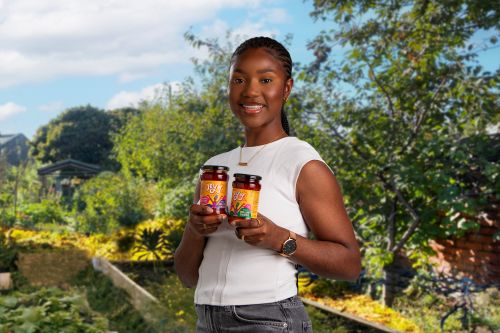
Studying Culinary Arts at Technological University Dublin taught me far more than knife skills and sauce reductions. It taught me discipline and standards and instilled in me an obsession with flavour integrity and authenticity, as well as the confidence to think outside the box. I learned how to build dishes from scratch and how to properly balance flavours.
When I graduated, I imagined myself walking straight into a busy kitchen. That was the plan.
But COVID had other ideas. Restaurants were closed, and the path I thought I was stepping onto suddenly wasn’t there anymore.
At the time, it felt unsettling. Looking back, it was probably the best thing that could have happened.
During the programme, we had a module in New Product Development, and I remember loving it. It was creative in a completely different way. Less about plating and more about ideas, trends, consumer behaviour, and building something from concept to shelf. It pushed me to think beyond the kitchen.
So instead of chasing a traditional chef role, I started looking for work in NPD. It felt like the perfect middle ground. I could still use my chef training, but with full creative freedom and a broader understanding of the food industry.
I ended up working in the sector for a few years, and that experience completely shaped how I think about food. I learned how products are costed, how labels are developed, how retail really works, what buyers look for, and which trends have real staying power versus what simply looks good on Instagram. I saw the inner workings of FMCG in real time.
“Honestly, without that experience in NPD, I don’t think Joyof would exist.”
It gave me the confidence and practical understanding to say, “I can build this.” It wasn’t just about having a good recipe. It was about understanding the entire journey from idea to shelf.
That foundation came directly from the diversity of the Culinary Arts programme. It didn’t just train me to cook. It showed me that there are many different paths within food. COVID may have redirected my route, but in many ways, it placed me exactly where I needed to be.
Looking back at my time in Culinary Arts at TUD, the biggest impact wasn’t just one single moment, it was the range of exposure the programme gave me.
Professionally, the New Product Development module stands out the most. At the time, I didn’t realise how influential it would be. It opened my eyes to food beyond the plate. We weren’t just cooking, we were analysing trends, looking at consumer behaviour, thinking commercially. It was the first time I saw how creativity and strategy could sit in the same room. That module genuinely shifted my direction.
The practical kitchen training was also huge. The discipline, the standards, the constant push for consistency. It trained my palate and my mindset. Even now with Joyof, I still think like a chef when it comes to flavour balance and authenticity. That foundation hasn’t left me.
Personally, I think TU Dublin gave me confidence. Coming into Culinary Arts, you know you love food, but you don’t always know where that can take you. The variety of modules showed me that the food industry is much bigger than restaurants. There are pathways in development, retail, manufacturing, strategy. That broader perspective changed how I saw my future.
And then there was James Carberry. He was the kind of lecturer who really pushed his students. He didn’t just want us to pass; he wanted us to excel. I remember when we were organising internships, he would actively aim to place students in the best restaurants possible. Not the easiest options, the best options. He wanted us properly trained and genuinely challenged.
“He genuinely loves to see his students win”.
Even now, he’ll still call to check in and ask for updates. That level of care doesn’t just motivate you in the moment, it stays with you. It makes you want to do well, not just for yourself, but because someone believed you could.
One of the biggest challenges in the early stages of my career was uncertainty.
Graduating during COVID meant the traditional kitchen route I had pictured just wasn’t available. That forced me to rethink everything earlier than I expected. There was a moment of asking myself, “What now?” and not having a clear answer. That feeling was uncomfortable, especially after spending years training for a specific path.
“Redirection isn’t failure”.
Sometimes a change in direction is exactly what pushes you towards something more aligned with who you are.
I learned that confidence doesn’t come from knowing everything. It comes from being willing to figure things out. That mindset has carried me through starting Joyof, navigating retail conversations, and stepping into rooms I once would have doubted I belonged in.
My heritage has always been part of how I experience food. Growing up, West African dishes weren’t something “exotic” or “trendy”. They were just home. The flavours were bold, layered, unapologetic. Jollof wasn’t a special occasion dish, it was normal life.
But as I moved through culinary school and then into NPD, I noticed something. West African food was everywhere culturally but not reflected properly in mainstream retail spaces. You could find global cuisines represented on shelves, but very rarely West African flavours done well, and done authentically.
That gap stayed in the back of my mind.
The idea for Joyof came when I realised that the food I grew up eating didn’t need to be simplified or diluted to fit into the market. It just needed to be positioned properly. There was no reason Jollof couldn’t sit confidently alongside other globally recognised dishes.
There wasn’t one dramatic lightbulb moment. It was more a gradual realisation. I had the chef training. I had the FMCG insight from working in NPD. I understood retail. And I understood the flavours deeply because they were mine.
"At some point it stopped feeling like “someone should do this” and started feeling like “why not me?”
Bringing West African flavours to a wider audience wasn’t about trend chasing. It was about normalising them.
Running Joyof has shown me very quickly that culinary skill is just the starting point. Knowing how to build flavour is important, but it’s only one piece of the puzzle.
Resilience has probably been the most important ability so far. In food manufacturing and retail, things rarely move as fast as you want them to. There are delays, reformulations, packaging issues, cashflow pressures, and constant problem solving.
Commercial awareness has been equally important. Understanding margins, distribution structures, retailer expectations, and how to position a product strategically is just as critical as how it tastes. My experience in NPD really helped here. It taught me that creativity must work commercially.
Adaptability is another big one. When you run your own brand, you move between roles constantly. One day you’re in production, the next you’re reviewing financial projections, then you’re pitching to buyers or negotiating with suppliers. You can’t stay in one lane.
Leadership, even at an early stage, has also mattered. Whether it’s working with manufacturers, mentors, collaborators or building a small team around the brand, you must communicate clearly and make decisions confidently. People look to you for direction.
And creativity is still central. Not just in recipe development, but in branding, storytelling, problem solving, and finding ways to stand out in a competitive market.
If there’s one thread through all of it, it’s being willing to learn. I haven’t known everything at each stage. I’ve just been willing to ask questions, seek guidance, and figure things out as I go.
“It felt like validation that the direction I was taking with Joyof mattered”
My proudest moment so far has been being listed in the Irish Independent 30 Under 30 by Irish Independent. It was a complete shock. I didn’t even know it was something I was being considered for. At that point, Joyof had only been in business for about six months, so to receive that recognition so early on felt surreal.
When you’re building something from the ground up, especially in the early days, it can feel like you’re just figuring things out as you go. There’s a lot happening behind the scenes that people don’t see. So, to have an external platform recognise the work so early was a real proud moment for me.
It wasn’t just about the title. Being listed alongside other ambitious founders and professionals made me step back and think, “Okay, this is real.”
That moment gave me a boost of confidence at a time when I was still very much in build mode.
In the next few years, I see myself scaling Joyof into a brand that feels firmly established, not just a new product on the shelf, but a recognised name.
Right now, we’re in that growth and foundation-building stage. The focus is on expanding distribution, strengthening manufacturing partnerships, and making sure the business structure is solid. I’m very conscious about building properly, not just quickly. That means refining operations, understanding export requirements, and positioning the brand for long-term scale rather than short-term hype.
One of my biggest ambitions is to see West African flavours fully normalised in mainstream retail across Ireland and beyond. Not in a “speciality” corner, but alongside other global cuisines as an everyday option. Export is part of that vision, especially the UK and wider EU.
Product-wise, I don’t see Joyof staying as just sauces. The long-term vision is to build a broader food brand that spans categories, still rooted in West African flavour but evolving into different formats and occasions. I want it to be a brand that can sit across multiple aisles, not just one.
Personally, I see myself growing into a stronger leader. As the business grows, my role will shift more into strategy, partnerships, and brand direction. I’m excited about that evolution.
Ultimately, the goal isn’t just growth for the sake of it. It’s building something sustainable, impactful and culturally meaningful. Something that started from a simple idea and becomes a lasting brand.
“It’s one of the few spaces where I’m not “founder” or “chef.” I’m just part of something bigger.”
I love to sing. I’m part of the African Gospel Choir Dublin, and it’s something that’s important to me.
Singing gives me a completely different kind of energy. Running a business can be very strategic and mentally demanding, so choir is where I switch off from spreadsheets and manufacturing plans and just be present. There’s something powerful about singing in harmony with a group of people, especially when it’s rooted in culture and community.
It also connects me back to my heritage in a different way. Just like food, music carries stories and emotion. Being part of the choir reminds me that creativity isn’t limited to the kitchen or to business, it shows up in different forms.
“If I had to choose my ultimate meal, it would be Jollof. Straight away”
There’s just something about it. It’s the kind of food that feels like home. The smell alone takes you somewhere familiar. When it’s done properly, it speaks for itself.
For me, Jollof is comfort. It’s family gatherings, celebrations, Sunday meals. It’s the dish that’s always at the centre of the table. Everyone has an opinion on it, everyone thinks theirs is the best, and that’s part of the fun.
“You don’t need to have everything figured out.”
My biggest advice would be not to panic if you don’t have your entire career mapped out yet. When you’re studying, it can feel like everyone else knows exactly what kitchen they want to work in or what role they’re aiming for. The reality is, most people are still figuring it out.
Be open to the range of opportunities the programme exposes you to. Culinary Arts doesn’t just prepare you for restaurant kitchens. There are pathways in product development, food styling, manufacturing, retail, strategy, entrepreneurship, and more. Pay attention to the modules you genuinely enjoy, even the ones you didn’t expect to like.
Also, don’t see a change in direction as failure. If something shifts your path, it might be redirecting you towards something better suited to your strengths.
And finally, build confidence in your foundation. The discipline, flavour training, and standards you develop during the programme will stay with you no matter what area of food you move into. Those skills are transferable.
You just need to stay curious, work hard, and be willing to take opportunities that might not look exactly like the plan you first imagined.