
Graham Oì Maonaigh
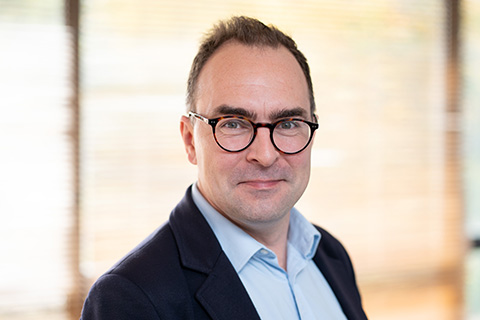
Graham’s path from TU Dublin to founding an AI HR tech company didn’t follow a straight line. A hands-on industry placement opened the door to his career in fast-growing tech, while student leadership and even early-morning rowing sessions helped shape the resilience and mindset he relies on as a founder today.
In this spotlight, Graham shares how TU Dublin’s practical, industry-connected approach played a key role in turning experience into entrepreneurship
My time at DIT (now TU Dublin) was the ultimate bridge between theory and the high-velocity world of tech. Two specific experiences shaped my trajectory:
In my final year of Marketing, I was placed with an early-stage Fintech startup. Being in the "engine room" of a young company and contributing to their Go-to-Market strategy was a revelation. It wasn't just an internship; it was an audition. Six months after graduating, that CEO reached out and asked me to join as their first Marketing hire. That single opportunity, facilitated by DIT’s industry-first approach, was the catalyst for my entire career leading marketing for tech scale-ups globally.
Serving on the Board of Directors for DITSU CLG Ltd was a masterclass in leadership. It taught me the delicate balance of strategic oversight and the importance of mentoring student leaders. Navigating the complexities of a large organisation while still a student gave me the confidence to occupy and report to senior leadership later in my career, ensuring I always understood the "why" behind the "what."
The most defining risk I took wasn't in business, but on the Liffey. I was a mature student when I helped found the DIT Rowing Club. At 30, I was getting into a boat with athletes in their physical prime.
Rowing is unlike any other sport; it is a sport of millimeters and absolute synchronization. I quickly realized that while I couldn't change my age, I could bridge the physical gap through mental mindset and a relentless commitment to training. That experience of showing up at 6:30 AM to prove that grit can outwork raw youth is exactly the mindset I tapped into when founding Tuarity. In the startup world, you’re often the underdog against "physical" giants (big tech), but mental fortitude and consistency are the great equalisers.
The transition from being a "First Hire" to a "Founder" was my greatest challenge. In my early career, I learned how to build someone else's vision. But when I moved into leadership roles in global scale-ups, I realised that the hardest part of growth isn't the technology, it’s the clarity of strategy.
The most significant challenge I’ve faced and one I see repeated across the startup ecosystem, is the trap of the "Vague Persona." Early in my career, I saw brilliant teams pour months of sweat equity into building products based on demographic archetypes: "Marketing Mary, aged 35, lives in Dublin, likes coffee." The problem? These personas don't buy software; they don't have "pain." When the product inevitably fails to gain traction, you’re forced into a painful, high-stakes pivot.
I learned that to survive the early-stage "Valley of Death," you have to pivot your thinking toward the Jobs-To-Be-Done (JTBD) framework. People don’t "buy" an AI platform; they "hire" it to make a specific kind of progress in a specific circumstance.
The challenge I took on with Tuarity was to stop looking at HRtech through the lens of traditional marketing and start looking at the "Job" the user is struggling with. HR leaders aren't looking for "AI buzzwords"; they are looking to solve a functional job (ensuring compliance at scale) and an emotional job (the peace of mind that their people are safe).
The Lesson: If you can’t define the "struggle" the customer is facing, your marketing is just noise. At Tuarity, we are ruthlessly focused on the customer's desired progress. We don't chase tech trends for the sake of it; we only build what is required to get the "Job" done better, faster, and more reliably than the status quo.
Treat your Placement as a Launchpad: Don’t treat your industry placement as a box-ticking exercise. Treat it like your first role in your career. If you add genuine value when the stakes are low, you’ll be the first person they call when the stakes are high.
The "Mature" Mindset: Whether you are 18 or 38, your biggest asset is your commitment to the craft. Like rowing, the "physical" advantages of a market can change, but your mental discipline is yours to keep.
Look Sideways, Not Just Up: We often talk about finding "mentors" who are 20 years ahead of us. But the most valuable mentorship happens peer-to-peer. My classmates were my first board of advisors. Help the person next to you with that difficult module; share your notes; brainstorm their project. The network you build in the classroom is the same one that will give you your first "warm intro" to a job three years from now.
The New Frontiers programme acted as a powerful stress test for the Jobs-To-Be-Done (JTBD) framework I’d developed throughout my career. It forced me to strip away the "founder ego" and get brutally honest about the market: Does this AI solve a fundamental struggle, or is it just a feature? Having access to the TU Dublin innovation ecosystem meant I wasn't building in a vacuum; I was surrounded by mentors and fellow founders who challenged our product roadmap until it was lean, ethical, and high-impact.
The lesson that stays with me today is the Startup "Swing." In rowing, the "swing" happens when every person in the boat is so perfectly in sync that the craft feels like it’s lifted out of the water. New Frontiers taught me that a functioning AI platform requires that same synchronicity between tech, ethics, and customer pain points.
Building Tuarity has been the culmination of everything TU Dublin instilled in me: the ability to lead with vision, the discipline to train through the "early mornings" of development, and the marketing wisdom to ensure we are always solving the right struggle for the right reasons. Tuarity isn't just a product of technology; it’s a product of the "doing" culture that TU Dublin represents.