
Jennie Flynn
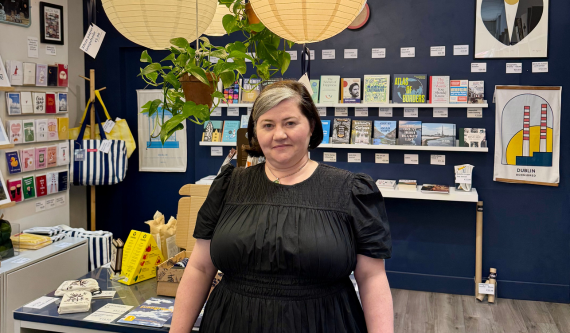
Jennie Flynn never imagined she would end up running one of Ireland's best-loved independent design stores. Trained as a designer at TU Dublin, she has spent the past fifteen years building Designist into a destination for beautifully considered products, thoughtful gifts and great design.
In this Alumni Spotlight, Jennie reflects on the creative education that shaped her, what she's learned from listening to customers, why independent retail still matters, and how good design is about much more than how something looks
I definitely didn’t realise how lucky I was at the time. Going to college, particularly when you are studying a design discipline, is like being given this amazing licence to play and experiment. There are very few other times in your life where you can be so self-directed and really immerse yourself in the things that interest you, and that is such a privilege.
For most of our projects in Interiors & Furniture, we were given a brief and a reading list as a jumping-off point, but it was up to us to come up with everything that came after that. That open-endedness and encouragement to find creative solutions to real-world problems was great training for loads of things, but particularly for running your own business.
Because it was part of the School of Marketing & Design, we got a great grounding in Psychology and Business Studies alongside the classic Bauhaus design curriculum, which seemed really normal at the time. But talking to other graduates, I think it was fairly unique and has definitely stood to me.
It definitely started then. Being graded on your ability to shape the world around you makes you feel very capable.
We used to have regular crits where you’d get feedback from your class and lecturers on your projects. Getting peer-reviewed rather than just graded was brilliant for helping you see all the different angles and potential outcomes. They were slightly scary at times, but really taught me how to think through a project and be well prepared, as you just never knew what kind of questions were going to come up, and it was up to you to justify your designs. On the odd occasion when you could convince everyone, that really built a lot of confidence.
It laid the foundations for how I approach everything. We were taught design was the framework to solve any problem and change the physical world around us.
I went on to do a Masters in Design Futures at Goldsmiths, University of London, a couple of years after I graduated, right when design thinking was becoming more mainstream. We were all encouraged to take that kind of creative problem-solving developed in our undergraduate design studies and apply it to loads of other fields, like systems, education, innovation and user experience.
Before setting up Designist, I worked in community and urban development in London, using design principles to create more social cohesion, and I definitely think shops have a role as community spaces.
As a designer, you always have a client or customer in mind when you’re developing a product, so putting the customer first came fairly naturally. But I guess having to keep the financial side of things in mind was a bit of a shift. You don’t want to think too creatively when it comes to making a budget or projections.
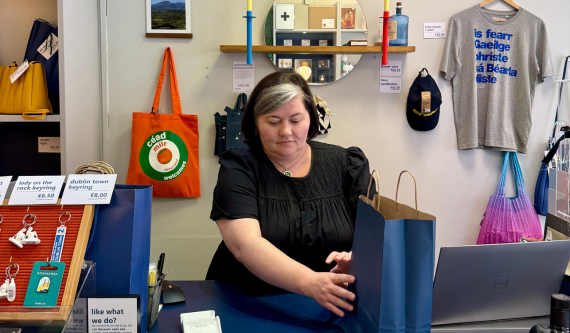
We’ve made lots of rubrics over the years with different criteria, and there are definitely categories that we try to fill. But it nearly always comes down to the story behind the product and how it connects people. I guess the most important filter is asking, what story is this product telling?
All the time, particularly before we really understood that we were a gift shop. The kinds of products that work for us don’t tend to be about a particular aesthetic but far more about the sense of connection they create. Most people aren’t buying for themselves, so taste is kind of secondary, although customers do connect with form.
For years I would have sworn we’d never sell socks, as I thought of them as a bit of a cliché. But that was before we found Irish Socksciety, who make really colourful and joyful socks that are all about shared culture.
I’m not sure if there’s one clear example because it happens fairly constantly. My absolute favourite thing is when a customer says, "Do you know what you should have in here…?" Some of the suggestions are off the wall, but a lot of the time they are exactly what we should be stocking.
We’ve really learned to stay curious and try to find out what the reason is behind why they’re asking for something. For example, around 2016, people suddenly started asking for dotted notebooks, which was the start of a massive trend in bullet journaling. We even ended up running workshops on it at one point.
I think being able to buy anything is actually the reason we have an edge. With endless choice and no parameters, it’s really hard to make a decision and even harder to feel happy with it.
There’s a study on the paradox of choice from the early 2000s which suggested people are happiest with their decisions when they are given a choice between six different things, but become overwhelmed when there are more than 30 choices. Designist acts like a filter, giving you a limited range of things to choose from that you hopefully know will be good because we’ve done a lot of the looking and thinking for you.
While we probably average around 600 SKUs, that’s still a lot easier to navigate than the endless choice online.
A lot of people imagine running a shop the same way you would have played it when you were little. Picking nice products, making them look fancy on the shelves and chatting to the customers. While that’s a lot of the job, there’s also an awful lot of logistics.
We work with an average of 80 small Irish and European suppliers to create the collection and have the right product mix, so it can often feel like you’re paddling very fast underwater while giving the impression of calm and serenity like a swan, particularly around Christmas.
That, and doing the bins.
To trust them. Anything you’re trying to figure out, the best thing to do is ask a customer, or three, about it. They’re such a lovely, thoughtful bunch of people who genuinely seem to enjoy being consulted.
We quite literally wouldn’t be here without them, so everything is built around the customer experience. We’ve aimed to create an environment where people can take their time and enjoy the time they spend in the shop or online, and feel like it’s a space they belong in.