
From Brief to Screen: Telling University and Community Stories in Still and Moving Images
Universities and community initiatives often undertake important sustainability, environmental, and civic engagement work that can be difficult to communicate effectively to wider audiences. While these projects can have significant social and environmental impact, translating complex initiatives into compelling public narratives requires creative storytelling approaches that are accessible, engaging, and visually impactful.
There is an increasing need for authentic media content that not only documents these initiatives, but also strengthens public understanding, participation, and connection between universities and the communities they serve.
From Brief to Screen
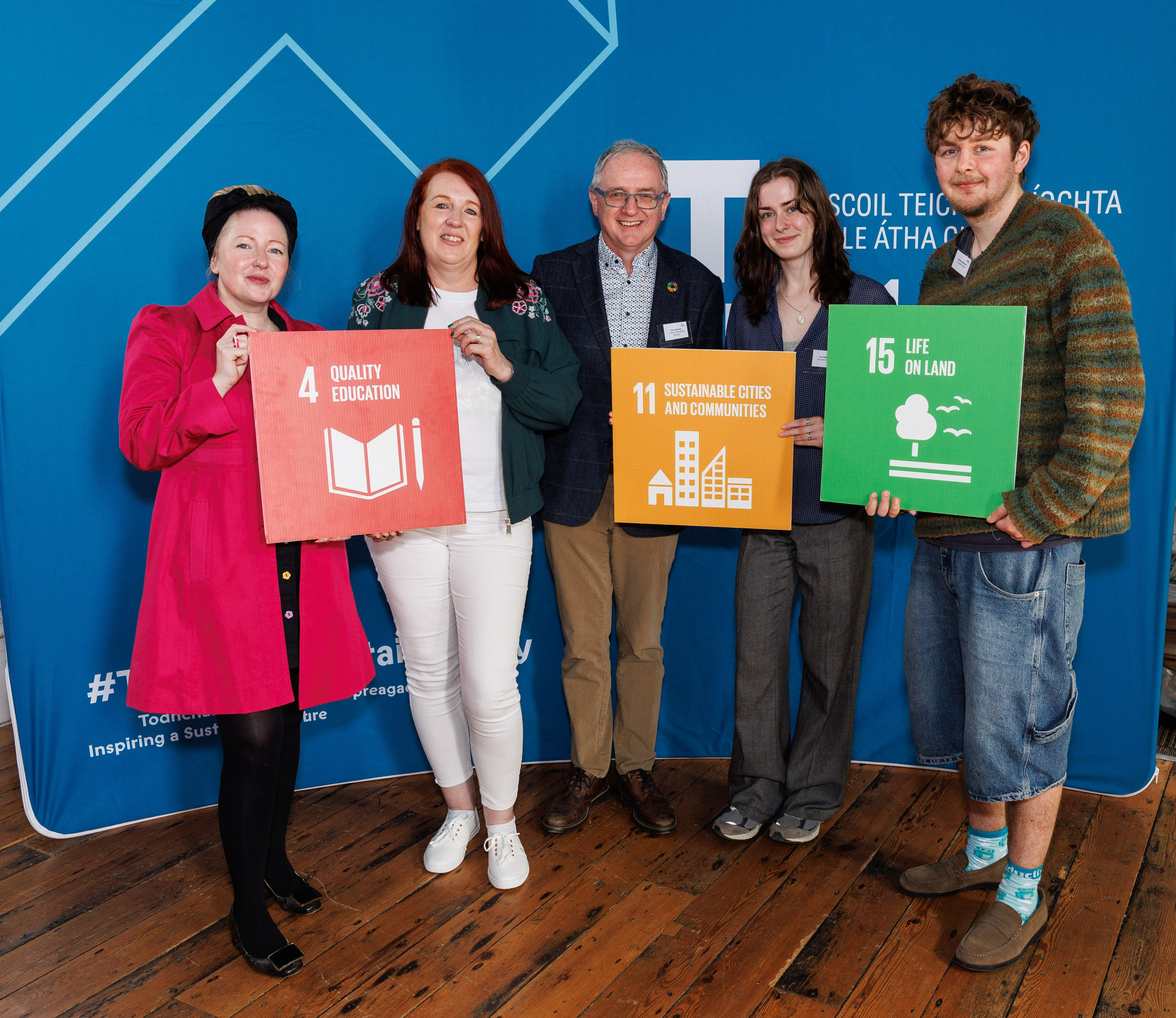
“From Brief to Screen” brought together TU Dublin students from the BA (Hons) Film & Broadcasting TU983 and BA Photography TU976 programmes to collaborate with the TU Dublin Sustainability Office on a series of live creative briefs.
Under the guidance of Dr Mary Ann Bolger, Dr Clare Scully, and Carrie Ann Moran from the School of Media, 25 students worked in creative teams to produce documentary and photographic media artefacts focused on university and community sustainability initiatives.
Through initial consultation with project partners, students identified key themes, audiences, and narrative approaches before translating these insights into short documentary films, photographic work, and written content. The collaboration took place across the semester within the practice-based module Students Working With the University, combining workshops, supervision, and iterative feedback.
Projects focused on initiatives including the Bradogue River and the CRAWL TU Dublin initiative, with outputs designed for use across university and stakeholder community platforms.
Shared Impact
The collaboration demonstrates how creative media practice can strengthen communication between universities, communities, and sustainability initiatives. By producing visually engaging and socially relevant content, students helped make important environmental and civic projects more accessible to broader audiences.
A strong co-learning dynamic emerged throughout the collaboration, with students responding to partner expertise while also shaping how stories could be told through still and moving images. This process encouraged experimentation, critical thinking, and collaborative problem-solving while grounding student learning in real-world practice.
“The project gave a voice to local Cabra residents who had been affected by flooding, and highlighted nature restoration projects that can reduce the impact of flooding. It was very valuable to work with the TU Dublin students to capture these stories.”
Niamh Kirwan, Connecting Cabra
This initiative strongly aligns with the United Nations Sustainable Development Goals: SDG 6, 11, 12, 13.
- SDG 6: Clean Water and Sanitation - Ensure availability and sustainable management of water and sanitation for all
- SDG 11: Sustainable Cities and Communities - Make cities and human settlements inclusive, safe, resilient and sustainable
- SDG 12: Responsible Consumption and Production - Ensure sustainable consumption and production patterns.
- SDG 13: Climate Action- Take urgent action to combat climate change and its impacts
Each Sustainability Action Lab project is underpinned by:
- SDG 17: Partnership for the Goals - Strengthen the means of implementation and revitalize the Global Partnership for Sustainable Development
- SDG 4: Quality Education - Ensure inclusive and equitable quality education and promote lifelong learning opportunities for all
The project also aligns with specific competences from the "GreenComp sustainability competency framework including:
|
Competency Area |
Competency |
Descriptor |
|
Embodying sustainability values |
Promoting nature |
To acknowledge that humans are part of nature; and to respect the needs and rights of other species and of nature itself in order to restore and regenerate healthy and resilient ecosystems. |
|
Embracing complexity in sustainability |
Systems thinking |
To approach a sustainability problem from all sides; to consider time, space and context in order to understand how elements interact within and between systems. |
|
Envisioning sustainable futures |
Exploratory thinking |
To adopt a relational way of thinking by exploring and linking different disciplines, using creativity and experimentation with novel ideas or methods |
|
Acting for sustainability |
Collective action |
To act for change in collaboration with others |
This collaboration was supported by the Societal Engagement and Sustainability Education teams and through the Higher Education Authority’s Strategic Alignment of Teaching and Learning Enhancement (SATLE) fund.