
Integrated Design of a Gaelic Football Facility
.png)
A persistent challenge in higher education is ensuring that students gain meaningful, real-world experience while communities benefit from academic expertise. The community initiative between the TU Dublin School of Transport and Civil Engineering and St Brendan’s GAA Club represents a strong model of practice-based learning delivering tangible value beyond the classroom.
Undertaken under the guidance of Dr. Ahmed Nasr and Dr. Liam McCarton, from the school of Transport & Civil Engineering the project provided final-year Civil Engineering students (TU826) with the opportunity to engage directly with a real client and a live development challenge - the proposed redevelopment of the Longmeadows sports facility in Islandbridge, Dublin. This partnership, supported by TU Dublin’s Sustainability Action Lab programme, created a meaningful bridge between academic learning, professional practice, and community development.
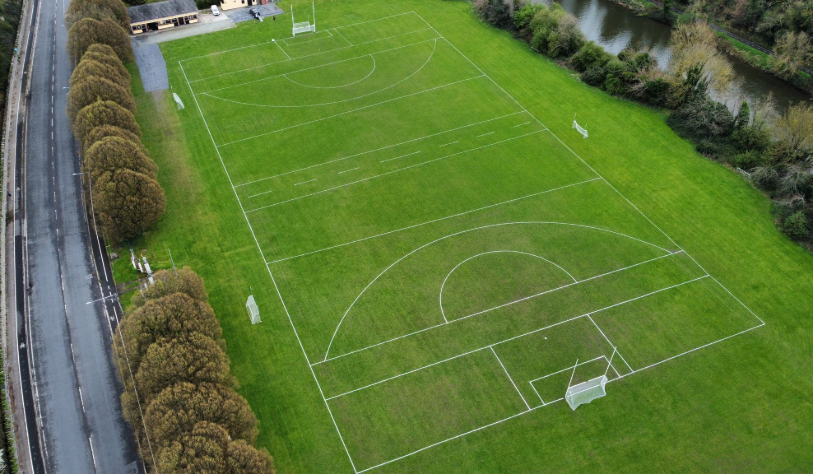
This hands-on collaboration created an innovative learning environment where TU Dublin Civil Engineering students applied the skills and knowledge of their discipline and of the SDGs in a real-life setting. It directly addressed SDG 3: Good Health and Wellbeing, SDG 6: Clean Water and Sanitation, SDG 11: Sustainable Cities and Communities and SDG 13: Climate Action, reflecting both the approach of the project and the sustainability impacts the club is aiming to achieve in the local community.
From an educational perspective, the initiative significantly enhanced student learning outcomes. Students were required to operate in multidisciplinary teams, addressing complex and interrelated aspects of a real infrastructure project, including environmental constraints, transport impacts, sustainable energy systems, drainage design, and social considerations.
The experience strengthened not only their technical competencies but also key professional skills such as stakeholder engagement, communication, teamwork, and iterative design development in response to client feedback. Working from a brief provided by the community partner ensured that student outputs were grounded in real needs and expectations, closely simulating professional engineering practice.
For the community partner, the collaboration delivered significant practical value. The students developed a comprehensive suite of high-quality conceptual and detailed design proposals, grounded in the United Nations Sustainable Development Goals, climate change adaptation strategies, and national development priorities, including the Ireland 2040 National Planning Framework.
These outputs provide St Brendan’s GAA Club with valuable insights and design options to inform future planning, funding applications, and phased development of the Longmeadows site. Importantly, the work represents a cost-effective source of innovative thinking, bringing fresh perspectives and evidence-based solutions to the club’s redevelopment ambitions.
Chair of St Brendan's GAA Club Euguene Kelly said:
"The redevelopment proposals for Longmeadows were completed to a very high standard and fully in line with the project brief. I was particularly impressed with how the students engaged with the process, took all of our feedback on board, and delivered such a professional and well considered final presentation. It was clear a huge amount of effort, thought, and technical expertise went into the work. The outputs will be extremely valuable to us as we continue to explore the future development of the site."
Dr. Ahmed Nasr, lecturer at the School of Transport & Civil Engineering, said:
“This initiative reinforces TU Dublin’s role as a civic and engaged institution, demonstrating how academic expertise can directly support local communities and grassroots organisations. By embedding sustainability, resilience, and community needs into engineering education, the collaboration contributes to shaping future engineers who are not only technically proficient but also socially responsible and responsive to real-world challenges.
“Overall, the partnership delivers a dual impact: it enriches student education through authentic, experiential learning while simultaneously generating meaningful, actionable outcomes for community stakeholders. It stands as a replicable model for university–community collaboration in advancing sustainable infrastructure and local development.”
SDG Alignment
This initiative strongly aligns with the United Nations Sustainable Development Goals:
- SDG 3: Good Health and Wellbeing - Ensure healthy lives and promote well-being for all at all ages
- SDG 6: Clean Water and Sanitation - Ensure availability and sustainable management of water and sanitation for all.
- SDG 11: Sustainable Cities and Communities - Make cities and human settlements inclusive, safe, resilient and sustainable
- SDG 13: Climate Action- Take urgent action to combat climate change and its impacts
Each Sustainability Action Lab project is underpinned by:
- SDG 17: Partnership for the Goals - Strengthen the means of implementation and revitalize the Global Partnership for Sustainable Development
- SDG 4: Quality Education - Ensure inclusive and equitable quality education and promote lifelong learning opportunities for all
GreenComp Alignment
The project also aligns with specific competences from the "GreenComp sustainability competency framework including
- Embodying Sustainability Values,
- Embracing Complexity in Sustainability,
- Envisioning Sustainable Futures and
- Acting for Sustainability.
|
Competency Area |
Competency |
Descriptor |
|
Embodying sustainability values |
Valuing Sustainability |
To reflect on personal values; identify and explain how values vary among people and over time, while critically evaluating how they align with sustainability values. |
|
Embracing complexity in sustainability |
Critical thinking |
To assess information and arguments, identify assumptions, challenge the status quo, and reflect on how personal, social and cultural backgrounds influence thinking and conclusions. |
|
Envisioning sustainable futures |
Exploratory thinking |
To adopt a relational way of thinking by exploring and linking different disciplines, using creativity and experimentation with novel ideas or methods |
|
Acting for sustainability |
Political agency |
To navigate the political system, identify political responsibility and accountability for unsustainable behaviour, and demand effective policies for sustainability |
This collaboration was supported by the Societal Engagement and Sustainability Education teams and through the Higher Education Authority’s Strategic Alignment of Teaching and Learning Enhancement (SATLE) fund.