
Reconnect the Disconnected – Biodiversity awareness and appreciation
Overview
Ireland is experiencing significant biodiversity loss, driven by human activity, land-use change, climate change, pollution, overexploitation of natural resources and invasive species (Environmental Protection Agency, 2024). Approximately 90% of protected habitats in Ireland are in unfavourable condition, with over two-thirds impacted by agricultural pressures such as grazing, drainage and pollution (National Parks and Wildlife Service, 2025).
At the same time, many people are becoming increasingly disconnected from nature and from each other. In urban environments, including city-based campuses, everyday contact with soil, plants, insects, birds, trees and seasonal change can become limited. Over time, this can contribute to “shifting baselines”, where depleted natural environments are increasingly accepted as normal because people have limited experience or memory of richer ecological conditions.
Care for nature is often rooted in direct experience. As David Attenborough has said, “No one will protect what they don’t care about, and no one will care about what they have never experienced”. This is particularly relevant in higher education, where students are also navigating wider wellbeing challenges, including climate anxiety which is negatively affecting their daily life and functioning.
Enhancing biodiversity on campus can therefore support ecological, educational, social and wellbeing outcomes. Research suggests that biodiverse natural environments are associated with stronger improvements in mental wellbeing, particularly where people encounter a range of natural features such as trees, plants, birds and water. Within higher education, creating nature-rich spaces can make biodiversity visible, accessible and meaningful, while opening up opportunities for shared learning, care, outdoor teaching and learning, conversation and reconnection between students, staff and local communities.
Reconnect the Disconnected
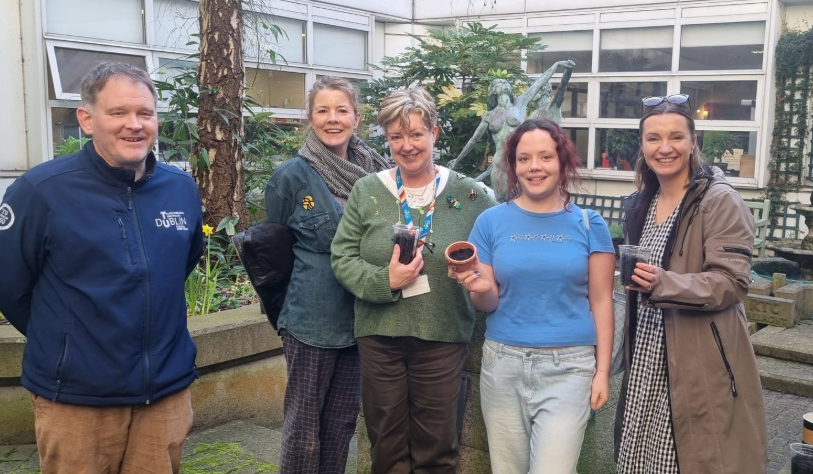
Reconnect the Disconnected is a cross-campus TU Dublin initiative focused on increasing biodiversity and biodiversity awareness, while also reconnecting students, staff and local communities with nature and with each other.
The project has been led by Dr Lucia Walsh, TU Dublin Sustainability Education and Innovation Lead, and developed with co-leads and collaborators across TU Dublin campuses and Dublin South City Partnership. It brought together TU Dublin staff, students, local social enterprises, environmental artists and community partners.
The project objectives were to:
- Increase biodiversity and biodiversity awareness across TU Dublin campuses
- Develop campus spaces that support wellbeing, belonging and community
- Create opportunities for students, staff and communities to reconnect with nature
- Strengthen social connection through shared, practical action
- Support outdoor learning, informal learning and teaching innovation
- Encourage cross-campus exchange of ideas and learning
Reflecting about the project, Dr Lucia Walsh said:
For me, this project has been about cross-pollination in every sense: of plants, ideas, skills, stories and people. Each campus brought its own context, energy and possibilities, and together we began to create a stronger community of people who care about biodiversity, learning and connection. What I have found most powerful is how small actions, such as planting trees or creating a place to sit outdoors, can open up conversations and relationships. These are the kinds of learning experiences that stay with us: hands-on, collaborative, rooted in place and shaped by real connection.
Increasing biodiversity and connection across campuses
A key strength of Reconnect the Disconnected is its cross-campus approach. The project supported biodiversity enhancement, outdoor learning and social connection across TU Dublin campuses, while allowing each location to respond to its own spaces, needs and communities.
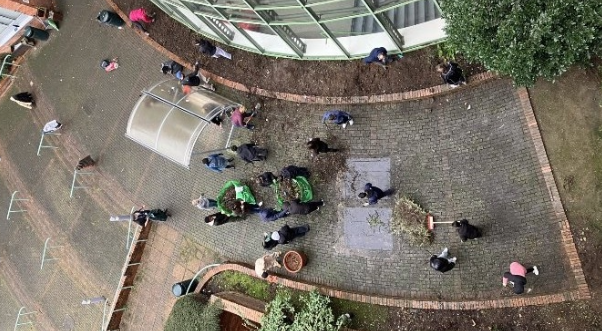
- Aungier Street Campus - biodiversity and outdoor learning space formed another major part of the wider Reconnect the Disconnected The space includes native planting, reclaimed timber seating, planters, a mini wildflower meadow, a micro-pond and habitats for insects and pollinators. A separate article tells the story of the Aungier Street micro-garden in more detail (link).
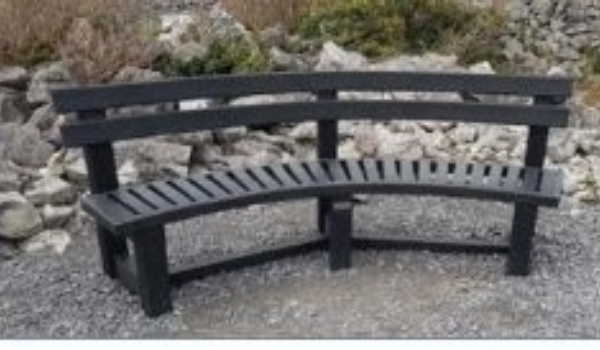
- Blanchardstown Campus - the project was co-led with Rachel Freeman, Lecturer at TU Dublin's School of Culinary Arts and Food Technology. Funding supported the creation of a new outdoor space designed for reconnection, reflection and informal gathering. A curved bench made from recycled materials was installed and surrounded by plants and flowers, helping to create a more welcoming and biodiverse space for students, staff and visitors. The space is intended to support everyday connection with nature, as well as conversation, rest and informal learning.
- Bolton Street Campus - Christina Malone, Chaplain at Bolton Street Campus and Dillon Slattery Lopez, student at TU Dublin's School Of Mechanical Engineering, have been exploring potential areas for biodiversity enhancement. Planting and further activity will commence in the new academic year.
- Grangegorman Campus - Dr Sarah Rawe and Dr Claire McDonnell, Lecturer and Senior Lecturer at the School of Chemical and Bio-Pharmaceutical Sciences, led work to expand planting on a terrace in East Quad. Additional medicinal planters and plants were introduced to enhance an existing seating area and create more opportunities for outdoor learning, social connection and informal conversations.
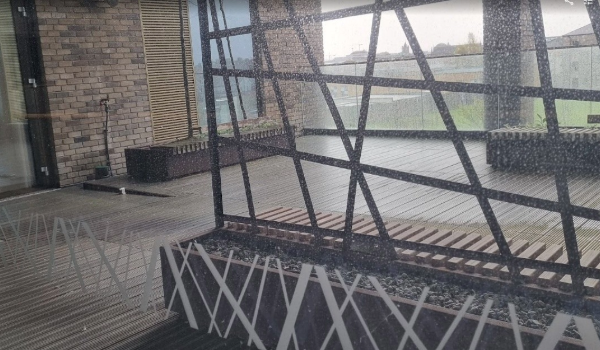
The space will be enjoyed by the wider campus community and will also be used by chemistry students and students from other disciplines for teaching and learning. This demonstrates how biodiversity interventions can support wellbeing, connection and curriculum-based engagement.
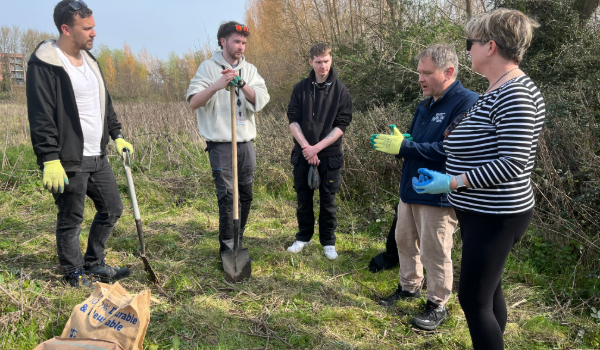
- Tallaght Campus – co-led by Gerry Ryder (Lecturer in Engineering) and Linda Bennett (Librarian), 30 native trees sourced from Pocket Forest were planted outdoors. These trees will support biodiversity and provide the basis for developing an outdoor learning and social space. It will be a great addition to courtyard gardens such as the Elemantal and Forest Bathing ones that Gerry, Linda, Niamh Plunkett and others have been developing.
Solitary bee stones across five campuses
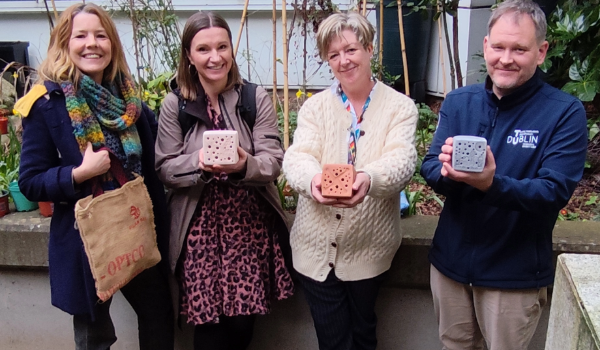
The project also acquired solitary bee stones from Plan Bee for each of TU Dublin’s five campuses. These bee stones will provide nesting habitat for cavity-nesting solitary bees and will support shared learning across campuses as staff and students observe which species use them over time.
This creates a simple but powerful cross-campus learning opportunity, helping the university community notice, understand and care for pollinators in campus environments.
Green Week 2026: workshops and creative engagement
A central component of the project was a series of participatory workshops during Green Week 2026, delivered across multiple campuses. These combined science, creativity, and practical action and included:
- Marketing Meets Biodiversity: From Micro-Garden to Movement- Facilitated by Gobnait Ní Neill (The Grassroots Guild), this hands-on session explored water management and habitat creation, including designing a micro-pond to support biodiversity.
- Wild Bee Wonders: Learn, Protect, and Take Action - Led by Kirsten Wendenburg (Plan Bee), participants explored Ireland’s native bee species and created habitats using bee stones and planting.
- Eco-Drawing and Spring Plant Exploration - Environmental artist Enagh Farrell guided participants in observing and drawing seasonal plants, highlighting the ecological value of common “weeds.”
- EcoBites: Climate, Food and Everyday Action - Delivered by The Sustainable Life School, this workshop explored links between food, climate, and lifestyle choices, with practical actions to reduce food waste.
- Not My Bag & the Future of the Circular Economy - Screening of Beta Bajgart’s documentary followed by discussion with Sarah Fliessbach (Shareclub), examining consumption, waste, and circular systems.
- The Forest Midwife Screening - A reflective film experience exploring our relationship with nature and ecological responsibility.
- Environmental story-telling workshops – hands on workshops with Beta Bajgart focusing on positive environmental storytelling through different forms of media
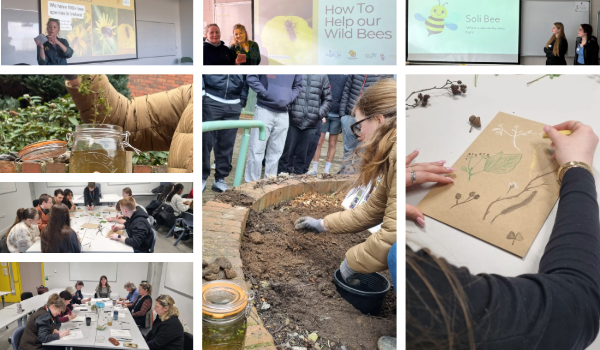
These workshops made biodiversity visible and understandable, but also emotional, creative, and relevant.
Evaluation and Reflection
The project delivered impact in awareness, engagement, learning and collaboration. It:
- Increased awareness and appreciation of biodiversity among students, staff and local communities
- Strengthened connections between people, place and nature across TU Dublin campuses
- Supported interdisciplinary learning through integration into teaching and assessment
- Created opportunities for outdoor learning, informal conversation and wellbeing
- Established a visible and participatory model for engaging with sustainability
- Built a cross-campus cross-polination network for sharing ideas, plants, practical support and learning
- Created stronger connections between campuses through shared biodiversity action
Rather than treating each campus intervention as separate, Reconnect the Disconnected created a network of people learning from one another and supporting each other to make change in their own places.
Importantly, the project showed that biodiversity action can also be social, creative and deeply human. Small interventions such as benches, planters, bee stones, native trees and micro-habitats can become much more than physical additions to a campus. They can become invitations to notice, care, gather, learn and belong.
The modular design of the project makes it adaptable and scalable, with potential for continued development across campuses and future replication in other institutions.
What comes next
This is just the beginning. Across TU Dublin campuses, the spaces created and enhanced through Reconnect the Disconnected will continue to evolve through planting, teaching, volunteering, observation and everyday use.
The next phase will create more opportunities for students, staff and collaborators to get involved, share learning and continue reconnecting with nature and with each other.
Alignment with SATLE Objectives
The project supports SATLE objectives by embedding sustainability into experiential learning, fostering interdisciplinary collaboration and strengthening community engagement. It creates opportunities for students to work on real sustainability challenges while developing practical skills, creativity, systems thinking and a stronger sense of connection to place.
SDG and Green-Campus Alignment
This project addresses SDG 11: Sustainable Cities & Communities and contributes to SDG 3: Good Health & Wellbeing, SDG 4: Quality Education, SDG 13: Climate Action, and SDG 15: Life on Land.
It aligns with the Green-Campus theme of Biodiversity, demonstrating how participatory, place-based approaches can enhance biodiversity awareness, strengthen connections with nature, and support the creation of nature-rich campus environments.
By enhancing biodiversity, supporting outdoor learning, strengthening wellbeing and building connections between students, staff and campus communities, Reconnect the Disconnected demonstrates how campus-based sustainability action can contribute to wider environmental, educational and social goals.