
Restoring Sight: A Community-Based Eye Care Initiative
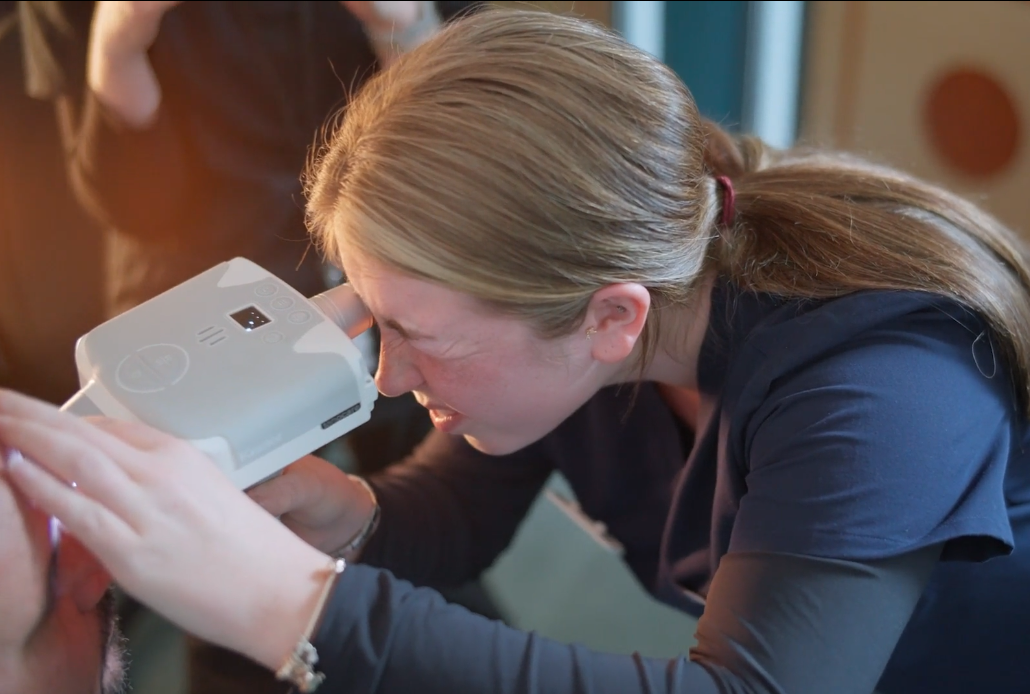
For many guests of the Capuchin Day Centre, access to even the most basic healthcare can be out of reach. Supporting people experiencing homelessness and poverty, the Centre provides vital services - but specialist medical care, including for eye health - is often difficult to access.
Recently, a guest arrived at the Day Centre seeking help after losing vision in one eye due to a preventable cataract, with the sight in the other eye deteriorating. Without timely intervention, their independence and quality of life would be severely compromised.
Thanks to a powerful local partnership, the guest was able to receive vital care.
A Community-Based Eye Care Initiative
Since September 2025, students from Technological University Dublin’s Optometry programme (TU871), under the guidance of Arlene Fox, Orla Murphy and Anna Marie Healy from the School of Physics, Clinical and Optometric Sciences, have been delivering a year-long pilot outreach clinic in partnership with the Capuchin Day Centre in its premises on Bow Street, Dublin 7.
The project was also supported by Vinicius Russo, Clinical Technician and Rebecca O' Hora, Senior Dispensing Optician, Declan Hovenden, Head of Discipline, Optometry, and Siobhan Daly, Head of School of Physics, Clinical and Optometric Sciences. The initiative is supported through TU Dublin’s Sustainability Action Lab programme, and philanthropy partners Ocuco and Topcon Healthcare.
This collaboration creates a learning environment where TU Dublin optometry students can apply knowledge of their discipline and of the SDGs in a real-life setting. It directly addresses SDG 3 Good Health and Wellbeing, Target 3.8, by enabling access to eye care services for vulnerable groups.
During Semester 1, fourth-year optometry students:
- Conducted 40 comprehensive eye examinations
- Dispensed glasses to the majority of guests examined
- Identified several serious eye conditions requiring referral for further care
In Semester 2, third-year students are continuing the work, providing care to 20 guests over a ten-week period.
Students carry out full eye examinations and medical histories on-site, ensuring guests receive the same standard of care available in clinical practice - but in a setting that is accessible, familiar, and supportive.
Beatrice Rosales, a third-year optometry student, said:
“Some of the guests had very significant eyesight issues that would affect them navigating the world day to day. It’s very fulfilling to provide this service as many of the guests here haven’t been able to avail of eye care previously. It’s great to give people glasses and the care they need.”
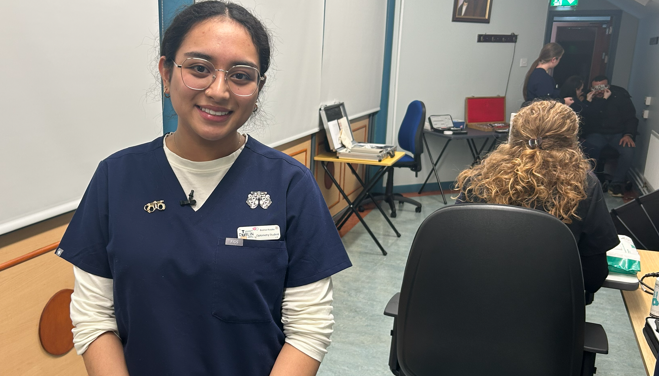
She recalls the guest with severe cataract-related vision loss:
“He was relying on only one eye because he had no access to sufficient eye care. I gave him a full eye exam and glasses to help improve his vision.”
Beyond delivering care, the initiative provides students with hands-on clinical experience while deepening their understanding of inclusive, community-based healthcare.
Early Intervention, Lasting Change
The collaboration is already helping the local community. For guests, it means access to early detection of eye disease, timely referrals for specialist care, improved vision and independence and reduced barriers to healthcare.
Brian Friel, CEO of the Capuchin Day Centre, emphasised the importance of the partnership:
“This programme gives our guests access to a level of support that they otherwise might not have been able to avail of. We work with very marginalised people who don’t have access to services, and this programme means that some illnesses and impairments can be addressed at an early stage before they have too much impact. We’re delighted to be engaged in this partnership with TU Dublin.”
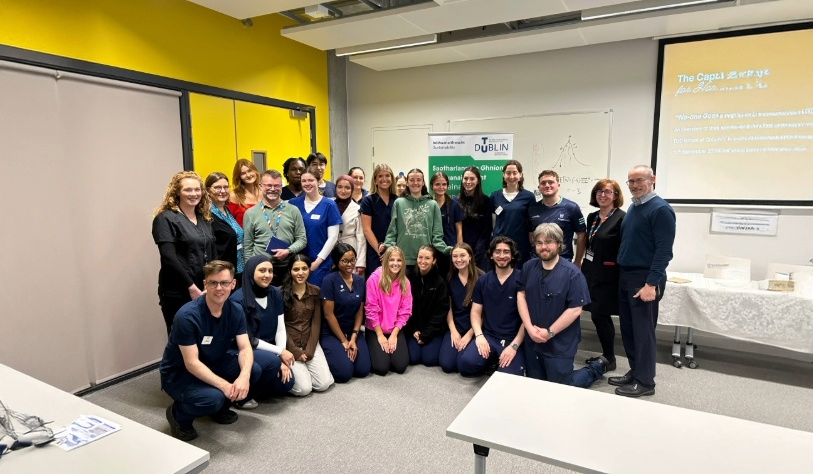
Declan Hovenden, Head of Optometry at TU Dublin’s School of Physics, Clinical and Optometric Sciences, said:
“We’re delighted to be involved in this project. There are huge benefits for everyone involved. We’re honoured to be asked and involved as the Capuchin Day Centre is in our neighbourhood, so it’s a great community initiative and an inclusive health initiative - which is something we teach our students about. It’s brilliant to see it in action.”
SDG Alignment
This collaboration supported the Sustainable Development Goals (SDGs), including:
- SDG 3: Good Health and Wellbeing - Ensure healthy lives and promote well-being for all at all ages
- SDG 3.8: Achieve universal health coverage, including financial risk protection, access to quality essential health-care services and access to safe, effective, quality and affordable essential medicines and vaccines for all
Each Sustainability Action Lab project is underpinned by:
- SDG 17: Partnership for the Goals - Strengthen the means of implementation and revitalize the Global Partnership for Sustainable Development
- SDG 4: Quality Education - Ensure inclusive and equitable quality education and promote lifelong learning opportunities for all
GreenComp Alignment
The project also aligns with specific competences from the GreenComp sustainability competency framework including Embodying Sustainability Values, Embracing Complexity in Sustainability, Acting for Sustainability.
|
Competency Area |
Competency |
Descriptor |
|
Embodying sustainability values |
Supporting fairness |
To support equity and justice for current and future generations and learn from previous generations for sustainability. |
|
Embracing complexity in sustainability |
Critical thinking |
To assess information and arguments, identify assumptions, challenge the status quo, and reflect on how personal, social and cultural backgrounds influence thinking and conclusions. |
|
Acting for sustainability |
Collective action |
To act for change in collaboration with others |
This collaboration was supported by the Societal Engagement and Sustainability Education teams and through the Higher Education Authority’s Strategic Alignment of Teaching and Learning Enhancement (SATLE) fund.