
Seeds of Science: Inspiring Young Minds Through Medical Science
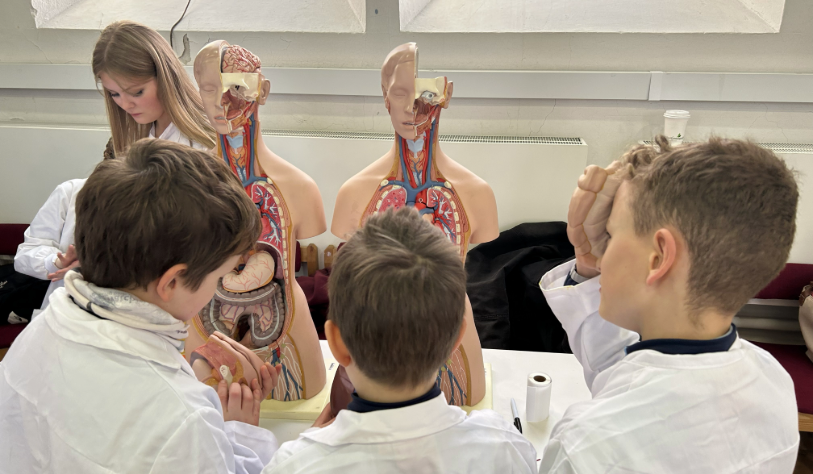
Across Ireland, student participation in STEM subjects is shaped long before they reach secondary school. Research consistently shows that early exposure to engaging, hands-on STEM experiences play a critical role in shaping future educational choices. Yet many children have limited opportunities to encounter science, technology, engineering and maths in ways that feel accessible, exciting, and relevant.
On December 10th, 2025, Technological University Dublin’s City Campus Grangegorman became a hub of curiosity, creativity and community learning as the annual Seeds of Science programme welcomed over 100 primary school pupils for a day of hands-on scientific exploration.
Now in its fourth year, this initiative led by the School of Biological, Health and Sports Sciences within the Faculty of Sciences and Health brings science to life for young learners while embedding professional practice and sustainability learning outcomes into the BSc Medical Science curriculum.
This event enabled students to apply their scientific knowledge and SDG learnings in a real-life setting. It directly addressed SDG 3: Good Health and Well-being and SDG 10: Reduced Inequalities, broadening access to STEM and health literacy in the local community while supporting innovative sustainability approaches by students.
Learning With and From the Community
Seeds of Science forms part of the Professional Practice module for 79 first-year students in TU867 BSc Medical Science and TU866/1 Biomedical and Molecular Diagnostics.
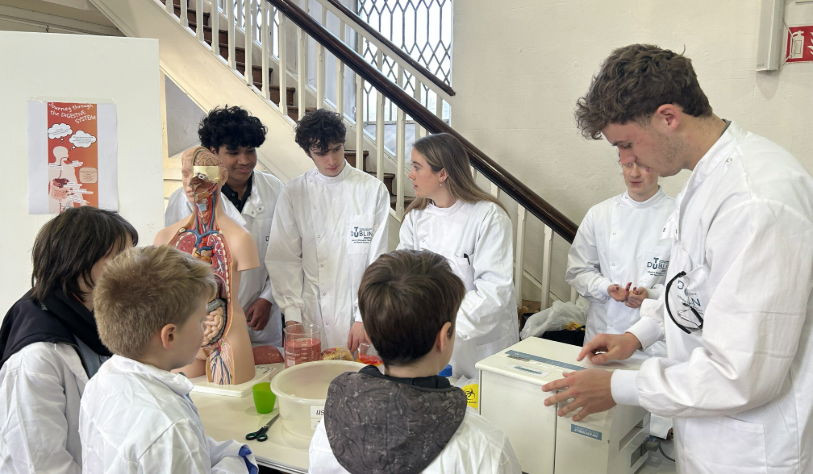
Under the guidance of Dr. Claire Wynne, Dr. Áine Balfe, Ms. Fiona Crotty and Dr. Carla Surlis, with technical support from Suzanne O'Brien, and in collaboration with Ian Roller from the Access Office and TU Dublin’s Sustainability Action Lab programme, students designed and delivered a dynamic science showcase for visiting pupils from Presentation Primary School George’s Hill and Gaelscoil Inse Chór.
Throughout the semester, TU Dublin students worked collaboratively to develop 18 interactive demonstration stations, carefully designing safe, age-appropriate and fun experiments and activities.
On the day, the school students had a brilliant time rotating through stations exploring scientific themes such as density and states of matter, digestion and body systems, DNA and genetics and microbiology and infection control. There was great excitement and energy as the students engaged with projects from experimenting with non-Newtonian fluids like Oobleck, to investigating bacterial spread during handwashing, to building models of blood and body systems. Through games and interactive presentations, complex concepts from medical science and biomedical and molecular diagnostics were transformed into engaging, memorable learning experiences for the school children.
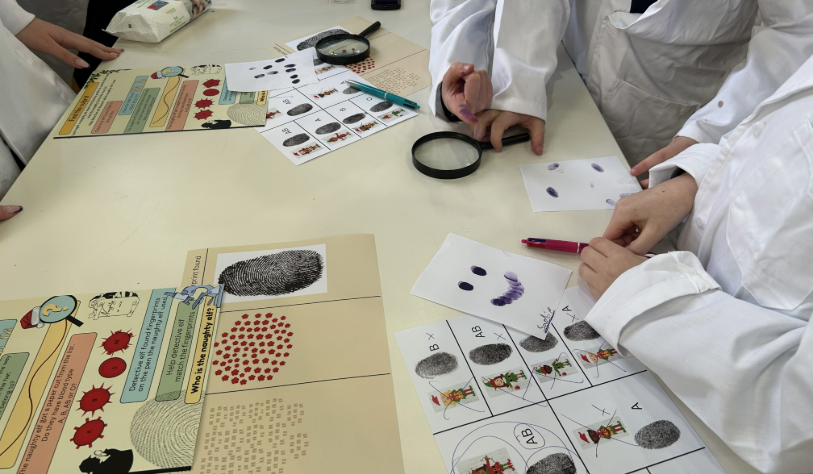
As part of their professional training, the TU Dublin students completed formal risk assessments, designed teaching models, games and child-friendly infographics, developed reusable learning materials for schools and wrote reflective pieces to deepen their professional development.
One student described the experience as:
“A thrilling and insightful experience that offered learning opportunities for everyone involved, reinforcing the belief that early, accessible science experiences nurture curiosity, build reasoning skills, and open pathways into STEM.”
In recognition of innovative thinking, prizes were awarded to TU Dublin students whose projects demonstrated the most sustainable ideas, highlighting the programme’s commitment to both science education and sustainability.
Dr. Claire Wynne, Lecturer at the School of Biological, Health and Sports Sciences, said:
“The Seeds of Science Sustainability Action Lab project continues to be an invaluable component of these undergraduate programmes, fostering teamwork, organisation, and effective communication among students. This community-based initiative strongly reflects both the School’s and TU Dublin’s commitment to local community engagement, widening participation, and collaborative learning, while inspiring the next generation of young scientists.”
“Seeds of Science has run every December for the past four years and will continue as a cornerstone of the Medical Science programme, ensuring sustained and meaningful community impact.”
SDG Alignment
This initiative strongly aligns with the United Nations Sustainable Development Goals:
- SDG 3: Good Health and Well-being - Ensure healthy lives and promote well-being for all at all ages
- SDG 10: Reduced Inequalities - Reduce inequality within and among countries
Each Sustainability Action Lab project is underpinned by:
- SDG 4: Quality Education - Ensure inclusive and equitable quality education and promote lifelong learning opportunities for all
- SDG 17: Partnership for the Goals - Strengthen the means of implementation and revitalize the Global Partnership for Sustainable Development
GreenComp Alignment
The project also aligns with specific competences from the "GreenComp sustainability competency framework including
- Embodying Sustainability Values,
- Embracing Complexity in Sustainability,
- Acting for Sustainability
|
Competency Area |
Competency |
Descriptor |
|
Embodying sustainability values |
Supporting fairness |
To support equity and justice for current and future generations and learn from previous generations for sustainability. |
|
Embracing complexity in sustainability
|
Systems thinking |
To approach a sustainability problem from all sides; to consider time, space and context in order to understand how elements interact within and between systems. |
|
Acting for Sustainability |
Individual initiative |
To formulate current or potential challenges as a sustainability problem in terms of difficulty, people involved, time and geographical scope, in order to identify suitable approaches to anticipating and preventing problems, and to mitigating and adapting to already existing problems. |
This collaboration was supported by the Societal Engagement and Sustainability Education teams and through the Higher Education Authority’s Strategic Alignment of Teaching and Learning Enhancement (SATLE) fund.