
Soil health promotion with the Liberties Community Project
As environmental concerns such as soil degradation and urban pollution continue to rise, there is an increasing need to connect scientific research with local communities to create awareness and action. Many communities have limited access to scientific knowledge and tools that can help them understand and care for their local environment. Bridging this gap is essential to promoting environmental stewardship, building awareness, and empowering communities to take informed action on sustainability issues.
Community engagement through applied science
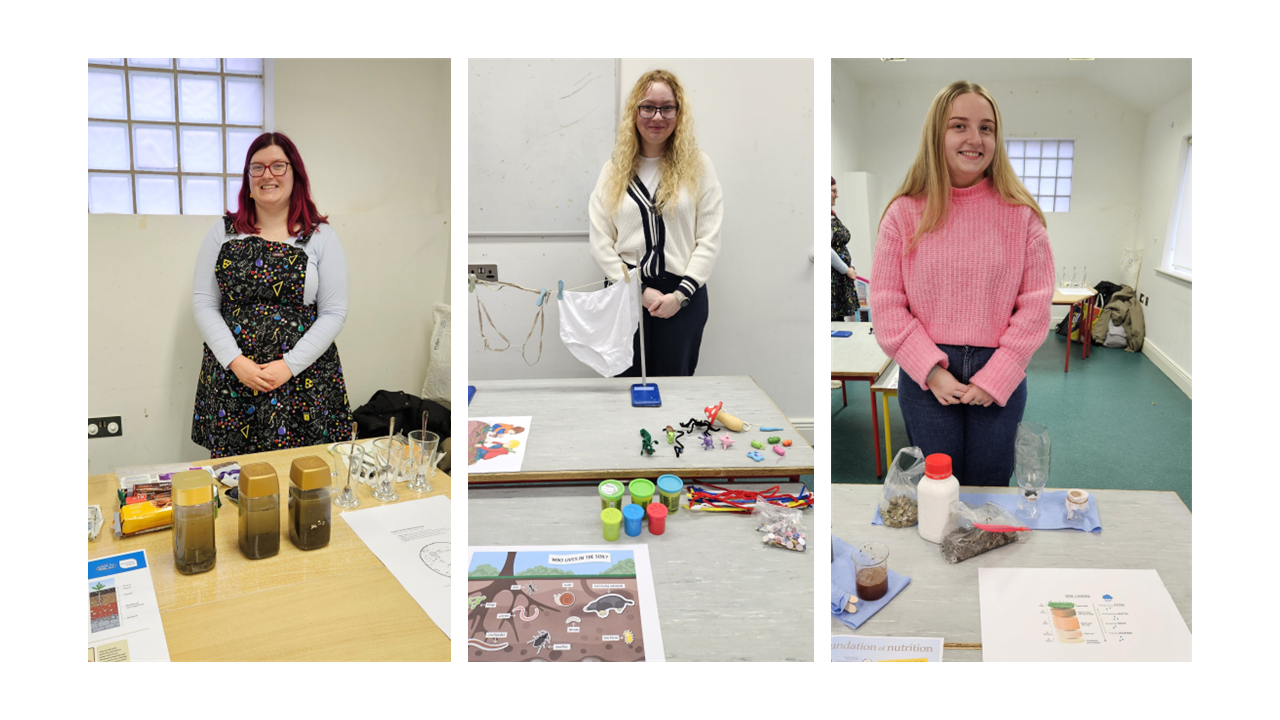
In the 2025/26 academic year, four final-year students from TU Dublin’s chemistry programmes (TU851 Analytical Chemistry, TU852 Chemical Sciences and Medicinal Chemistry, and TU762 Medicinal Chemistry and Pharmaceutical Sciences) undertook research projects focused on soil health in collaboration with the Liberties Community Project.
The collaboration was led by Dr. Claire McDonnell and Dr Shane O’Reilly, Lecturer at the School of Chemical and BioPharmaceutical Sciences, Faculty of Sciences and Health at TU Dublin, and supported by TU Dublin’s Sustainability Action Lab programme.
Applying scientific knowledge in real-world settings
Students collected and analysed soil samples from locations identified by the Liberties Community Project, engaging directly with local residents during the sampling process and afterwards when sharing the results. These interactions created opportunities to discuss scientific methods and environmental issues in an accessible way. In addition, students designed and implemented hands-on activities for children participating in the Liberties afterschool programme, ensuring the content was relevant and engaging and explaining their research in a fun, interactive way.
The participatory nature of this collaboration created an interactive and inclusive learning environment where TU Dublin students shared their STEM and SDG knowledge in a real-life setting. It directly addressed SDG 3: Good Health and Wellbeing, SDG 11: Sustainable Cities and Communities, SDG 13: Climate Action and SDG 15: Life on Land by connecting with and empowering local residents and children with environmental knowledge.
Through this collaboration, students gained valuable experience applying scientific knowledge in a community context and improved their communication, critical thinking, and planning skills.
For the Liberties Community Project and local residents, the initiative provided meaningful exposure to scientific processes, helping to build awareness and practical understanding of soil health, while encouraging environmental responsibility and local advocacy.
Austin Campbell, CEO of the Liberties Community Project said:
“Our afterschool attendees and staff enjoyed the soil education activities, and we hope they can continue next year.”
Claire McDonnell, Lecturer, Chemical and Biopharmaceutical Sciences said:
“TU Dublin staff and students gained valuable knowledge and insights about soil health education and sustainable gardening practices from collaborating with the Liberties Community Project. Because of the in person learning, our students were very engaged by the work, and they developed their professional skills significantly.”
Áine Winters, TU Dublin student said:
“This project was important to begin bridging the gap between academia and community. Introducing young children to the topic is a great way to boost awareness, as they'll grow up with a better understanding of how to keep our planet happy and healthy.”
SDG Alignment
This initiative strongly aligns with the United Nations Sustainable Development Goals:
- SDG 3: Good Health and Wellbeing - Ensure healthy lives and promote well-being for all at all ages
- SDG 11: Sustainable Cities and Communities - Make cities and human settlements inclusive, safe, resilient and sustainable
- SDG 13: Climate Action- Take urgent action to combat climate change and its impacts
- SDG 15: Life on Land - Protect, restore and promote sustainable use of terrestrial ecosystems, sustainably manage forests, combat desertification, and halt and reverse land degradation and halt biodiversity loss.
Each Sustainability Action Lab project is underpinned by:
- SDG 17: Partnership for the Goals - Strengthen the means of implementation and revitalize the Global Partnership for Sustainable Development
- SDG 4: Quality Education - Ensure inclusive and equitable quality education and promote lifelong learning opportunities for all
GreenComp Alignment
The project also aligns with specific competences from the GreenComp sustainability competency framework including:
- Embodying Sustainability Values,
- Embracing Complexity in Sustainability and
- Acting for Sustainability.
|
Competency Area |
Competency |
Descriptor |
|
Embodying sustainability values |
Supporting fairness |
To support equity and justice for current and future generations and learn from previous generations for sustainability. |
|
Embracing complexity in sustainability |
Systems thinking |
To approach a sustainability problem from all sides; to consider time, space and context in order to understand how elements interact within and between systems. |
|
Acting for sustainability |
Collective action |
To act for change in collaboration with others |
|
|
|
|
This collaboration was supported by the Societal Engagement and Sustainability Education teams and through the Higher Education Authority’s Strategic Alignment of Teaching and Learning Enhancement (SATLE) fund.