
Sustainable Food: Nourishing Communities Through Meaningful Partnerships
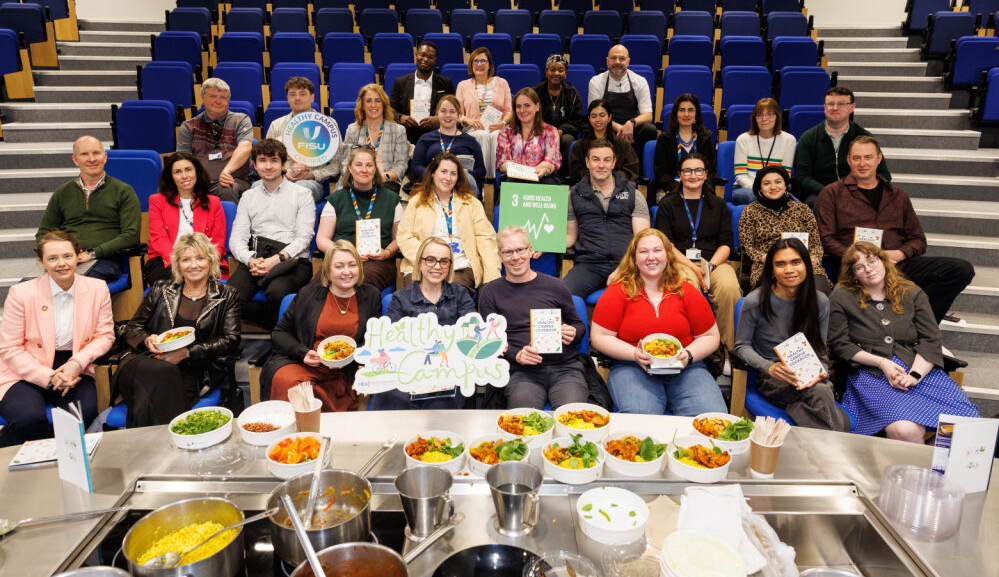
In the face of growing health disparities, food insecurity, and misinformation around nutrition, the Nourishing Communities project presents a meaningful response to one of today’s most pressing needs: equitable access to nutrition education and sustainable food practices.
Promoting health through community partnership
In the 2025/26 academic year, 25 third-year students from the Human Nutrition & Dietetics programme (TU870/3) at TU Dublin collaborated with a range of local community partners - TU Dublin Healthy Campus, CBS James Street, Stanhope Street Primary School, St Paul's CBS and EVE Goirtín - to promote health and nutrition.
The initiative was led by Claire Connolly and Daniel McCartney from the School of Biological, Health & Sports Science and supported by TU Dublin’s Sustainability Action Lab programme.
By working in an embedded and applied way with an array of partners, students were able to apply for knowledge of Human Nutrition and Dietetics and the Sustainable Development Goals to a mix of real world contexts. Given the mission and role of these organisations, their learning experiences also brought direct benefit to the community, delivering on the aims of SDG 2: Zero Hunger - creating a world free of hunger by 2030, SDG 3: Good Health and Wellbeing, SDG 10: Reduce Inequalities, SDG 11: Sustainable Cities and Communities and SDG 12: Responsible Consumption and Production.
EVE Goirtín Hub
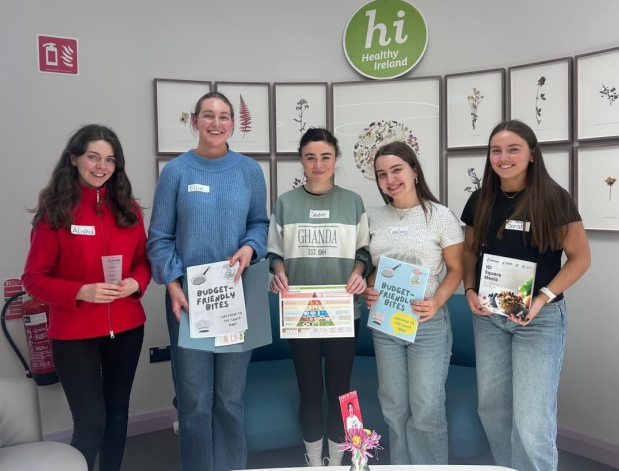
One group of students partnered with EVE Goirtín Hub to educate and inspire service users about healthy eating. Based in Grangegorman, and part of the Health Service Executive’s (HSE) EVE programme, The Goirtín Hub supports people with mental health challenges to live more independent, fulfilling lives by helping them achieve personal goals through centre and community-based activities. The service also encourages community involvement and the development of natural support networks.
The dietetics students met with service users and staff to plan and deliver a 90-minute workshop covering four key topics: exercise, budgeting, the food pyramid, and health related diets.
The workshop engaged approximately 15 service users, who gained practical skills and increased confidence around healthy choices, while the students developed key professional skills, including communication, adaptability and delivering person-centred care in a mental health setting.
A Goirtín Hub Service User said:
“There was a good bit of banter, which makes learning more enjoyable.”
One student involved said:
“At the end of the workshop, we provided each participant with an information pack containing workshop recipes, a Safefood portion cup, a Food Pyramid guide, and a copy of the Safefood cookbook 101 Square Meals. We hope these resources support continued exploration of nourishing, tasty, and affordable food, and that our workshop has a lasting impact on the service users."
Another student said:
“Participation in this project reminded us of our shared responsibility to approach food preparation more sustainably for instance, by incorporating leftover vegetables already in the fridge into your next snack or meal. As the service users in ‘Goirtín Hub’ have done, you could even grow your own ingredients! When it comes to sustainability, we can all learn from each other.”
TU Dublin Healthy Campus Cookbook
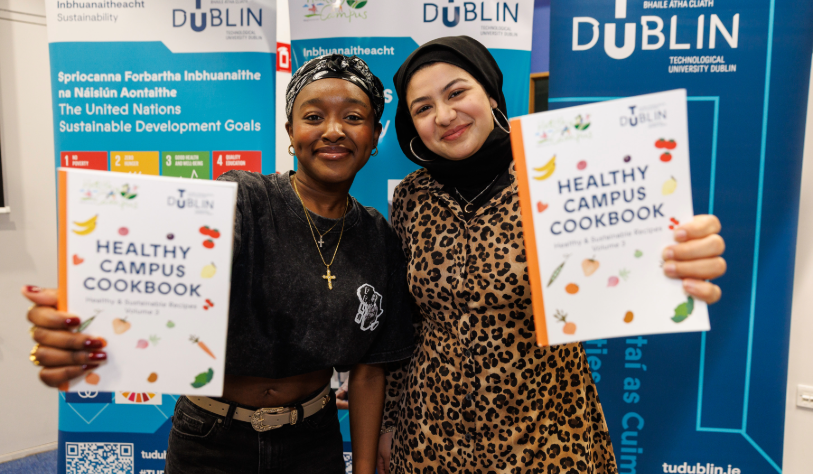
The project also involved collaborating with TU Dublin Healthy campus to coordinate the annual TU Dublin Healthy Campus Cookbook, featuring healthy, sustainable recipes from students, staff, and guest contributors.
Nutrition talk with St Paul's CBS
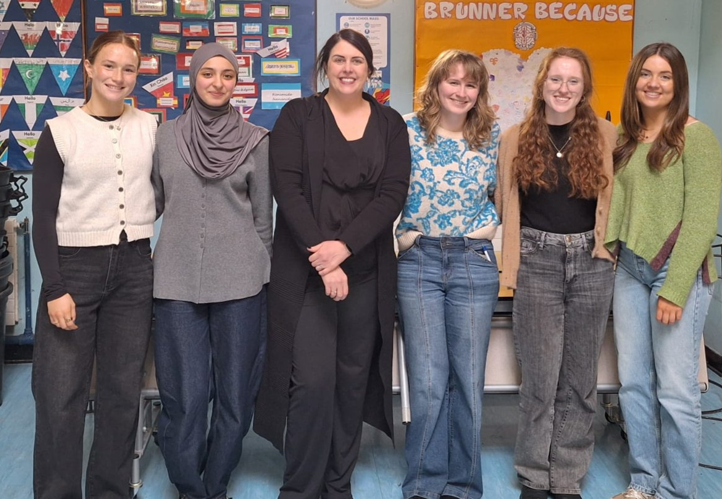
A group of students also collaborated with St Paul’s CBS where the team delivered an engaging nutrition workshop covering healthy eating, sports nutrition, and energy drinks. Interactive activities, like calculating sugar in energy drinks and building food pyramids, made the session practical and fun. Students also learned about meal planning and hydration for sports performance. For many, it was their first introduction to nutrition education.
Empowering young minds through food and fuel
Led by students and overseen by Dr Eileen O’Brien, the collaboration with CBS James Street aimed to bridge gaps in nutrition and sustainability education among young people. Aligned with the school’s Wellbeing Week, the team delivered engaging resources to first-year students, covering topics like sports nutrition, hydration, skin health, and food myths. The session concluded with a fun Nutrition Quiz, supported by TU Dublin’s Access and Outreach programme. The project aimed not just to inform, but to inspire students to take practical, sustainable steps toward better health.
Stanhope Street Primary School
A group of students also worked with a local primary school, Stanhope Street, to create interactive activities to teach children about healthy eating. By making learning fun and practical, the students aimed to improve food choices early in life and support better health outcomes, especially in disadvantaged communities.
One student involved said:
“By collaborating with primary school students and their teacher, it allowed us to develop our communication skills. We also established a sense of independence while carrying out this project. We were able to improve our interpersonal skills while working as a group, as we identified different learning styles and worked together based on these. Our project included education surrounding seasonal fruits and vegetables, and when the most sustainable time is to buy and eat them.”
Speaking about the overall project, Dr Claire Connolly said:
"Through this brilliant initiative, our students collaborated with community partners to design and deliver tailored nutrition workshops, applying their knowledge in real-world settings while making a meaningful impact on community health".
SDG Alignment
This collaboration supported several Sustainable Development Goals (SDGs), including:
- SDG 2: Zero Hunger - creating a world free of hunger by 2030.
- SDG 3: Good Health and Wellbeing - Ensure healthy lives and promote well-being for all at all ages
- SDG 10: Reduce Inequalities – Reduce inequalities within and among all countries.
- SDG 11: Sustainable Cities and Communities - Make cities and human settlements inclusive, safe, resilient and sustainable.
- SDG 12: Responsible Consumption and Production - Ensure sustainable consumption and production patterns.
Each Sustainability Action Lab project is underpinned by:
- SDG 17: Partnership for the Goals - Strengthen the means of implementation and revitalize the Global Partnership for Sustainable Development
- SDG 4: Quality Education - Ensure inclusive and equitable quality education and promote lifelong learning opportunities for all
GreenComp Alignment
The project also aligns with specific competences from the "GreenComp sustainability competency framework including
- Embodying Sustainability Values,
- Embracing Complexity in Sustainability,
- Acting for Sustainability,
- Envisioning Sustainable Futures.
|
Competency Area |
Competency |
Description |
|
Embodying sustainability values |
Supporting fairness |
To support equity and justice for current and future generations and learn from previous generations for sustainability. |
|
Embracing complexity in sustainability |
Critical thinking |
To assess information and arguments, identify assumptions, challenge the status quo, and reflect on how personal, social and cultural backgrounds influence thinking and conclusions. |
|
Envisioning sustainable futures |
Exploratory thinking |
To adopt a relational way of thinking by exploring and linking different disciplines, using creativity and experimentation with novel ideas or methods |
|
Acting for sustainability |
Collective action |
To act for change in collaboration with others |
This collaboration was supported by the Societal Engagement and Sustainability Education teams and through the Higher Education Authority’s Strategic Alignment of Teaching and Learning Enhancement (SATLE) fund.