
The TU Dublin Bioblitz and Photo Competition
Overview
Despite extensive legislation enacted by the EU and the Irish Government, The EU Directive on the conservation of Habitats, Flora and Fauna (92/43/EEC) and the Wildlife Act 1972, 2000, 2010 and 2012 that aimed to protect and to reverse declines of both habitats and species in Ireland, there has been a continuing decline in biodiversity in Ireland.
Recent reports on biodiversity in Ireland have highlighted continuing pressure on habitats with 90% of habitats and 32% of the species listed in the Habitat Directive in unfavourable status with over half habitats showing continued decline [1].
At the same time, each new generation of children brings a deeper sense of disconnection with nature and therefore a corresponding decline in appreciation and therefore care for the natural world [2].
One of the key Biodiversity responsibilities placed on listed public bodies it to integrate biodiversity into their plans, policies and programmes taking guidance from the National Biodiversity Plan. Education bodies at all levels have a key responsibility to integrate meaningful education opportunities for their students. Inspiring the next generation of society to not just be aware of natures and its importance to society but to care for it and protect it for future generations [3].
TU Dublin Bioblitz and Photo Competition
The TU Dublin Bioblitz and Photo Competition project aimed at developing a strategy and mechanisms for expanding awareness of the importance of nature to society and understand the pressures acting on Ireland’s biodiversity including plants, insects, birds, pollinators and invertebrates.
It focused on bridging the gap between education, science and society through the co-creation of a series of gamified biodiversity assessment exercises coupled with the Nature Connections photo exhibition, a cross-campus conversation about our place in nature and natures positive effects on people [4].
The development of this proposal was based on the foundation provided by a third-year undergraduate project completed by Isabella Barr Lynch as part of her studies on the BEng (Hons) in Sustainable Energy Engineering at TU Dublin, Tallaght Campus. This project focused on the development of a process for identifying, characterising and evaluating biodiversity on the TU Dublin Tallaght campus and was completed in May 2026.
The TU Dublin Bioblitz and Photo Competition is led by the School of Mechanical Engineering lecturers Gerry Ryder and Niamh Plunkett with support from Senior Library Assistant Linda Bennet at the Tallaght campus. It combines citizen science, gamification, and creative engagement to raise awareness and generate biodiversity data. The project’s objectives were to:
- Increase awareness and appreciation of biodiversity on campus
- Engage students, staff, and local communities in citizen science
- Develop and trial a structured approach to biodiversity surveying on campus
- Promote creative engagement through photography and storytelling
A draft version of the Bioblitz project was delivered to staff and students on the TU Dublin campus during Green Week 2026 in order to gain feedback from participants that would lead to the full development of the bioblitz process. The full version of the bioblitz was delivered to the 6th class students from St Mary's National School, Tallaght during National Biodiversity Week using a co-created, iterative approach, combining scientific tools, gamified activities, and community engagement.
Iterative refinement based on feedback
During the first bioblitz event during Green Week 2026 participants solved word and number puzzles to find the combination for a puzzle box. The puzzle box contained maps, identification sheets and tools to help participants explore biodiversity on the TU Dublin Tallaght campus. The event was limited to one hour to fit into student and staff timetables. The aim of this event was to get feedback on the puzzle and biodiversity elements of the event and to get suggestions for improvements to the process.
This feedback identified issues with the puzzles, some felt that more information was needed to help participants get started on the puzzles. The team based competitive nature of the puzzles did not work, there was only one puzzle box and the first team to get the combination really enjoyed the game, but the other teams felt deflated and disappointed. The large puzzle box design was intended to act as an insect habitat as well as the puzzle box, but the larger size made it time consuming and expensive to make. Seasonal patterns also had an impact. Green Week is in March and due to a cold spring, plant growth and flowering of early wildflowers was delayed, meaning that there was a lack of identifiable plants, pollinators and insects.
A Gamified approach to biodiversity evaluation
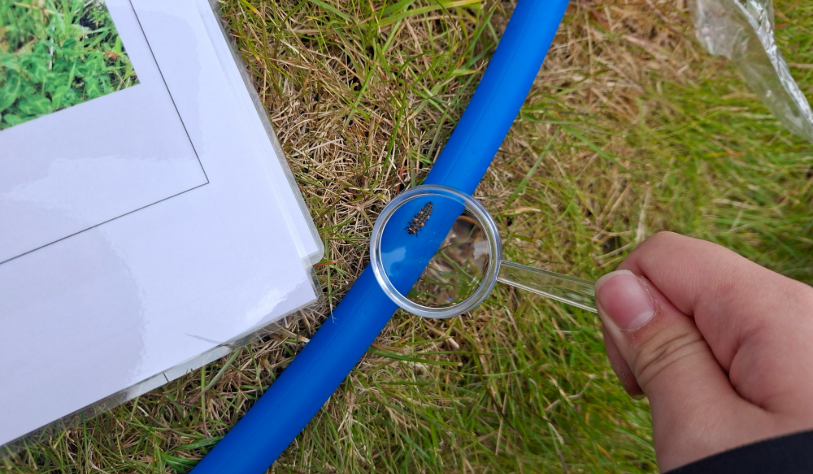
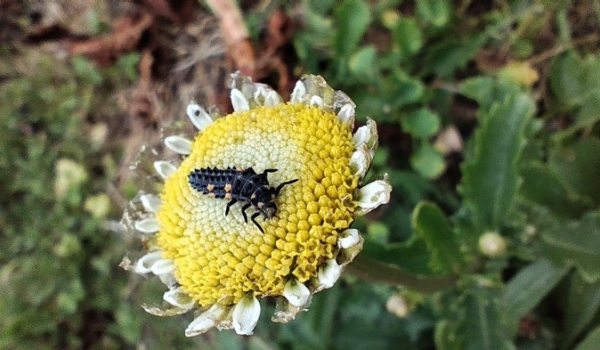
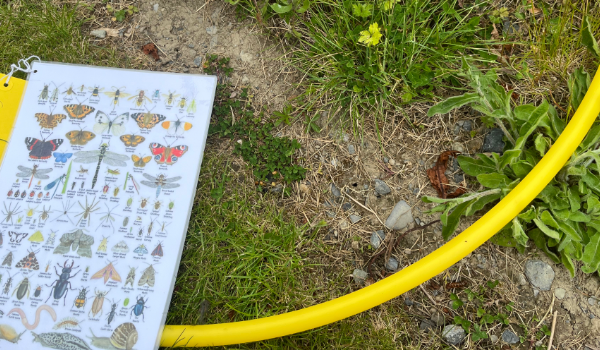
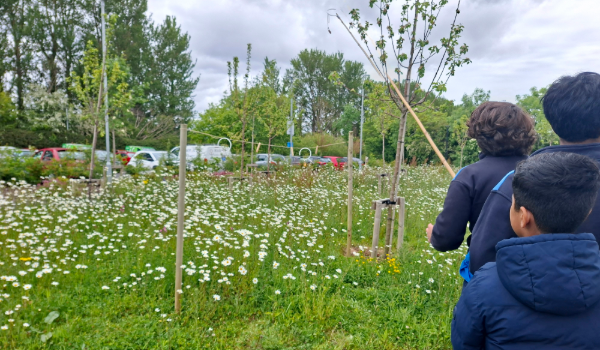
The final Bioblitz event was delivered to 6th Class students from St Mary’s National School in Tallaght during National Biodiversity Week in early May 2026. There had been a burst of plant growth and a large number of pollinators appeared. The highlights from the biodiversity search included ladybirds, ladybird larvae, shield bugs, butterflies, moths, a wide range of bees and hoverflies. A range of identification sheets were developed for easier identification of plants, trees, birds, bees, butterfly’s and insects.
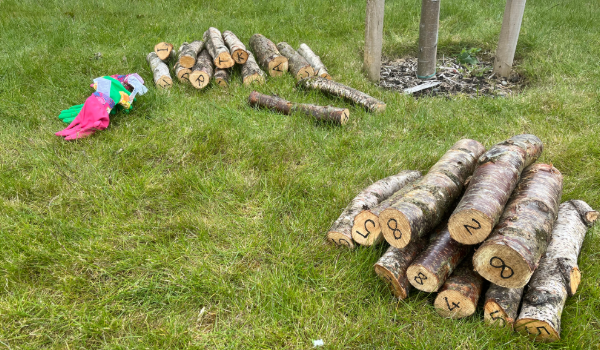
Students were divided into two groups, one for trees and hedgerows and one for grassland. Groups worked together to solve physical puzzles. The tree group had to solve a log pile code puzzle, trying to identify a native animal from a series of clues. They built a pyramid of logs that had letters on one side and numbers on the other, which they used to solve the code and open the puzzle box.
The grassland group had to solve a fishing line puzzle where students had to construct a hook to retrieve a key to unlock the puzzle box.
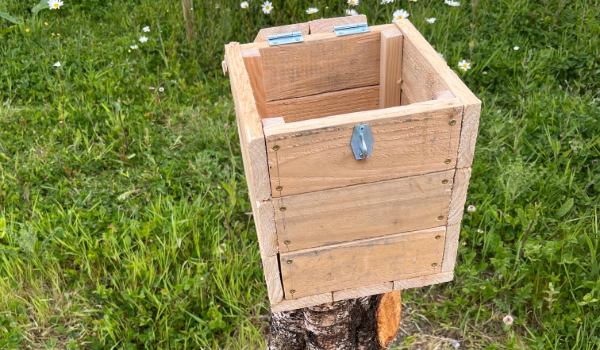
The puzzle boxes were much smaller and contained the identification sheets, the instructions for the biodiversity search and a range of tools for students including magnifying glasses and sample pots to help them identify plants and animals.
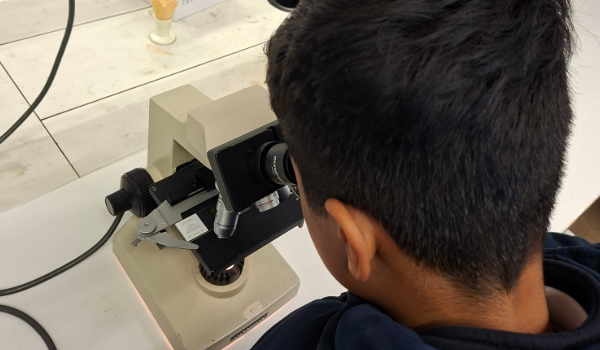
Students gathered samples of common plants and flowers and took them to one of the science laboratories where microscopes had been set up for analysis. Students were able to look at samples including bees, butterflies, flies, feathers, leaves and flowers under the microscope to give them a closer look at nature.
Creative engagement – photo competition:
Part of expanding TU Dublin’s cross campus conversation around biodiversity was The Nature Connections Photo Exhibition. Staff and Students were invited to submit a photo and story that related to their connection to nature through the photo. A range of images were submitted by staff and students and will be on display in the TU Dublin Library on the Tallaght campus until October when the next exhibition will be launched. The stories submitted were deeply personal, many from childhood and showing not only a link to nature but also how families often played a big part of our relationship with nature.
Evaluation and Reflection
The feedback from the Biobliz was positive, the puzzles engaged students and they carried that engagement into the biodiversity search. There was a genuine sense of wonder and awe during the microscope investigation and students left talking excitedly about everything they had seen during the event.
The key outcomes of this project include
- The development of a replicable methodology for a gamified approach to biodiversity assessment.
- Generation of baseline data for the yearly evaluation of biodiversity on the TU Dublin Tallaght campus
- The start of an organisation wide conversation about what nature means to each of us.
Speaking of the Bioblitz, St Mary's National School teacher said:
The Bioblitz session was a fantastic experience for our class. The activities were engaging, varied and very well organised, and the children were enthusiastic from start to finish. It was a wonderful way to bring biodiversity to life for them and to encourage curiosity about the natural world around them.
Participating pupils have also shared their enthusiasm and appreciation for taking part in the activity:
The activities were really fun and interesting, and it made learning about nature much more exciting
I liked that we got to be hands-on and take part instead of just listening.
I loved that we got to move around to different stations and learn about biodiversity in so many different ways.
My favourite part was getting to look closely at plants and animals and find out things I didn’t know before.
Living Lab Approach and Alignment with SATLE Objectives
This project applies a Living Lab approach by using the campus as a real-world environment where participants co-create, test, and refine biodiversity engagement methods.
It aligns with SATLE objectives by embedding sustainability into experiential learning, integrating research and education, and fostering collaboration between the university and wider community.
In Semester 1 of the 2026-2027 academic year this Green Campus Solution will be considered by the Green Campus Committee for further iteration, replication or scaling up, and for publication in the TU Dublin Green Campus Living Lab community on Zenodo.
SDG and Green-Campus Alignment
This project addresses SDG 11: Sustainable Cities & Communities and contributes to SDG 3: Good Health & Wellbeing. SDG 13: Climate Action, SDG 14: Life below Water. SDG 15: Life on Land
References
[1] National Parks and Wildlife Service, The Status of EU Protected Habitats and Species in Ireland, 2025. Available at: The Status of EU Protected Habitats and Species in Ireland 2025
[2] Beery T. et. al. Disconnection from nature: Expanding our understanding of Human – nature relations, People and Nature, 5: 470–488, 2023.
[3] Department of Housing, Local Government and Heritage, National Biodiversity Action Plan 2024-2030: Implementation Plan, 2025. Available at: https://www.gov.ie/en/department-of-housing-local-government-and-heritage/,