
TU Dublin Biomedical Design Student Wins Sustainability Pitch Competition with Innovative Prosthetics Project
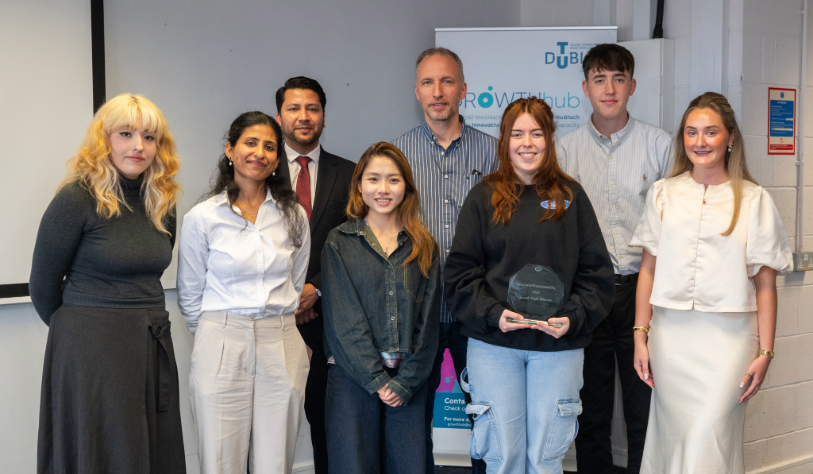
A TU Dublin student has taken the top prize at a national sustainability-focused entrepreneurship competition, impressing judges with a project aimed at improving the lives of children requiring prosthetic limbs.
Amy Smith, a Biomedical Design (TU841) student representing TU Dublin, was announced as the winner at the grand final event held on 18 June at TU Dublin's Aungier Street campus. Her project, which focuses on designing prosthetics that can grow alongside children, secured her the €2,000 top prize in a competitive pitch event featuring finalists from across Ireland. Fellow TU Dublin student Anneline Koopmans from Product Design (TU 811) was also a finalist. The other finalists were from University of Galway and South East Technological University (SETU).
Competitors were tasked with presenting innovative solutions addressing sustainability challenges, with an emphasis on real-world impact and scalability.
Amy Smith’s concept addresses the need for adaptable prosthetics that reduce waste and financial burden on families and her idea aligned closely with the competition’s focus on the United Nations Sustainable Development Goals (UNSDGs).
The judging panel included Mark Peters of Wake Up Capital and Nakul Wali from the Enterprise Ireland High Potential Start-Up (HPSU) team.
Innovate4Sustainability
The competition forms part of the Innovate4Sustainability initiative, a collaborative programme funded by the Higher Education Authority (HEA). The initiative brings together TU Dublin, SETU, and the University of Galway to foster entrepreneurship and innovation skills among students, particularly through sustainability-driven challenges.
Central to the programme are activities such as UNSDG Design Sprints and the Summer Sustainability Launchpad Accelerator. These initiatives offer students hands-on opportunities to develop creative, practical solutions to pressing global sustainability issues. Participants are encouraged to apply design thinking, collaboration, and entrepreneurial approaches in tackling real-world problems.
Organisers highlighted that the design sprints are intended to be both engaging and inspiring, helping students build confidence in innovation while contributing to meaningful social and environmental change. The broader aim of Innovate4Sustainability is to equip the next generation of graduates with the skills needed to address complex global challenges.