
Multi-Factor Authentication (MFA)
What is MFA?
Multi-Factor Authentication (MFA), also known as two-step verification, is an additional layer of security used by TU Dublin to help protect your account.
Why is MFA more secure?
A password alone may not be enough to keep your account secure. MFA requires two forms of verification:
- Something you know – your password.
- Something you have – for example, the Microsoft Authenticator app on your phone.
This means that even if someone obtains your password, they should not be able to access your account without completing the second verification step.
Why is MFA important?
MFA significantly improves the security of your TU Dublin account and helps protect your email, files and other University services from unauthorized access.
TU Dublin recommends using the Microsoft Authenticator app as your primary MFA method.
SMS and Voice Authentication are being retired
Microsoft is moving away from SMS text message and voice call authentication in favor of more secure authentication methods.
Students should ensure they have registered:
- Microsoft Authenticator app – as their primary MFA method.
- Personal email address – as a secondary account recovery method.
Keeping these methods up to date will help ensure you can securely access your TU Dublin account and recover access if required.
What Forms of Verification can I use to Access my Account?
Authenticator App
The Microsoft Authenticator app helps you sign in to your accounts when you're using two-step verification. Two-step verification helps you to use your accounts more securely because passwords can be forgotten, stolen, or compromised.
Microsoft Authenticator will prompt you to enter a number displayed on the sign-in screen when approving an MFA request in Microsoft Authenticator. This further protects you from potential accidental approvals and phishing attempts.
When you use your TU Dublin email address and password to sign in to an application connected to Office 365 you will be prompted to enter a number in the authenticator app.
Code sent by email to your Personal Email Address
When you use your TU Dublin email address and password to sign in to an application connected to Office 365 you will be prompted to enter a code on screen which will be sent to your registered personal email address.
How do I setup MFA using the App?
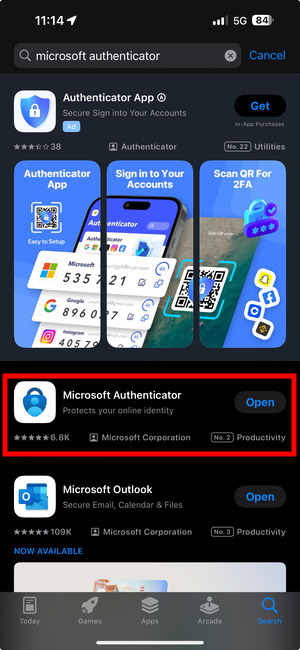
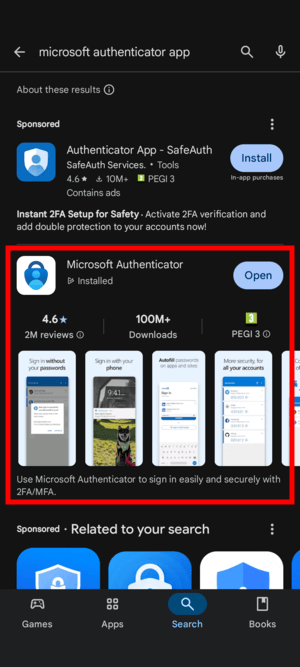
The below screenshots show the Microsoft Authenticator App and how it appears in each respected store - the Apple App store and the Google Play store. Make sure not to download the sponsored app suggested first by each store:
Multi-Factor Authentication (MFA) – Frequently Asked Questions
What is happening to SMS and voice authentication?
Microsoft is retiring Microsoft-provided SMS text message and voice call authentication.
Students should move away from SMS and voice authentication and ensure they have an alternative authentication method configured.
TU Dublin recommends using the Microsoft Authenticator app.
When are SMS and voice authentication being retired?
Microsoft has announced that Microsoft-provided SMS and voice authentication will be fully retired from 1 February 2027.
Students are encouraged to move to the Microsoft Authenticator app well in advance of this date to avoid any disruption accessing their account.
Do I need a smartphone?
A smartphone is recommended for using the Microsoft Authenticator app. Other authentication options may be available depending on the authentication methods enabled by TU Dublin.
If you cannot use the Microsoft Authenticator app, contact the IT Service Desk for assistance.
Do I need mobile coverage to use Microsoft Authenticator?
Not necessarily. Microsoft Authenticator can generate verification codes without a mobile phone signal or internet connection.
However, your phone will need an internet connection, through Wi-Fi or mobile data, to receive and approve sign-in notifications.
What happens when I receive an MFA notification?
When signing in, Microsoft may send a notification to the Microsoft Authenticator app.
Open the app and carefully check the sign-in request. You may be asked to enter or match a number displayed on the device you are signing into before approving the request.
What if I receive an MFA request that I didn't initiate?
Do not approve it.
An unexpected MFA request could mean that someone is attempting to access your account. Deny the request and, if you are concerned that your account may have been compromised, contact the IT Service Desk.
Never approve an MFA request simply because it appears on your phone.
What happens if I get a new phone?
Before replacing or resetting your old phone, ensure that you have access to another authentication or recovery method where possible.
You may need to register Microsoft Authenticator again on your new device.
If you no longer have access to your old device and cannot complete MFA, contact the IT Service Desk for assistance.
What happens if I lose my phone?
If you lose the device containing Microsoft Authenticator and cannot access your account using another registered method, contact the IT Service Desk.
Should I approve an MFA request from someone claiming to be IT Support?
No. Never approve an MFA request that you did not initiate yourself, even if someone contacts you claiming to be from TU Dublin, Microsoft or IT Support.
Where can I get help?
If you experience problems registering or using MFA, or you have lost access to your authentication method, contact the TU Dublin IT Service Desk for assistance.