
Included By Design: Designing Inclusive Environments for Care
In Dublin City Centre there are over 11,000 people without a home. In addition to extreme socio-economic vulnerabilities and personal distress, people experiencing homelessness face multiple barriers to accessing healthcare services, which often results in serious negative health outcomes.
Inclusion Health is growing approach to practice, research and policy that is focused on addressing the real needs of people on the margins of society and experiencing social exclusion, including homelessness. For vulnerable populations - such as those experiencing homelessness, mental health issues, or trauma - hospitals and institutional healthcare environments can be overstimulating and intimidating.
Included By Design
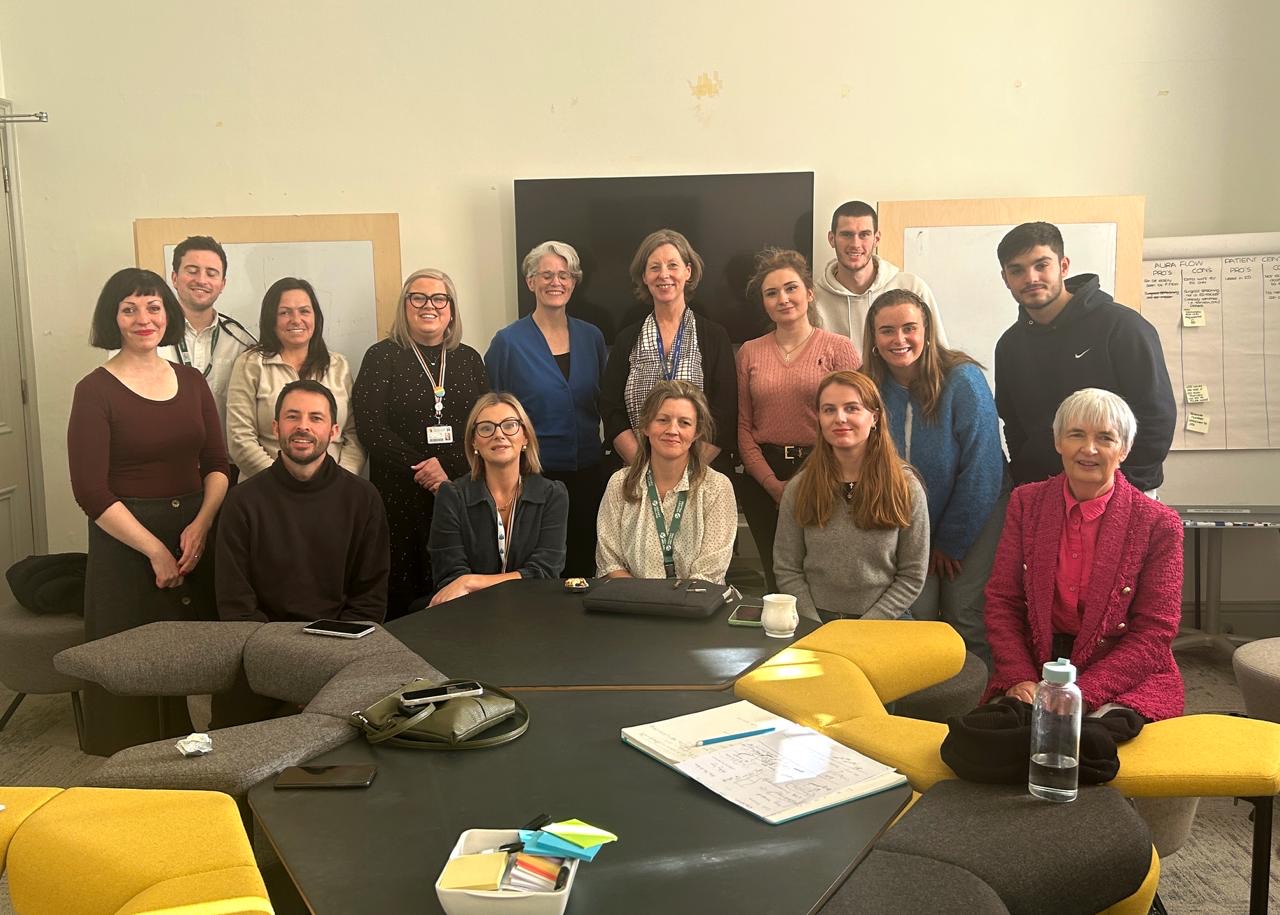
In the 2025/26 academic year, four students from TU832 Architecture degree and one from TU974 Fine Art engaged in a collaboration with the Mater Inclusion Health and Transformation teams to understand and design spaces to deliver inclusive environments for care.
The collaboration was led by Emma Geoghegan and Annamae Muldowney from the School of Architecture, Building and Environment at TU Dublin, and supported by TU Dublin’s Sustainability Action Lab programme.
This collaboration enabled students to apply the knowledge of their disciplines and of the SDGs in a real-life setting. It directly addressed SDG 3: Good Health and Wellbeing, and SDG 10: Reduced Inequalities, addressing health inequalities and promoting health and well-being for all at all ages.
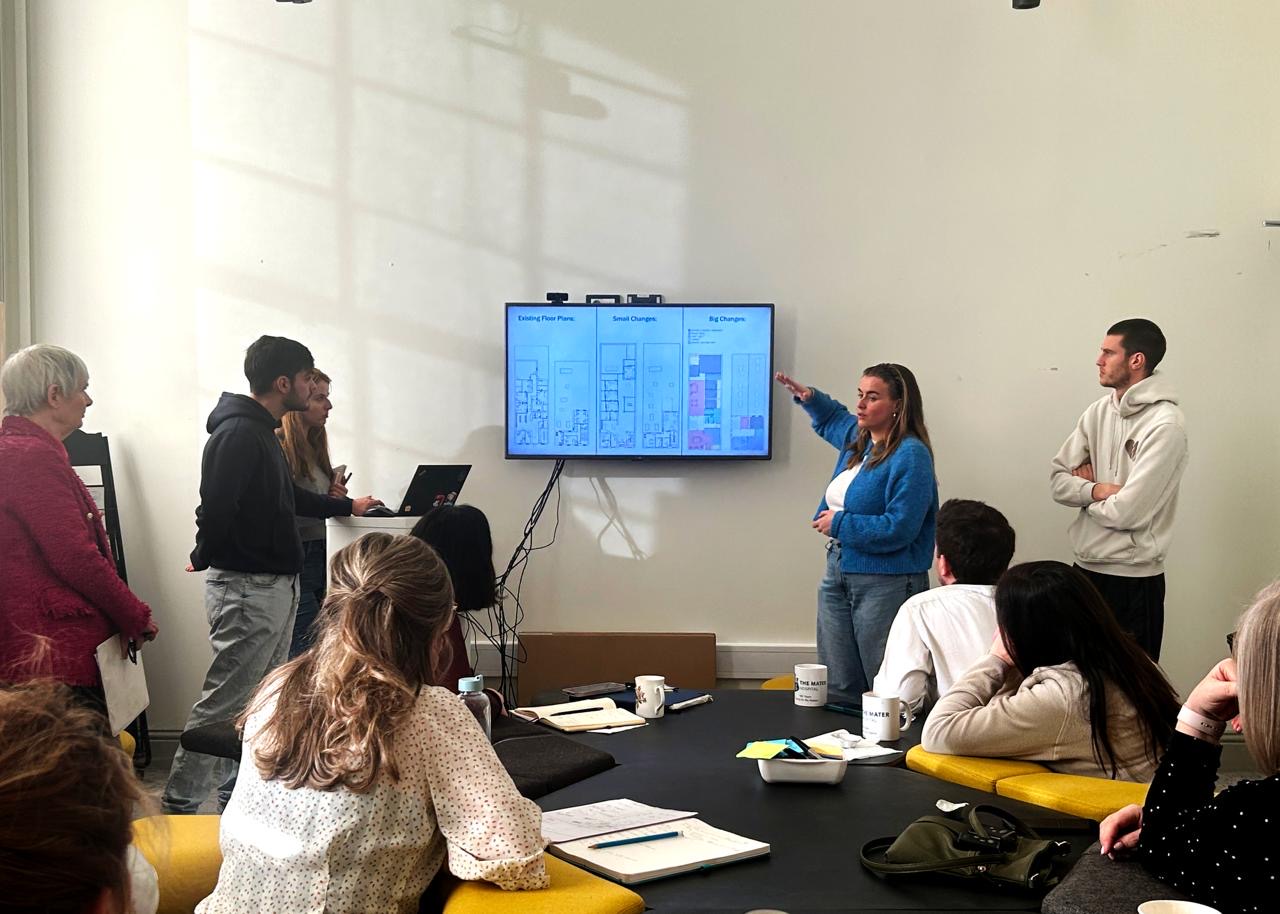 Students worked with partners in the Mater Hospital Inclusion Health and Transformation team to reimagine the Summerhill building occupied by the Inclusion Health service. The group set out to create an ambitious, "future-facing" healthcare model that integrates spatial, visual, and social factors to produce an inclusive environment. The intent was to use the Summerhill site as a template that could be replicated in other locations across Ireland.
During the project the students conducted site evaluations of the existing building, researched international best practices in design for inclusive healthcare and engaged directly with Mater clinical and transformation teams to understand the lived experiences of caregivers and patients. A key aspect of the project was the collaboration through a series of workshops with peer advocates who had lived experience of homelessness.
The student team also developed a range of "low-impact" and "high-impact" architectural design proposals. Key interventions included replacing hard seating with couches, removing glass reception barriers, and introducing natural materials like timber and foliage walls to enhance a sense of sensory wellbeing.
Savio Bejdo, Bachelor of Architecture student said:
"Working closely with the Mater team meant our ideas were grounded in real experiences and data, which made the process far more meaningful. I found the project incredibly impactful, particularly because it felt like our work had a real-world effect, something I haven’t experienced to the same extent in other college projects."
The outcome of the project was a detailed design report which presented the student’s design proposals for the Summerhill building and suggested how these ideas could be scaled for other similar healthcare facilities around Ireland.
Emma Geoghegan, Head of Discipline of Architecture at the School of Architecture, Building and Environment said:
“The project was important because it demonstrated through design research how the physical environment significantly affects an individual’s sense of identity and belonging, and willingness to engage with necessary medical care. By proposing design interventions that address barriers to access and follow trauma informed principles, the project shows how design can support the reduction of avoidable health crises associated with social exclusion.”
For the Mater Inclusion Health Team, the project added a valuable spatial dimension to ongoing research, demonstrating how design can reduce barriers to care, support dignity and trust, and improve engagement with healthcare services for marginalised communities.
Aileen Igoe, from the Mater Transformation Team said:
“This project really broadened the clinical team's understanding of how the design of environments impacts people experiencing homelessness, particularly those with a history of trauma or difficult healthcare interactions. It felt like genuine co-design: we were learning from each other and challenging our assumptions. Some of the insights were quite emotional and highlighted how deeply environment shapes people’s experiences. It allowed us to understand more fundamentally, and it stretched our thinking as to what might be possible- combining design of services with design of clinical spaces. The key now is carrying this learning into future design projects and models of care, so these voices and perspectives are built in from the start.”
SDG Alignment
This initiative strongly aligns with the United Nations Sustainable Development Goals:
- SDG 3: Good Health and Wellbeing - Ensure healthy lives and promote well-being for all at all ages
- SDG 10: Reduced Inequalities - Reduce inequality within and among countries
Each Sustainability Action Lab project is underpinned by:
- SDG 17: Partnership for the Goals - Strengthen the means of implementation and revitalize the Global Partnership for Sustainable Development
- SDG 4: Quality Education - Ensure inclusive and equitable quality education and promote lifelong learning opportunities for all
GreenComp Alignment
The project also aligns with specific competences from the "GreenComp sustainability competency framework including
- Embodying Sustainability Values,
- Embracing Complexity in Sustainability,
- Acting for Sustainability,
- Envisioning Sustainable Futures.
|
Competency Area |
Competency |
Descriptor |
|
Embodying sustainability values |
Supporting fairness |
To support equity and justice for current and future generations and learn from previous generations for sustainability. |
|
Embracing complexity in sustainability
|
Systems thinking |
To approach a sustainability problem from all sides; to consider time, space and context in order to understand how elements interact within and between systems. |
|
Problem framing |
To formulate current or potential challenges as a sustainability problem in terms of difficulty, people involved, time and geographical scope, in order to identify suitable approaches to anticipating and preventing problems, and to mitigating and adapting to already existing problems. |
|
|
Envisioning Sustainable Futures.
|
Exploratory thinking |
To adopt a relational way of thinking by exploring and linking different disciplines, using creativity and experimentation with novel ideas or methods |
|
Collective action |
To act for change in collaboration with others |
This collaboration was supported by the Societal Engagement and Sustainability Education teams and through the Higher Education Authority’s Strategic Alignment of Teaching and Learning Enhancement (SATLE) fund.