
Intergenerational Collaboration: Building Community with Naas Men’s Shed
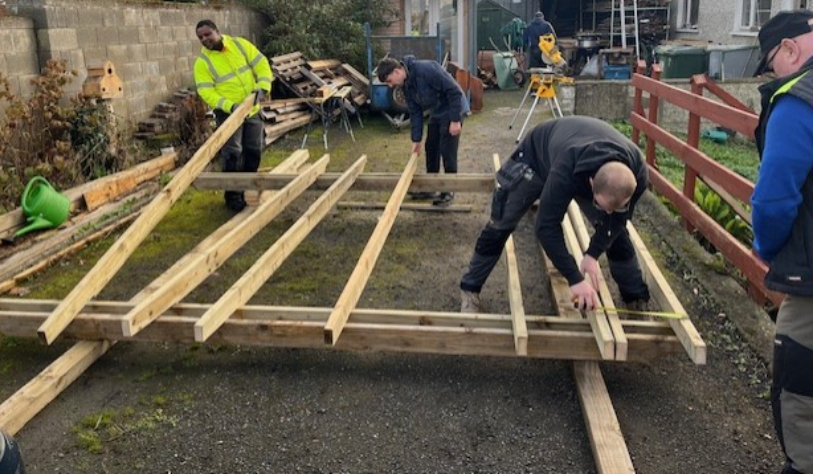
Community organisations such as the Naas Men’s Shed play an important role in supporting social connection, skill-sharing, and enhancing wellbeing for local people. The community-based initiative can help to identify people that could benefit from practical support to improve their everyday lives. Recognising the potential for collaboration, TU Dublin partnered with Naas Men’s Shed and TU Dublin’s Sustainability Action Lab programme to create an intergenerational learning experience where students could apply their technical skills while contributing to a project that addressed a local need.
This project places the United Nations (UN) Sustainable Development Goals (SDGS) at its centre, namely SDG 3: Good Health and Wellbeing, SDG 8: Decent Work and Economic Growth, SDG 9: Industry, Innovation and Infrastructure reflecting the project’s focus on wellbeing, learning, skills development and strong community partnerships.
Intergenerational Learning
Fourth-year students from the BSc Sustainable Timber Technology programme TU838, under the guidance of Damien Cross, Assistant Lecturer at the School of Architecture, Building and Environment, worked alongside members of the Naas Community Men’s Shed to design and build a timber pergola for a local family with children who have additional needs.
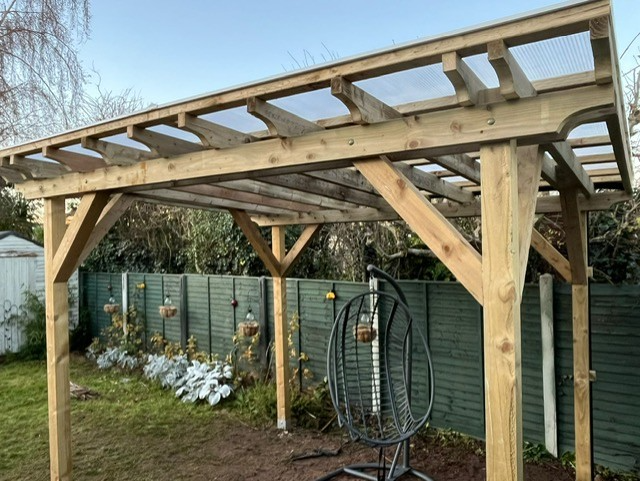
The purpose of the pergola was to create a sheltered outdoor space that the family could use throughout the year, regardless of weather conditions. Using design software and timber construction skills, the students planned the structure and worked collaboratively with members of the Men’s Shed to cut, prepare and assemble the 36 timber components required.
Building Collaboration and Connection
Within four weeks, the team successfully designed, cut, pre-assembled and transported the pergola before installing it in the family’s garden. The completed structure provides a calm outdoor space where the children can relax.
The children’s mother, expressed how much the structure would improve their daily lives, describing the project as something that would “make a massive difference”.
Beyond the physical structure, the project fostered meaningful exchange between students and community members. Over several weeks, students engaged with many members of the Men’s Shed community, sharing stories, skills and even music during lunchtime gatherings.
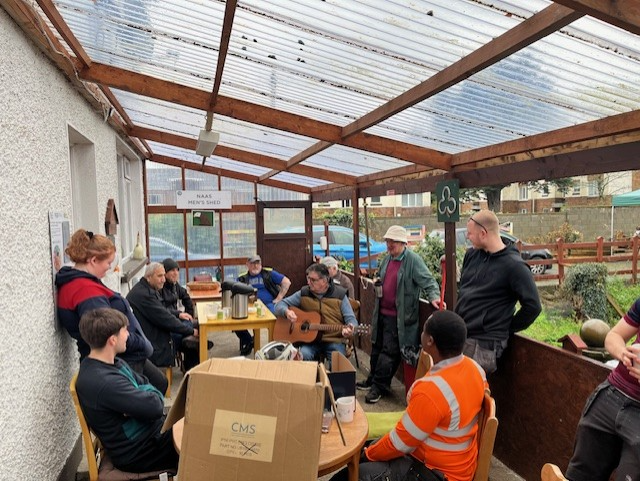
For the students, the project highlighted the importance of social responsibility and community engagement alongside technical expertise. It allowed them to place their specialist knowledge in a wider societal context.
One of the students involved said:
“Through our work with the Naas Community Men’s Shed, we experienced first-hand how engagement fosters inclusion and shared responsibility. The Shed provides a safe space where men of all ages can gather, exchange skills, reduce isolation, and build confidence. This highlighted to us that engagement is not only about completing a project but also about contributing to a community's emotional, social, and mental well-being.
“Community engagement provided a platform to apply classroom knowledge in a meaningful context and teaches empathy and responsibility. Through meeting the family receiving the pergola, we gained appreciation for the impact our work could have on others’ quality of life. Providing a sheltered sensory space benefitted children with additional needs, showing us how construction solutions can support welfare beyond physical structures. This experience encouraged us to value purpose-driven practice, where building outcomes contributes to human wellbeing and community resilience.”
Participants from the Naas Men’s Shed said that the build was “a little past their ability” and they enjoyed working with the students who helped them to create something they otherwise would find difficult to do.
Damien Cross, Assistant Lecturer at the School of Architecture, Building and Environment, said:
“The projects allowed students to engage in intergenerational learning to develop their social skills and realise the benefits of societal engagement. While some physical products were produced, the sharing of skills and knowledge mixed with rich and diverse life experiences of the Naas Men's Shed members allowed for a successful collaboration. The project also supported personal growth of individuals while increasing their confidence levels.”
SDG Alignment
This collaboration supported several Sustainable Development Goals (SDGs), including:
- SDG 9: Industry, Innovation and Infrastructure - Build resilient infrastructure, promote inclusive and sustainable industrialization and foster innovation
- SDG 3: Good Health and Wellbeing - Ensure healthy lives and promote well-being for all at all ages
Each Sustainability Action Lab project is underpinned by:
- SDG 17: Partnership for the Goals - Strengthen the means of implementation and revitalize the Global Partnership for Sustainable Development
- SDG 4: Quality Education - Ensure inclusive and equitable quality education and promote lifelong learning opportunities for all
GreenComp Alignment
The project also aligns with specific competences from the "GreenComp sustainability competency framework including
- Embodying Sustainability Values,
- Embracing Complexity in Sustainability,
- Acting for Sustainability,
- Envisioning Sustainable Futures.
|
Competency Area |
Competency |
Descriptor |
|
Embodying sustainability values |
Supporting fairness |
To support equity and justice for current and future generations and learn from previous generations for sustainability. |
|
Embracing complexity in sustainability |
Critical thinking |
To assess information and arguments, identify assumptions, challenge the status quo, and reflect on how personal, social and cultural backgrounds influence thinking and conclusions. |
|
Envisioning sustainable futures |
Exploratory thinking |
To adopt a relational way of thinking by exploring and linking different disciplines, using creativity and experimentation with novel ideas or methods |
|
Acting for sustainability |
Collective action |
To act for change in collaboration with others |
This collaboration was supported by the Societal Engagement and Sustainability Education teams and through the Higher Education Authority’s Strategic Alignment of Teaching and Learning Enhancement (SATLE) fund.