
National Behaviour Change Campaign for Ground-Nesting Bird Conservation
Ground-nesting birds across Ireland are increasingly under threat due to habitat disturbance, recreational activity, habitat loss, and low public awareness of their vulnerability during nesting season. Everyday actions such as walking dogs off-leash, approaching nesting areas, or disturbing coastal and upland habitats can have significant consequences for bird populations and biodiversity.
Traditional conservation messaging can struggle to influence public behaviour at scale or communicate the urgency of protecting these fragile ecosystems. There is a growing need for creative, accessible campaigns that encourage lasting behavioural change and foster greater public responsibility for biodiversity conservation.
Behaviour Change
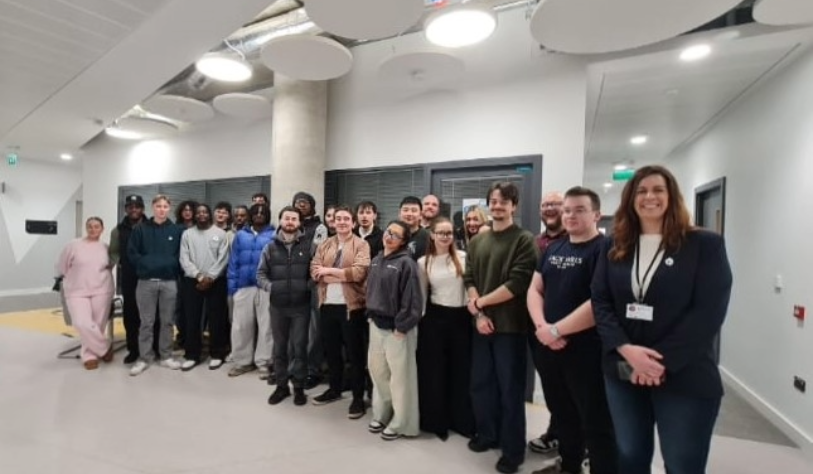
During Semester 2, Digital Marketing TU920 students collaborated with the the Breeding Waders EIP Project, (co-funded by the National Parks and Wildlife Service, and the Department of Agriculture, Food and the Marine) to co-develop a national behaviour-change campaign focused on protecting ground-nesting bird habitats.
Under the guidance of Dr John Cusack, Assistant Lecturer, School of Marketing and Entrepreneurship, students engaged with a live industry brief informed by ecological and behavioural insights provided by project partners. Across the semester, students applied marketing strategy, audience research, and persuasive writing skills to address a real-world conservation challenge.
This initiative supported students to harness their knowledge of Digital Media to real world SDG challenges, with a particular alignment with SDG 11: Sustainable Cities and Communities, SDG 13: Climate Action and SDG 15: Life on Land through the promotion of sustainable use of natural spaces and protecting important ecosystems.
Through structured stages including campaign development, industry pitching, refinement, and stakeholder feedback, students produced strategic messaging frameworks and creative campaign concepts. Outputs included campaign identities, audience insight reports, and integrated campaign portfolios developed through ongoing collaboration with industry stakeholders.
Shared Impact
The project demonstrates how creative communication and higher education partnerships can support meaningful environmental action. By focusing on behaviour change, the campaign seeks to increase public awareness of biodiversity protection while encouraging practical actions that reduce disturbance to vulnerable bird species and habitats.
One participating student, Darragh Doyle Cole, said:
"The collaboration between TUD and Breeding Waders EIP gave the class a great opportunity to apply our theoretical knowledge into a real-world campaign in a way that felt meaningful and exciting. Working on the campaign also made us take time to think about and reflect on the impact we have on the outdoor spaces we use in a way we wouldn’t have done before. Overall, it was a unique experience that gave us the opportunity to create a real campaign with real impact and for that we are grateful."
Owen Murphy, Senior Project Manager, The Breeding Waders EIP said:
“It has been a genuine pleasure to be involved in this project. From the outset, we have been incredibly impressed by the students’ enthusiasm, creativity, and the level of skill they have brought to such an important real-world challenge. The quality of thinking and the professionalism shown throughout has been outstanding.”
“I would like to sincerely thank the students for their hard work and commitment to this cause, and also extend my thanks to Dr Cusack for his leadership and support in making this collaboration possible. It is initiatives like this that demonstrate the real value of partnerships between education and industry.”
Dr John Cusack said:
“I have been genuinely blown away by the level of student engagement and the sense of ownership they have taken over this project. From the very beginning, they approached it not as an assignment, but as a real opportunity to make a meaningful contribution, and that has shown in the quality of their work throughout.”
“I am extremely grateful to Owen, Karen, and Donal from the Breeding Wader EIP for their time, effort, and commitment in helping to make this partnership work so effectively. Their input has been invaluable in grounding the students’ ideas in real-world practice.”
“There is a real sense of pride, both from myself and from the students, in being a part of a project that has the potential to make a genuine difference.”
SDG Alignment
This initiative strongly aligns with the United Nations Sustainable Development Goals:
- SDG 11: Sustainable Cities and Communities - Make cities and human settlements inclusive, safe, resilient and sustainable
- SDG 13: Climate Action- Take urgent action to combat climate change and its impacts.
- SDG 15: Life on Land - Protect, restore and promote sustainable use of terrestrial ecosystems, sustainably manage forests, combat desertification, and halt and reverse land degradation and halt biodiversity loss.
Each Sustainability Action Lab project is underpinned by:
- SDG 4: Quality Education - Ensure inclusive and equitable quality education and promote lifelong learning opportunities for all
- SDG 17: Partnership for the Goals - Strengthen the means of implementation and revitalize the Global Partnership for Sustainable Development
GreenComp Alignment
The project also aligns with specific competences from the GreenComp sustainability competency framework including
- Embodying Sustainability Values,
- Embracing Complexity in Sustainability,
- Acting for Sustainability, and
- Envisioning Sustainable Futures.
|
Competency Area |
Competency |
Descriptor |
|
Embodying sustainability values |
Promoting nature |
To acknowledge that humans are part of nature; and to respect the needs and rights of other species and of nature itself in order to restore and regenerate healthy and resilient ecosystems. |
|
Embracing complexity in sustainability |
Systems thinking |
To approach a sustainability problem from all sides; to consider time, space and context in order to understand how elements interact within and between systems. |
|
Envisioning sustainable futures |
Exploratory thinking |
To adopt a relational way of thinking by exploring and linking different disciplines, using creativity and experimentation with novel ideas or methods |
|
Acting for sustainability |
Collective action |
To act for change in collaboration with others |
This collaboration was supported by the Societal Engagement and Sustainability Education teams and through the Higher Education Authority’s Strategic Alignment of Teaching and Learning Enhancement (SATLE) fund.