
Photography & The Environment: A Community Engaged Learning Project with Global Action Plan
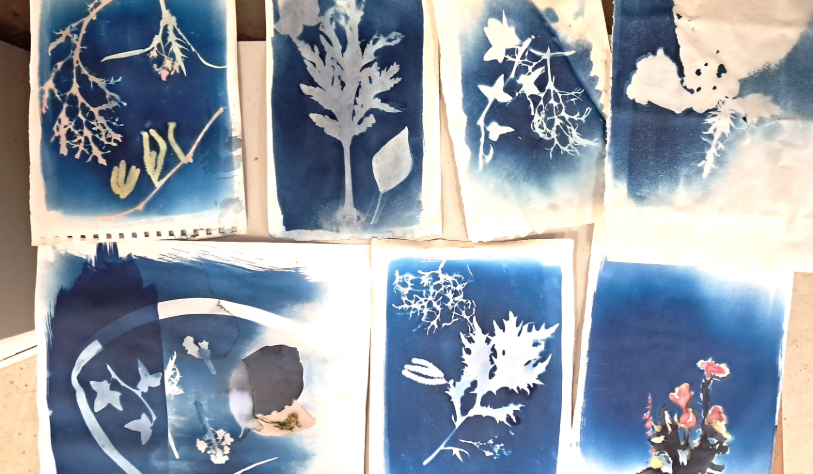
As environmental challenges such as biodiversity loss, soil degradation, and declining ecosystem health intensify, there is a growing need for more immersive, practice-based approaches to sustainability education. Engaging directly with community-led initiatives offers a powerful way to build awareness, inspire behavioural change, and deepen understanding of sustainable practices.
Sustainable practice through creative engagement
In Semester 2 2025/26, 40 students from the BA in Creative Digital Media at TU Dublin TU981, as part of the Photography & The Environment module (DMED 3074), engaged in a community-based research learning project with Global Action Plan (GAP), based at the GLAS @ TU Dublin community garden at the TU Dublin Blanchardstown campus.
The collaboration was led by Sinéad Curran, Lecturer of Arts & Humanities, School of Media at TU Dublin, and supported by TU Dublin’s Sustainability Action Lab programme.
This collaboration created an environment in which students to apply their knowledge of Creative Digital Media and the SDGs in a real-life setting. It directly addressed SDG 2: End Hunger and SDG 6: Clean Water and Sanitation through enabling creative engagement with the transformative space, work and initiatives the GLAS @ TU Dublin community garden provides.
Students worked closely with GAP to gain a deeper understanding of the GLAS @ TU Dublin community garden environment, engaging directly in activities such as planting seeds, sampling plants and soil, and exploring biodiversity. Through this process, they examined how plants and natural materials can inform sustainable photographic practices. The project encouraged exploration of key environmental themes including local food production, pollination, plant biodiversity, soil health, pesticides, and water quality.
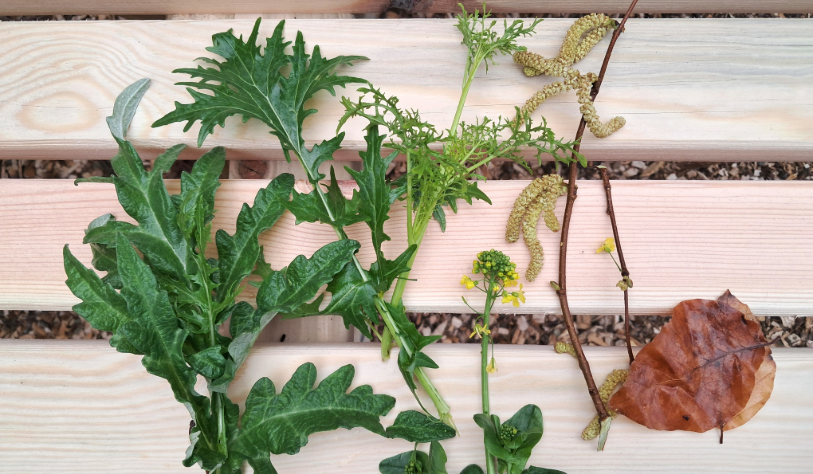
Using a CERL (Community Engaged Research and Learning) approach, the students explored the garden through the lens of a “darkroom garden” working through various analogue photographic processes. The students utilised the Biomimicry principles of resilience, regenerative and sustainable solutions to human challenges. Using the GLAS garden as a living learning space, they reflected on the relationship between people and the natural world, considering the impacts of environmental degradation while exploring themes of healing, interconnectedness and ecological renewal. Their work engaged with ideas such as deep time, hidden ecosystems, plant life cycles, food systems, recycling, grief and fragility, encouraging a deeper appreciation of the often-overlooked processes and relationships that sustain life on Earth.
This project helped TU Dublin students to develop practical skills in both sustainability and creative media, applying their learning in a real-world context. Through creative and hands-on engagement, students connected environmental awareness with photographic practice, while also contributing to increased visibility of GAP’s work within the community.
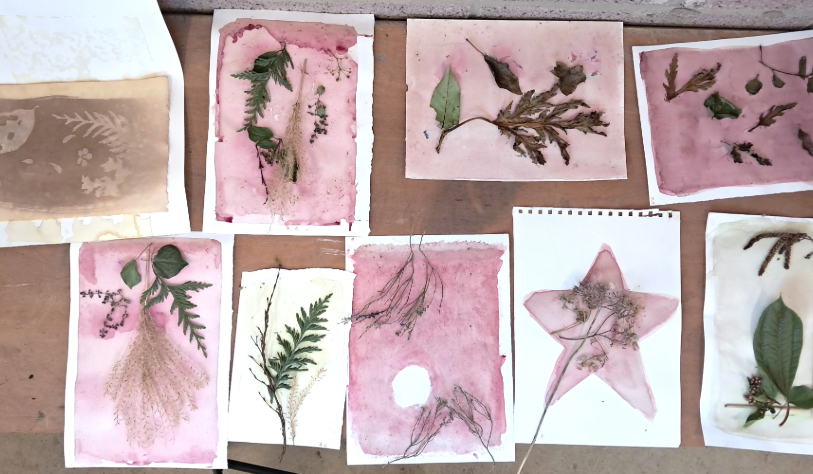
Participating students said:
“I loved this module and have learned a lot about creating my own work with the freedom we were given. It was fun to experiment and test different ideas and interact with a space.”
“The project seeks to slow down time and invite the viewer to notice the everyday drama of the rise, the flourish, and the decay/return to the soil of a flower.”
“Through this project, I have learned a lot about the world of cameraless photography and how you can utilise it to tell beautiful and emotion invoking stories.”
Sinéad Curran, Lecturer of Arts & Humanities, School of Media at TU Dublin said:
“The students gained new insights into working with a community partner, taking time and place to explore environmental topics affecting us all today – by delving deeper the students became more aware of their own actions and the impact we can all have on the natural environment.”
For Global Action Plan, the collaboration helped raise awareness of the GLAS @ TU Dublin community garden initiative and supported its role as a living example of community-based sustainability. The project will also act as a case study for the LOESS project. This project was shortlisted for the AIB Student Impact Award “Biodiversity & Nature Stewardship Project of the Year”.
Lee Geoghegan, GLAS @ TU Dublin Community Garden Manager said:
"It’s been fantastic to see the students popping in and taking some ownership in the garden, it’s great to see them getting more comfortable and just coming in as and when they need to and just getting on with their work."
SDG Alignment
This initiative strongly aligns with the United Nations Sustainable Development Goals:
SDG 2: End Hunger - End hunger, achieve food security and improved nutrition and promote sustainable agriculture
SDG 6: Clean Water and Sanitation - Ensure availability and sustainable management of water and sanitation for all
Each Sustainability Action Lab project is underpinned by:
- SDG 17: Partnership for the Goals - Strengthen the means of implementation and revitalize the Global Partnership for Sustainable Development
- SDG 4: Quality Education - Ensure inclusive and equitable quality education and promote lifelong learning opportunities for all
GreenComp Alignment
The project also aligns with specific competences from the GreenComp sustainability competency framework including
- Embodying Sustainability Values,
- Embracing Complexity in Sustainability,
- Acting for Sustainability, and
- Envisioning Sustainable Futures.
|
Competency Area |
Competency |
Descriptor |
|
Embodying sustainability values |
Promoting nature |
To acknowledge that humans are part of nature; and to respect the needs and rights of other species and of nature itself in order to restore and regenerate healthy and resilient ecosystems. |
|
Embracing complexity in sustainability |
Systems thinking |
To approach a sustainability problem from all sides; to consider time, space and context in order to understand how elements interact within and between systems. |
|
Envisioning sustainable futures |
Exploratory thinking |
To adopt a relational way of thinking by exploring and linking different disciplines, using creativity and experimentation with novel ideas or methods |
|
Acting for sustainability |
Collective action |
To act for change in collaboration with others |
This collaboration was supported by the Societal Engagement and Sustainability Education teams and through the Higher Education Authority’s Strategic Alignment of Teaching and Learning Enhancement (SATLE) fund.