
The Forest Bathing Garden
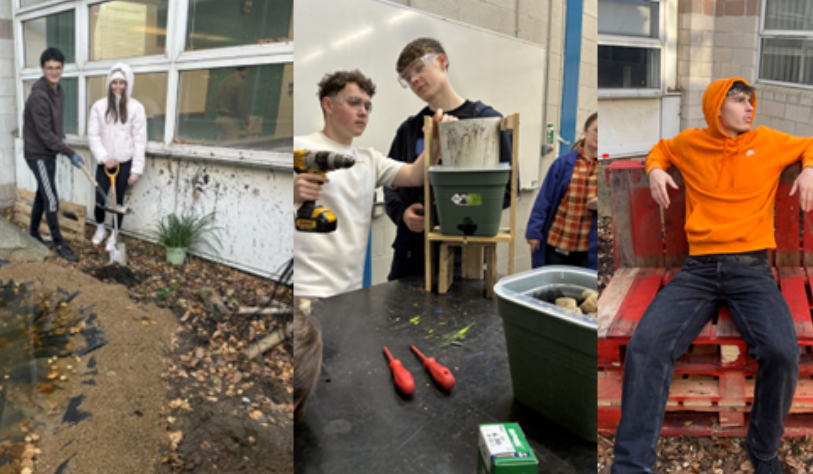
In Ireland, the evidence shows that the complexity of our ecosystems is declining, and many species found in our country are endangered or under threat of extinction. The latest report by the National Parks and Wildlife Service show that 90% of all habitats in Ireland including water and woodland habitats are in an unfavourable condition. Decreased biodiversity for the planet also means reduced means of food production.
Another rising challenge we are faced with is loneliness, now widely recognised as a critical public health issue. One solution that is gaining in popularity are community gardens - increasingly hailed for their ability to provide food and improve biodiversity, mental health and social inclusion.
The Forest Bathing Garden
Recognising these challenges, a group of TU Dublin staff including Gerard Ryder and Niamh Plunkett, lecturers on the Sustainable Energy Engineering programme (TU801) in the School of Mechanical Engineering , Linda Bennett, Senior Librarian in the Tallaght campus Library and John Heaney, Campus & Estates Senior Staff Officer and his team are regenerating an underused garden space on the Tallaght campus. Renaming it as the forest bathing garden, they have prepared the garden for undergraduate projects for the year ahead. The garden gets its name from the Japanese concept of forest bathing, the idea of immersing all your senses into the garden in mindful practice.
Gerard Ryder and Niamh Plunkett, along with their students in the first year Critical Skills and Development module on the Sustainable Energy Engineering programme have been working on a range of group projects that are focused on enhancing the biodiversity of the garden to turn it into a haven for native plant, insect and animal species. The group projects include developing a native wildlife pond, vertical planters, bird nesting boxes and insect hotels, a bog garden table and bench and a natural pond water filter. All projects have been constructed with recycled pallet materials or other recycled materials. In addition to this students and staff from TU Dublin have planted a range of native plants and bulbs including sedge, woodruff, bluebells, snowdrops and wild garlic.
The pond will be a particularly important feature in the forest garden providing habitats for a range of beneficial insects, frogs and newts. Students have also been conducting a range of water and soil biodiversity tests to evaluate the presence of insects ‘before’ and ‘after’ the introduction of native plants and the introduction of the pond. The goal is to practice these skills ahead of a second semester ‘Bioblitz’ competition designed to observe and catalogue the biodiversity on the TU Dublin Tallaght campus.
Project Impact
At the end of the module the students presented a poster which tells the story of the environmental issues they observed and the solutions they designed during the project. The posters were presented to graduates of the programme Gary Tyrrell Climate Action Officer in South Dublin County Council and Lana Krumina, a Junior Power Systems Engineer with Premium Energy Ltd. Fourth year students from the programme were also present at the poster show to discuss the projects with the first year students.
Speaking about the project Gerard Ryder says:
“The students really look forward to the activity in this module and I believe it is improving student retention. It is the one module I have where attendance increases during the semester. Sharing the work in the garden is binding the group together and gives them a lasting memory that they have added something permanent to their college campus.”
Students were asked about their experience of the forest bathing garden projects. Student on the course Zoe Ryan says:
“Working on projects like these can make us feel proud of what we can accomplish together, make learning more fun and give us a sense of achievement. They also remind us that learning isn’t just about exams it’s about creating and collaborating and enjoying the journey together.”
Student Oisin Gilligan added:
“I think projects are important as they offer a hands-on experience with the use of skills like teamwork and tasks like project management and offer the chance to learn from your peers.”
Shared Impact
At TU Dublin we are committed to progressing the United Nations Sustainable Development Goals (SDGs) through collaboration and action. This project addresses targets under SDG3 Good Health & Wellbeing, SDG11 Sustainable Cities & Communities and SDG 15: Life on Land.
This project aligns with the Green-Campus theme of Biodiversity. Biodiversity aims to build awareness around the value of protecting biodiversity and develop our understanding of environmental and natural resource management.
Green Campus Open Call
The Green-Campus Open Call can help bring ideas like these to life by making micro-grants available to selected project ideas submitted in response to the open call. The Green-Campus programme encourages a partnership approach to environmental education and management. To optimise the potential for impact, the Green-Campus Open Call programme encourages project proposals that can be implemented using the Living Lab approach and that include exploration, co-creation, experimentation and evaluation phases. You can read more about the TU Dublin Living Lab and access living lab planning templates.