
Smarter Travel Student Awards
- Module: Strategic Marketing (MRKT3512)
- Programme: BSc Marketing (Year 3)
- Discipline: Marketing
- School: Marketing and Entrepreneurship
- Number of students: 97
- TLA Category: Creation of an artefact (physical or digital) e.g poster, infographic, podcast, social media content, video etc, ; Event
- Find out more: Roisin Vize
Smarter Travel Student Awards
The competition is open to third level students around Ireland. The ask is for students to develop a project that supports, facilitates and/or enables sustainable and active travel modes to, from and on campus. The categories are designed to link with academic programmes and modules, so students can develop practical project experience relevant to their coursework. As an assignment students create a poster illustrating their ideas relevant to a category aligned with the module. Smarter Travel includes modes of transport such as walking, cycling, public transport, carpooling etc. All entries to the competition are reviewed and judged by an independent judging panel who are experts in their industry. Finalists are invited to attend the National Student Awards Ceremony, where their project is showcased with the winners in each category.
Students from the MSc Digital and Content Marketing and from the Postgraduate Certificate in Sustainability Leadership in Business have also represented TU Dublin through participation in the competition.
Promoting Sustainable Travel in Ireland
Third-year marketing students participated in the Smarter Travel Student Awards; a national initiative developed in partnership with Transport for Ireland (TFI). The awards invite students to design marketing artefacts such as videos, graphics, advertising concepts, or digital campaigns that inspire more sustainable travel behaviours among their peers and wider communities.
Within the module this translated into 97 students working both collaboratively and independently to research mobility challenges, identify behavioural motivators, and propose compelling communication strategies. Students were supported by classroom guidance as well as a rubric co-developed by Dr. Roisin Vize and the TFI Smarter Travel team.
The response from the students was positive. What began as coursework quickly became meaningful portfolio work, with over 90% of the class producing strong, sustainability-focused submissions. Several students went on to be shortlisted at the national Smarter Travel Awards, showing the professional standard of their ideas.
Embedding Sustainability in Marketing Education
There is a significant skills gap in how sustainability is understood in the marketing discipline and projects like the Smarter travel Student Awards that focus on responsible marketing behaviours augment learning outcomes that consider the triple bottom line in a responsible and sustainable manner. I wanted to embed sustainability education into my modules in a more meaningful and impactful way particularly as marketing practices frequently conflict with circular and sustainable production and consumption behaviours. In my view, marketing needs to be reformulated in terms of its’ purpose and constraints, where the principles and practice of marketing need to act as a corrective tool when commercial marketing is excessive.
Students engaging in a project such as this build on their knowledge of the Sustainable Development Goals specifically SDGs 11, 12 and 13. They get to compete with students from other third level campuses in other disciplines, which adds a sense of excitement to the project and broadens their network. They gain practical experience relevant to their field of study. Participating in an event of this calibre builds their professional portfolio. Their projects are reviewed and judged by a panel of industry experts strengthening the credibility and integrity of the process and the outcome. Certificates and prizes are awarded for the hard work which incentivises quality submissions.
A taste of success
The initiative has been very successful.
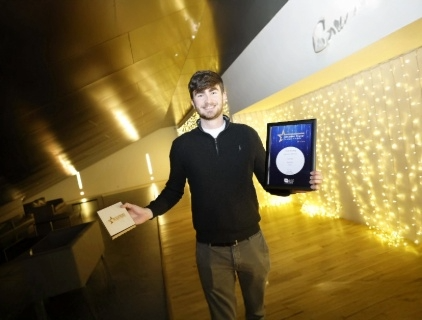
2022 - 8 shortlisted finalists with 2 students taking home joint winning place of the Marketing and Events category: Zoe Temple for #ActiveApril campaign and Eoin Power for “Using the Active Travel Logger tool in TU Dublin”
2023 – 12 students were shortlisted and two overall winners:
Niamh Murray placed first in the Social Marketing category for her smarter travel campaign idea ‘Fuel up with friends’ & Philip Maguire placed first in the Programmes & Advocacy sub-category for his ‘Leap Further’ campaign.
2024 – Winner ‘Marketing & Communications’ category (Deirdre Tracey lectured the cohort in 2024)
Closing Notes
I am grateful to Shane Hayes, Senior Smarter Travel Officer who has taken the time to meet with TU Dublin students and share helpful information about the Awards initiative. He has been very supportive and highlighted the value of aligning classroom learning with real national sustainability goals.
Impact for the SDGs
- SDG 4: Quality Education
- SDG 11: Sustainable Cities and Communities
- SDG 12: Responsible Consumption and Production
- SDG 13: Climate Action
GreenComp competences framework
| Competence Area | Competence | Descriptor |
|---|---|---|
| Embodying sustainability values | Valuing sustainability | Reflect on personal values; identify and explain how values vary among people and over time, while critically evaluating how they align with sustainability values. |
| Promoting nature | Acknowledge that humans are part of nature; respect the needs and rights of other species and of nature itself to restore and regenerate healthy and resilient ecosystems. | |
| Embracing complexity in sustainability | Systems thinking | Approach a sustainability problem from all sides; consider time, space, and context to understand how elements interact within and between systems. |
| Problem framing | Formulate current or potential challenges as a sustainability problem in terms of difficulty, people involved, time, and geographical scope, to identify suitable approaches to anticipating and preventing problems, and to mitigating and adapting to already existing problems. | |
| Envisioning sustainable futures | Futures literacy | Envision alternative sustainable futures by imagining and developing alternative scenarios and identifying the steps needed to achieve a preferred sustainable future. |
| Adaptability | Manage transitions and challenges in complex sustainability situations and make decisions related to the future in the face of uncertainty, ambiguity, and risk. | |
| Exploratory thinking | Adopt a relational way of thinking by exploring and linking different disciplines, using creativity and experimentation with novel ideas or methods. | |
| Acting for sustainability | Collective action | Act for change in collaboration with others. |
| Individual initiative | Identify own potential for sustainability and actively contribute to improving prospects for the community and the planet. |