
TU Dublin Sustainability Intelligence at the CitA BIM Gathering 2025
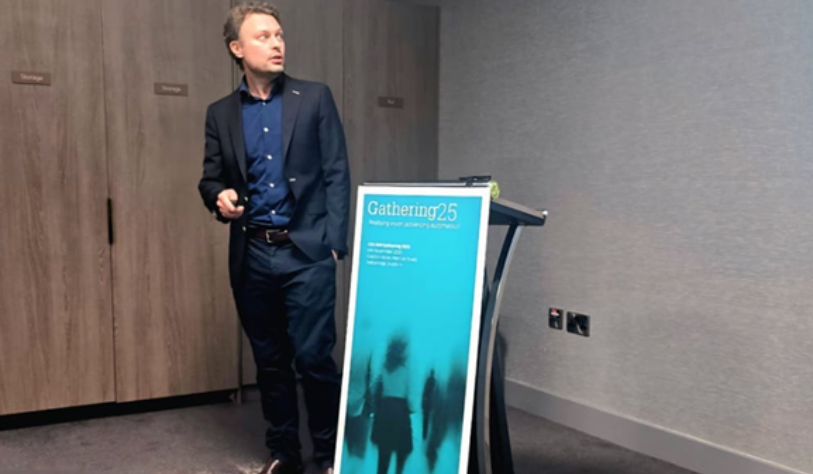
Dr. Philippe Lemarchand, Head of Sustainability Intelligence at TU Dublin, presented at the CitA BIM Gathering 2025, held on 6 November at the Clayton Hotel, Ballsbridge.
The annual gathering brought together industry, academia, and public-sector stakeholders to reflect on this year’s theme, “25 years of digital construction”, and to explore how automation, data, and artificial intelligence are shaping the next phase of the built environment.
In the scope of the project Towards a Sustainable University Campus, Philippe presented the approaches and challenges to the digital transformation of Public educational buildings. The presentation, available here, emphasises the need for building digitalisation in alignment with sustainability and climate mandates and strategies. Data governance is key to building digitalisation, and data lake technologies can help organise and extract actionable knowledge. The integration and interoperability of various building systems and technology services affecting the usage of the space are crucial to building holistic knowledge and optimising the operation of building and connected technology services.
Suggested reference: Lemarchand P., Raushan K., Kumar T., & Hassan A. (2025). Digital Transformation of Public Educational Buildings: Approaches and Challenges. CitA BIM Gathering 2025, Dublin, Ireland. Available from: https://www.cita.ie/wp-content/uploads/2025/11/Phillipe-Lemarchand.pdf
Philippe’s presentation focused on the practical approaches and challenges to digital transformation in public educational buildings, drawing on TU Dublin’s ongoing Towards a Sustainable University Campus (TSUC) initiative. The talk highlighted the strategic importance of digital transformation at TU Dublin and the critical role of institutional governance, given the considerable dependence on data quality, institutional readiness, and cross-departmental collaboration in digitising TU Dublin buildings.
The presentation also demonstrated how the newly implemented facility management system, building physics model, and data management platform can support informed decision-making related to energy performance, occupants' health and comfort, while creating opportunities for education, research, and operational staff upskilling through a living lab approach.
The session generated strong engagement and discussion, particularly around the need to align digital ambition with operational capacity and to ensure that advanced technologies deliver tangible value for building operators, occupants, and institutions alike.
TU Dublin’s Sustainability Office was pleased to contribute to this year’s gathering and to continue engaging with the wider construction and digital built environment community through forums such as CitA.
Presentation link: https://www.cita.ie/wp-content/uploads/2025/11/Phillipe-Lemarchand.pdf