
TU Dublin Urges Stronger Urban Road Safety Action with Focus on Pedestrians, Lower Speeds and Vision Zero
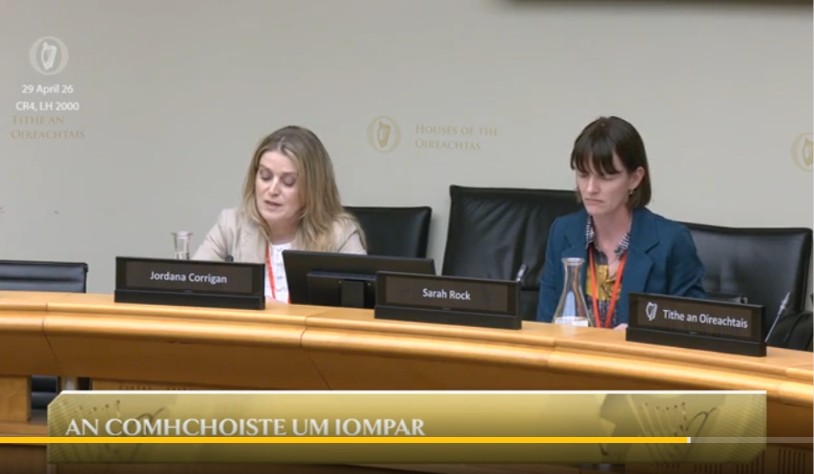
Lecturers call for people‑first streets, 30 km/h limits and stronger leadership to prevent deaths and serious injuries.
Dublin, 29 April 2026
Lecturers from Technological University Dublin have called for a renewed and more visible commitment to Vision Zero and a Safe Systems approach to road safety, with a stronger focus on pedestrians, lower urban speed limits and coordinated leadership across government and local authorities.
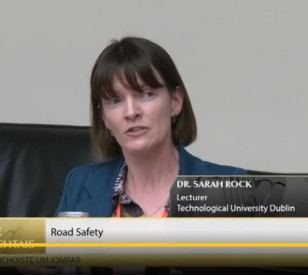
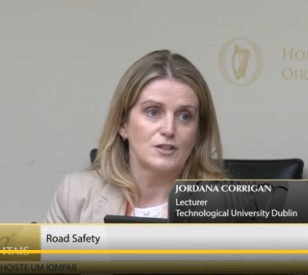
Addressing the Joint Oireachtas Committee on Transport, Dr. Sarah Rock and Ms. Jordana Corrigan of TU Dublin’s School of Architecture, Building and Environment said most serious injuries – and the vast majority of pedestrian casualties – occur in towns and cities.
Make Vision Zero More Visible
The academics highlighted the potential to strengthen the visibility of Vision Zero within Irish transport and planning strategies, noting that while Ireland has adopted the goal in principle, it remains weakly referenced in many key policy documents. It has the potential to connect road safety with polices that promote quality of life, sustainable mobility and healthy communities.
They pointed to recent research on international examples such as Pontevedra in Spain and Oslo in Norway, where road deaths have been largely eliminated through a combination of leadership, reduced car dominance and people‑centred street design.
Put Pedestrians First
The statement stressed that pedestrians and cyclists in Ireland are disproportionately impacted in road collisions, most often involving cars. The speakers called for a stronger cultural shift that prioritises walking and wheeling as everyday modes of transport, noting walking is fundamental to vibrant towns and communities.
They cited the transformation of Pontevedra, where reduced through‑traffic, lower speeds and an emphasis on pedestrian comfort have not only delivered significant road safety gains but revitalised the city socially and economically.
 |
 |
Lower Urban Speed Limits
The TU Dublin speakers urged decisive action on urban speed reduction, highlighting strong evidence that 30 km/h limits significantly reduce deaths and serious injuries. Across dozens of European cities, city‑wide 30 km/h limits have led to reductions of more than one‑third in fatalities and injuries.
They argued that the upcoming review of urban speed limits offers a major opportunity – especially if limits are applied consistently across most urban streets and supported by funding to redesign streets in key locations, and collision hotspots.
Leadership, Data and Holding the Line
Finally, the lecturers acknowledged that change is difficult and often contested, but stressed that robust data collection – including on casualties, traffic volumes, air quality and footfall – is recommended to demonstrate the wider benefits of safer streets and to sustain progress in the face of resistance.
The lecturers called for targeted training for elected representatives on the links between road safety, urban design and speed management, to support evidence‑based decisions and effective public engagement.
For more information, see - Committee on Transport – 34th Dáil, 27th Seanad – Houses of the Oireachtas and 2026-04-29_opening-statement-dr-sarah-rock-et-al-lecturer-technological-university-dublin_en.pdf