
Women in Mathematics Day 2026
The International Women in Mathematics Day is celebrated annually on 12 May to honour the achievements and contributions of women in mathematics.
More details about the May 12 Initiative can be found here.
It takes place on this day to mark the birthdate of Maryam Mirzakhani, an Iranian mathematician and a Professor of Mathematics at Stanford University, who was the first woman to be awarded the Fields Medal.
The Women in Mathematics Day Ireland is a one-day conference coordinated by the Irish Committee for Equality, Diversity and Inclusion and Inclusion in Mathematics, a sub-committee of the Irish Mathematical Society.
This year, the Women in Mathematics Day will be hosted by the School of Mathematics and Statistics at TU Dublin. It will take place on Tuesday, 12th May 2026 at the Grangegorman campus.
The previous two meetings were as follows:
- The 2025 event as held at the University of Galway on Monday, 12th May 2025.
- The 2024 event was held at the University of Limerick on Friday, 10th May 2024.
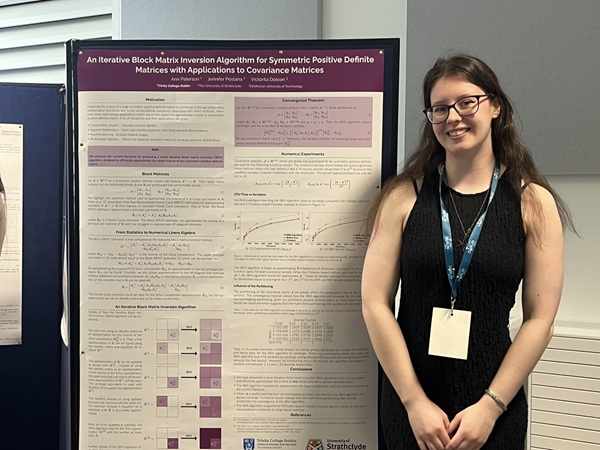
Ann Paterson (Trinity College Dublin) winner of best poster prize - An Iterative Block Matrix Inversion Algorithm for Symmetric Positive Definite Matrices with Applications to Covariance Matrices.
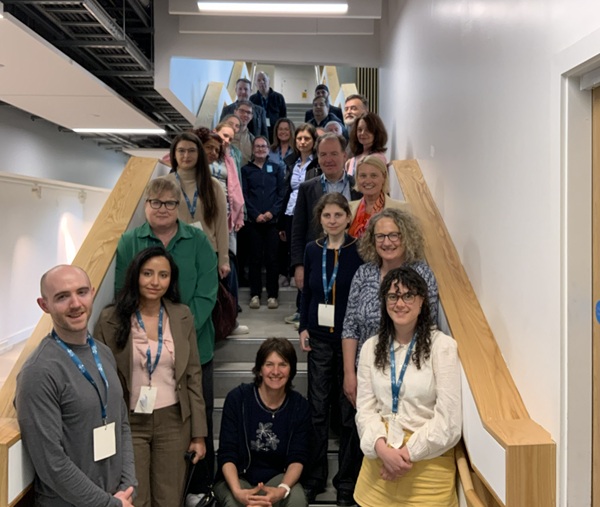
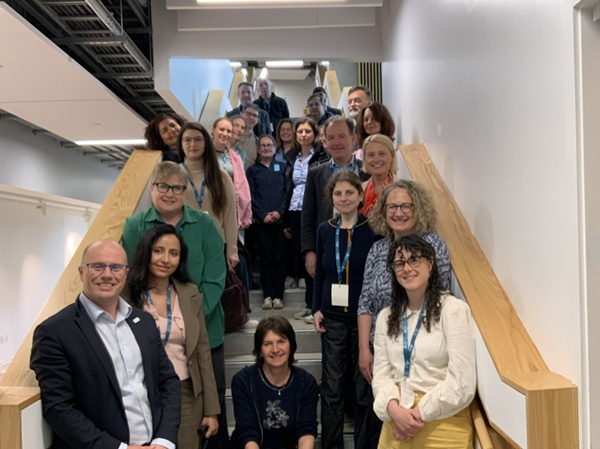
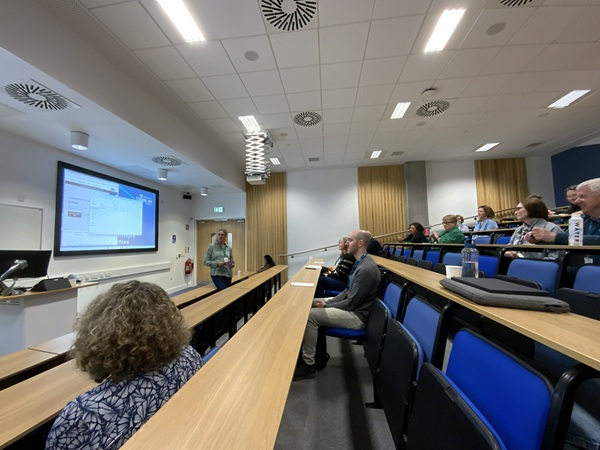
| 12th May 2026 | |
|---|---|
| 9:30 - 10:20 am | Coffee and Registration |
| 10:20 - 10:30 am | Welcome address |
| 10:30 - 11:00 am |
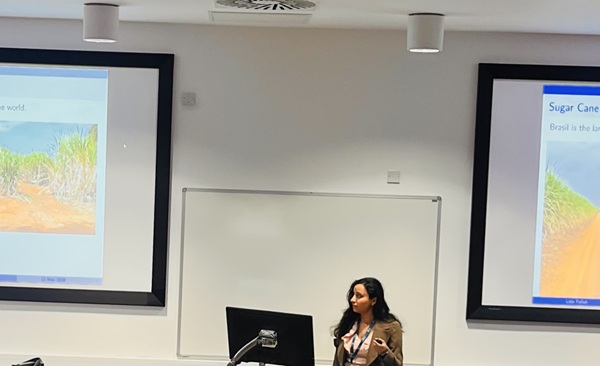
Lida Fallah (Technological University Dublin) Understanding Variability in Toxicological Bioassays: Models for Overdispersion |
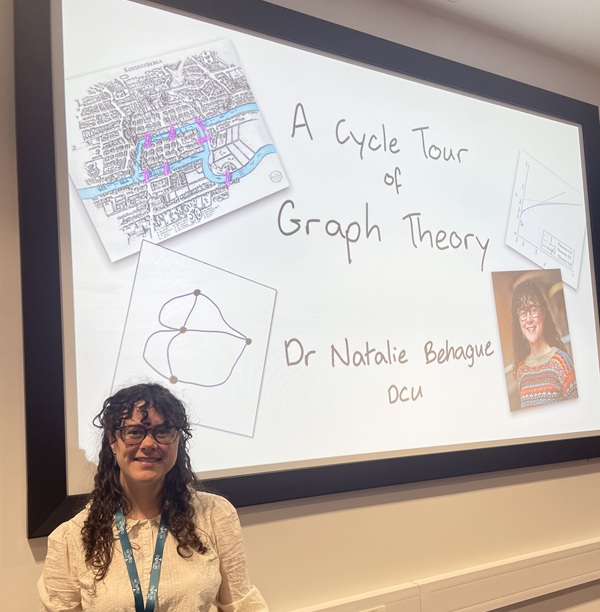
| 11:00 - 11:30 am | Natalie Behague (Dublin City University)
A Cycle Tour of Graph Theory |
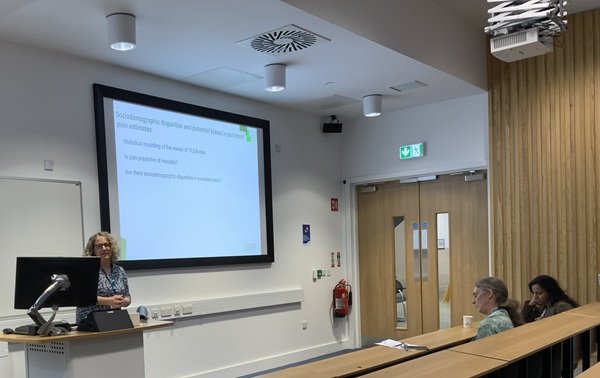
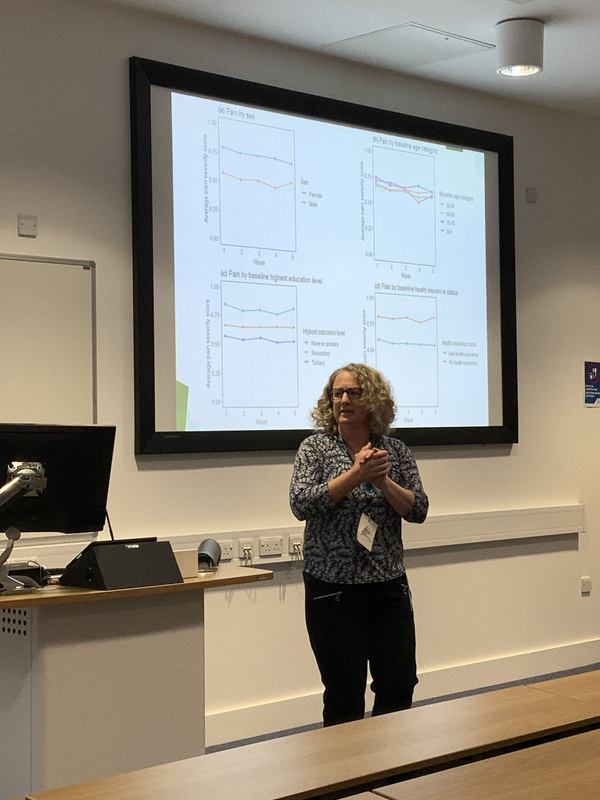
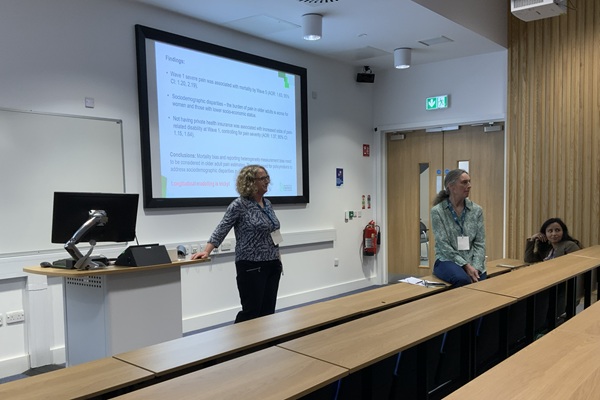
| 11:30 am - 12:00 pm | Helen Purtill (University of Limerick)
Modelling Pain in Older Adults: A Statistical Journey Through TILDA Data |
| 12:00 - 2:00 pm |
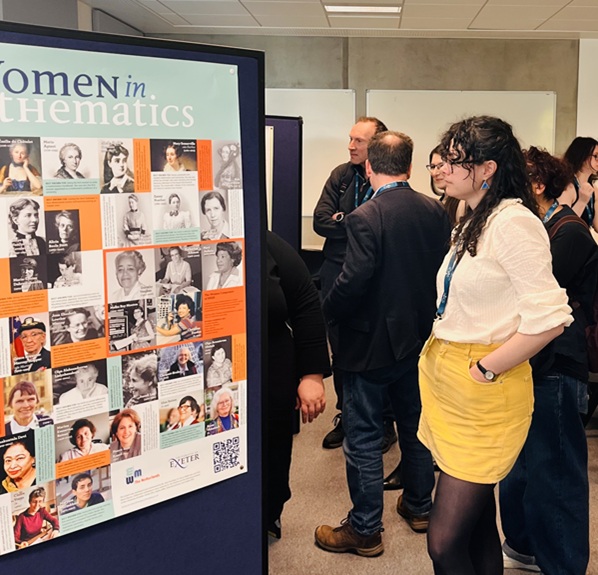
Lunch, poster session and World Scientific "Women in Mathematics" books exhibition. Movie screenings during lunch:
|
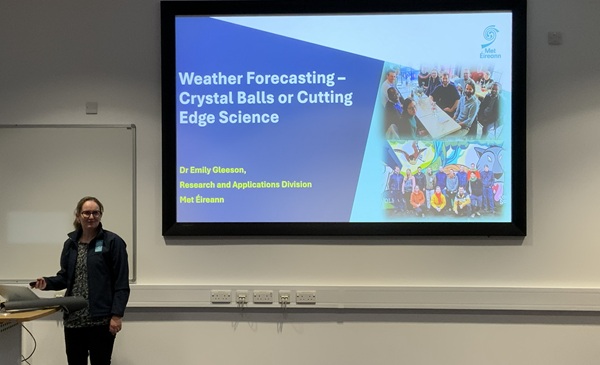
| 2:00 - 2:30 pm | Emily Gleeson (MET Éireann)
Weather Forecasting - Crystal Balls or Cutting Edge Science |
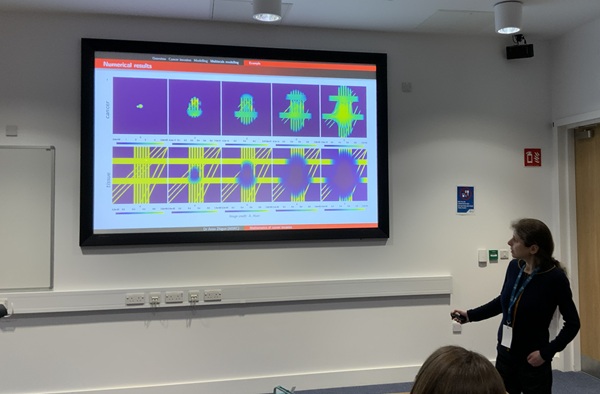
| 2:30 - 3:15 pm | Anna Zhigun (Queen's University Belfast) Mathematics of cancer invasion |
| 3:15 - 3:30 pm | Closing remarks: Dr Dympna O'Sullivan, Vice President of Research and Innovation, TU Dublin, followed by the Best Student Poster award. |
Please note that all talks take place in EQ002, while registration, coffee and lunch breaks, book exhibition and poster session will be in EQ112.
Abstracts
Natalie Behague (Dublin City University)
Title: A Cycle Tour of Graph Theory
Abstract: A "graph" (in the context of graph theory) is simply an abstract representation of a network, made up of vertices and edges connecting them. One of the earliest uses of graph theory was to solve the Bridges of Konigsberg problem, which can be rephrased in terms of a tour visiting all edges of a graph. A natural follow-up question is: what about visiting every vertex of a graph? I will tell you about a fundamental theorem of Dirac concerning these vertex-spanning cycles. The talk will culminate with a brief overview of the cutting-edge research generalising Dirac's theorem in different directions, including some of my own research along the way.
Lida Fallah (Technological University Dublin)
Title: "Understanding Variability in Toxicological Bioassays: Models for Overdispersion"
Abstract: This talk explores how statistical models can help us better understand biological variability in real-world data. Using an example from pest control, I’ll look at how different modelling approaches handle overdispersion in clustered toxicological data, focusing on experiments involving fungal pathogens used to control sugarcane pests.
I’ll introduce a range of methods, from generalised linear models to more flexible approaches such as Dirichlet-multinomial and random effects models and discuss how they compare in practice. Along the way, I’ll highlight how these choices affect key quantities like lethal time estimates and what this means for selecting effective biological control strategies.
Emily Gleeson (MET Éireann)
Title: “Weather Forecasting - Crystal Balls or Cutting Edge Science”
Abstract: In my talk, I will give an overview of the mathematical models we use for weather forecasting, with a focus on recent physics developments, including some uses of machine learning.
Helen Purtill (University of Limerick)
Title: Modelling Pain in Older Adults: A Statistical Journey Through TILDA Data
Abstract: Chronic pain is the most prevalent medical condition in Europe and worldwide and is the leading cause of disability, affecting over 1.7 billion people.1
The Irish Longitudinal Study on Ageing (TILDA) is a population-representative prospective cohort study involving over 8,500 community-living people resident in Ireland aged 50 or over.
Developing statistical models using TILDA data can provide insights into how pain develops, persists, and interacts with ageing-related factors over time.
This talk describes a statistical journey of 10 years working with TILDA data to model pain in older life.
- Vos T, Lim SS, Abbafati C, et al. Global burden of 369 diseases and injuries in 204 countries and territories, 1990–2019: a systematic analysis for the Global Burden of Disease Study 2019. The Lancet 2020;396(10258):1204-22.
Anna Zhigun (Queen's University Belfast)
Title: Mathematics of cancer invasion
Abstract: About 90% of deaths caused by cancer are due to metastasis. Invasion, the initial stage of cancer spread, acts as a crucial precursor to metastasis. It involves the infiltration of surrounding tissues, facilitating the subsequent dissemination of cancer cells to distant organs. A carefully developed mathematical model of invasion can enhance our understanding of this process. Moreover, it holds the potential to become an integral component of a medical tool that would aid clinicians in analysing patient data, making prognoses on disease progression, and devising cost-effective personalized treatment plans. Rigorous mathematical results, such as on existence, uniqueness, and qualitative behaviour of solutions to the model, enhance confidence in the outputs of such tools. While routinely accessed medical data deals with tumour density and its evolution in time and space, this evolution is the result of the movement of numerous individual cancer cells within the tumour. In this talk, I will delve into the main driving mechanisms of invasion and discuss an effective multi-scale approach to modelling it. This approach entails starting with equations at the cellular level and subsequently 'scaling up' to derive a single equation for tumour density.
Registration for this event is free. Please fill out this form.
The Women in Mathematics Day 2026 will be held in the East Quad, Grangegorman campus, TU Dublin.
The talks will take place in room EQ002. Registration, coffee, and lunch breaks will be held in room EQ112.
Information on the location of this campus and view travel and transport links.
- The Irish Mathematical Society
- The School of Mathematics and Statistics, TU Dublin
- Faculty of Computing, Digital and Data, TU Dublin
- The University of Limerick
Women in Mathematics Day 2026 is being organised by: Dana Mackey (chair), John Butler, Laura Cooke, Lida Fallah, Chris Hills, Mercedes Jordan-Santana, Blathnaid Sheridan, Gurpreet Singh and Milena Venkova.
For further information, please contact Dana Mackey (dana.mackey@tudublin.ie).