Road Safety Authority publishes a study by TU Dublin
TU Dublin study shows that reducing through-traffic combined with increased pedestrian priority has clear road safety benefits for towns and cities.
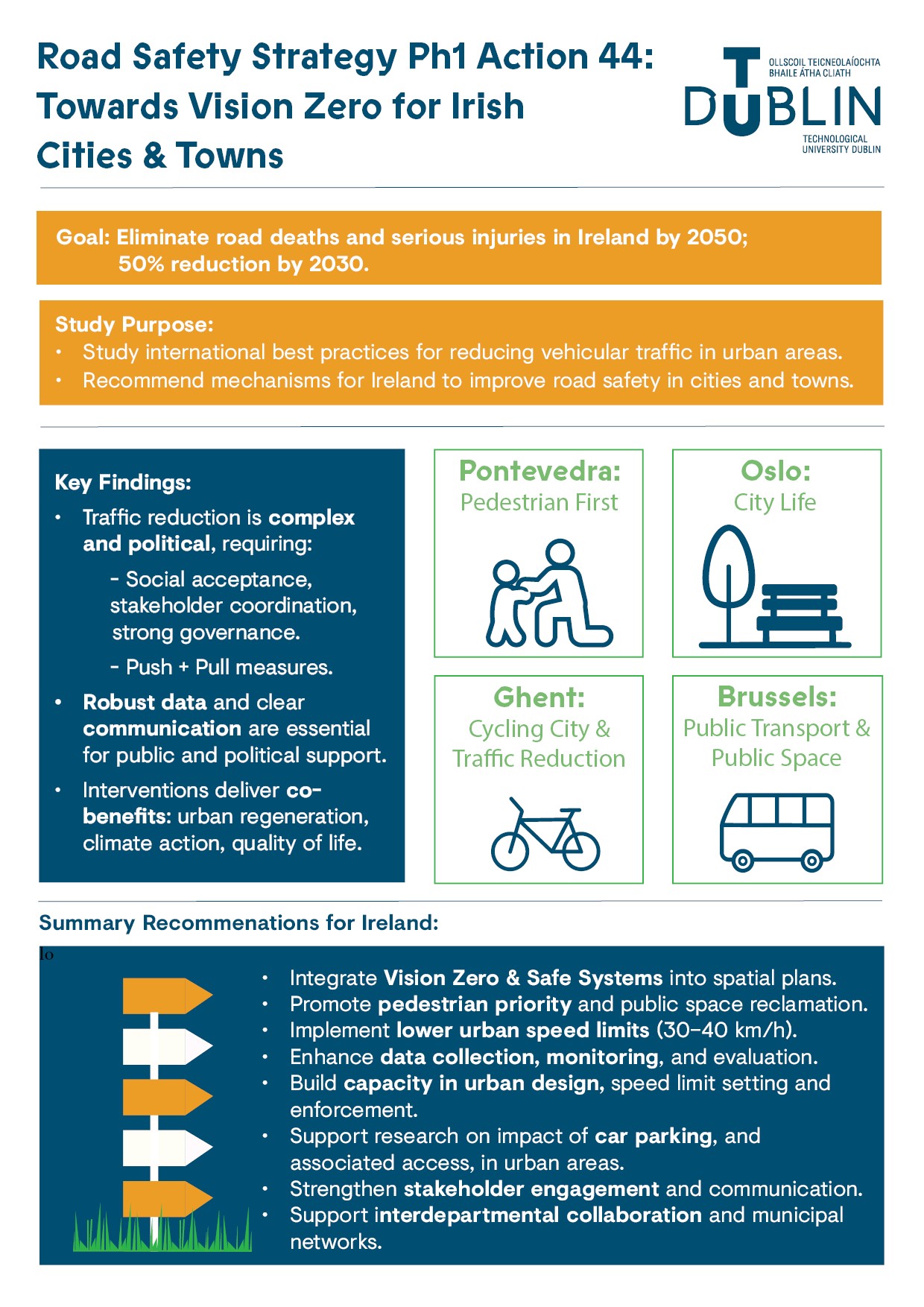
 The Road Safety Authority has published a study by TU Dublin into Action 44 of the Government’s Road Safety Strategy (2021-2030) which aims to half deaths and serious injuries on Irish roads and streets by 2030, and to achieve Vision Zero (no deaths or serious injuries) by 2050. This study seeks to understand mechanisms for reducing vehicular traffic in cities and towns, and how this can improve road safety, as well as increase quality of life for its residents and regenerate towns centres. The approach taken by four small and medium sized cities across Europe (Oslo, Brussels, Ghent and Pontevedra) is examined, suggesting lessons and recommendations for Ireland.
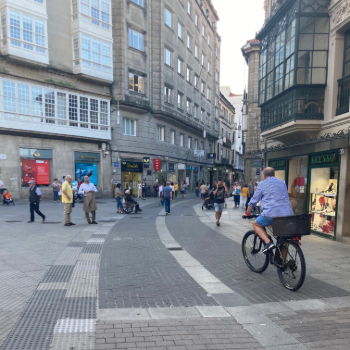
Although achieving Vision Zero is a challenging goal, many cities show how with strong political leadership, tangible progress can be achieved. The small Galician city of Pontevedra demonstrates how step-by-step over time, the city (and adjacent rural towns and villages) has transformed from one where congested busy roads dominated to a pedestrian focused and revitalised city centre that has achieved Vision Zero for road deaths for many years in a row. The Belgian and Norwegian cities illustrate the importance of 30km/hr speed limits, reducing through-traffic and the importance of investing in good walking and cycling infrastructure, public transport and high-quality public spaces. The measures taken to improve road safety are also consistent with wider public policy objectives to promote compact growth, quality of life and liveability in urban areas.
13 recommendations for Ireland are made. They include:
• Understanding the important role of lower speed limits in urban areas.
• Ensuring data-informed decision and plan making.
• Increasing the use and understanding of road safety related objectives in spatial and transport planning.
• Enhancing the priority of the pedestrian in cities, towns and villages (in policy, infrastructure provision, funding etc).
• Understanding the role of through-traffic and car-parking in the feasibility of achieving tangible road safety and regeneration outcomes.
To download a copy of the report, click here