
TU Dublin Staff Strengthen International Research Partnerships Through GETM4 Sandpits in Kenya
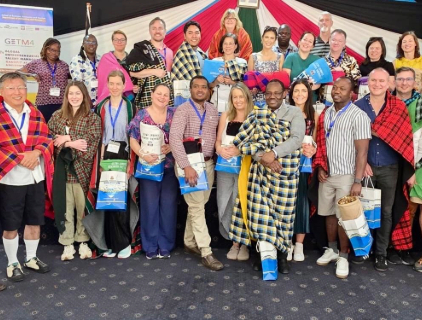
TU Dublin Staff Strengthen International Research Partnerships Through GETM4 Sandpits in Kenya
Staff and researchers from Schools across the TU Dublin Faculty of Business have reflected on their participation in two international research sandpits held in Kenya during January and July 2026, highlighting the significant professional, academic and cultural benefits of international research collaboration.
Organised through the Horizon Europe-funded Global Entrepreneurial Talent Management 4 (GETM4) project, Kenyatta University and the University of Nairobi hosted the sandpits, bringing together academics, researchers and entrepreneurs from partner institutions across the international consortium.
The two events offered opportunities to advance collaborative research, exchange knowledge, explore entrepreneurial innovation, and build stronger international partnerships. For TU Dublin participants, the experience also offered valuable insights into the importance of cultural understanding, inclusion and relationship-building in international research.
Exploring Entrepreneurship, Innovation and Sustainability
A key feature of both sandpits was the opportunity to engage directly with Kenyan communities and entrepreneurs, exploring how innovation and entrepreneurship respond to local economic, environmental and social challenges.
During the January sandpit at Kenyatta University, Jean Noonan from the School of Business Technology, Retail & Supply Chain, visited Dandora landfill in Nairobi, where conversations with waste pickers and traders working with mitumba (second-hand clothing) provided valuable insights into the global fashion supply chain and the realities of circular economy practices.
Reflecting on the experience, Jean described how witnessing circularity driven by resilience and necessity had generated new discussions with students and ideas for future research and collaboration within the GETM4 network.
Louise O'Sullivan, from the School of Accounting, Economics and Finance, who also participated in the January sandpit, highlighted the value of working with colleagues from different academic and cultural backgrounds. Through entrepreneurship and innovation workshops, she contributed to collaborative discussions and practical problem-solving activities, developing new perspectives on teamwork and innovation.
The experience has continued to influence her approach to collaboration, and connections made during the sandpit have created opportunities for potential future projects.
The July sandpit, hosted by the University of Nairobi, provided further opportunities to explore Kenya's entrepreneurial ecosystem.
Dr. Cormac McMahon from the School of Accounting, Economics and Finance reflected on how the experience challenged conventional assumptions about national innovation systems. Drawing on examples such as M-Pesa, geothermal energy and Kenya's informal economy, he highlighted how innovation can emerge from local needs and entrepreneurial resourcefulness, rather than being driven solely by formal institutional structures.
For Aleksandra Gruszka, a PhD researcher within the School of Marketing and Entrepreneurship participating in GETM4, a visit to Kariobangi Light Industries offered a particularly valuable perspective on grassroots entrepreneurship.
Meeting local entrepreneurs demonstrated the importance of resourcefulness, repair and reuse, challenging conventional understandings of where innovation originates and how research can respond to community needs.
Respectful Translation: Learning Across Cultures
One of the strongest themes emerging from staff reflections was the importance of Respectful Translation, a central research focus within GETM4.
Respectful Translation encourages researchers to recognise different cultural perspectives, respect local knowledge and ensure that international collaboration is built on mutual understanding, equitable participation and shared benefits.
Elaine Rossiter, from the School of Management, People and Organisations, who participated in the July sandpit, described the experience as one of the most rewarding of her professional career.
Having previously completed GETM4 secondments in Europe, Elaine welcomed the opportunity to experience a different cultural environment and reflect on how social and cultural contexts influence talent management, leadership and collaboration.
A particularly memorable aspect of the programme was integrating African culture into academic discussions, showing how cultural identity, storytelling, and artistic expression can contribute to learning and knowledge exchange.
Elaine also reflected on the Kenyan expression "pole pole", meaning "slowly, slowly", and its relevance to successful international collaboration.
Rather than focusing exclusively on deadlines and outputs, the experience reinforced the importance of investing time in relationships, building trust, and ensuring all participants feel included and valued.
As Elaine reflected, meaningful international collaboration depends not simply on shared academic interests, but on taking the time to understand one another, build relationships and learn together.
These experiences were reinforced through discussions about culturally sensitive research topics, highlighting the importance of understanding the social and cultural contexts in which research is conducted.
Cormac similarly emphasised the importance of Respectful Translation, describing it as an approach to international collaboration based on co-authorship, equitable benefit-sharing and protecting cultural integrity.
Supporting Academic Writing, Mentorship and Research Development
Alongside the sandpit activities, TU Dublin participants contributed to academic writing and mentorship initiatives designed to strengthen international research capacity.
During the July programme, participants engaged in the International Scholarly Writing and Editorial Mentorship Workshop, which focused on developing research ideas into publishable academic outputs.
Elaine participated as a mentor, supporting researchers while reflecting on the importance of recognising different academic, social and cultural contexts.
Dr. Hana Hlochova also participated in the international writing workshop, highlighting the opportunity to focus on academic writing, research development and research ethics.
Her experience provided insights into Kenyan higher education and opportunities for future institutional collaboration. She also contributed to ongoing GETM4 research and a chapter for the project's Entrepreneurs' Handbook.
These activities demonstrate how GETM4 supports not only research collaboration but also knowledge exchange, mentorship and professional development across partner institutions.
Lasting Research Impact and Future Collaboration
Importantly, the benefits of the Kenya sandpits have extended beyond the visits themselves, with several participants progressing research activities and international collaborations.
Following her July secondment, Aleksandra Gruszka conducted follow-up interviews with Kenyan women to support research on more inclusive international collaboration. She also completed a reflective report on Respectful Translation and contributed material on senior entrepreneurship to the GETM4 WP2 Entrepreneurs' Handbook.
Elaine Rossiter is continuing to work with international colleagues on research exploring health, wellbeing and happiness across cultures, with a view to developing a joint publication. Her collaborators include researchers from Ljubljana, Northumbria and Kenya.
Other participants have continued discussions with international colleagues regarding potential collaborative projects, while insights from the visits are being incorporated into teaching, research and professional practice at TU Dublin.
For Jean Noonan, the experience has already informed conversations with students about sustainability, circular economy practices and entrepreneurship.
Collectively, these outcomes highlight the wider impact of international staff exchanges in generating new research ideas, strengthening academic networks and encouraging researchers to challenge established assumptions.
Strengthening TU Dublin's International Research Partnerships
The January and July sandpits demonstrate the important role of GETM4 in connecting TU Dublin researchers with international partners and creating opportunities for collaborative research, innovation and knowledge exchange.
While the formal programmes focused on entrepreneurship, innovation and research development, the staff reflections reveal a broader and equally important outcome: a deeper appreciation of the role that culture, trust, inclusion and mutual respect play in building successful international partnerships.
The School of Management, People and Organisations extends its sincere thanks to colleagues at Kenyatta University and the University of Nairobi for their hospitality, collaboration and continued commitment to the GETM4 project.
As GETM4 progresses towards its final phase in October 2027, the relationships, research outputs and shared learning emerging from these experiences will continue to support international collaboration and strengthen TU Dublin's global research network.