/filters:quality(90)/0x150:1920x450/prod01/tudublin-cdn-pxl/media/website/explore/our-campuses/city-centre-campuses/grangegorman/TU-Dublin-Explore-Header.jpg)
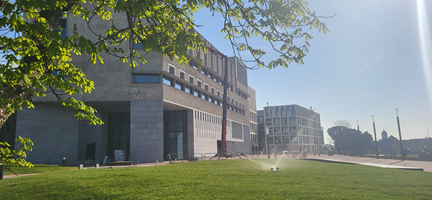
Key Facts & Highlights
- Eircode: D07 C972 (Grangegorman Campus)
- 12,600m2
- Incorporates North House (WEST WING) built between 1848 and 1854
- 5 floors
- Facilities include
- Café
- Event / Expo spaces
- Seminar rooms
- various study rooms / areas
We are excited to announce that the following services will be relocating to this new building beginning 2026:
- Academic Writing & Learning Centre
- Career Development Centre
- Computer Learning Centre
- Disability Support Service
- Library
- Maths Learning Centre
| Documents |
|---|
| Building Info Flyer 2020 (PDF) |
Campus Development
The building incorporates the beautifully restored North House, which was originally built between 1848 and 1854 as part of the Richmond Lunatic Asylum and later serving St Brendan’s Hospital. TU Dublin welcomed its first 1,000 students to Grangegorman following the first refurbishment of North House in 2014.
Key Facts & Highlights
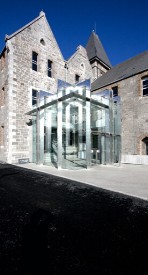
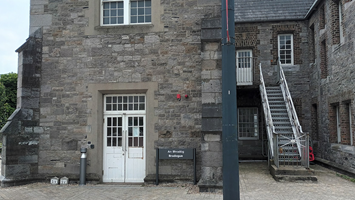
- Eircode: D07 E3HW
- 511m2
- Built 1854
- 2 floors
- Designed by W. Murray, nephew of renowned architect Francis Johnson.
- Launched in 2014
- Facilities include
- BR-102 Student Union
- BR-002 Student common area (pool tables, table tennis, ...)
| Documents |
|---|
| An Croi Info Flyer 2020 (PDF) |
Campus Development
Bradogue was originally built in 1854 as an infirmary, part of the Richmond Asylum. Today, it's a restored historic building located in An Croí (The Heart) of Grangegorman campus, serving as a multi-functional building for TU Dublin staff and students.
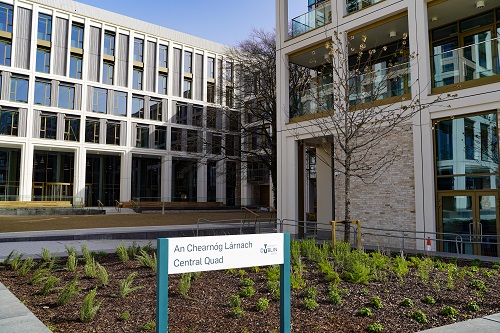
Key Facts & Highlights
- Eircode: D07 C972 (Grangegorman Campus)
- 36,044m2
- 6 floors plus half a basement
- Launched April 2021
- Multi-functional building
- Home to 6,500 students & 400 staff covering Computer Science; Mathematics and Statistics, Electrical and Electronic Engineering, Chemical and Biopharmaceutical Sciences; Biological, Health and Sports Sciences, Food Science and Environmental Health, Physics, Clinical & Optometric Sciences, Culinary Arts and Food Technology, and Hospitality Management and Tourism.
- Facilities include
- CQ-006 INTEL Lecture Theatre (250 seats)
- CQ-011 Arthur Guinness training bar
- Training Restaurants & kitchens
- CQ-040 Culinary Arts shop
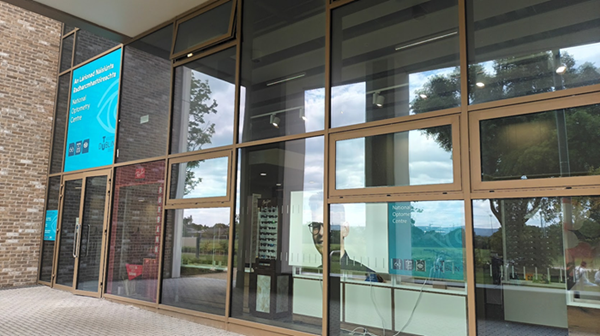
- National Optometry Centre
| National Optometry Centre Front Entrance |
|---|
 |
| Documents |
|---|
| Building Info Flyer 2020 (PDF) |
Take a 3D virtual tour
- CQ-0C002 Foyer
- CQ-LG04 Electrical Engineering
- CQ-LG12 Pastry Kitchen
- CQ-LG13 Standard Kitchen
- CQ-LG22 Lecture Theatre
- CQ-001 Training (Musgrave Market Place) Restaurant
- CQ-218 Science Lab
Campus Development
2020 was a momentous year for TU Dublin as we prepared to welcome the first 10,000 students to our new state-of-the-art campus in Grangegorman. We packed over 16,000 office crates, carefully transported almost 90 pianos, and reassembled all types of specialist lab and technical equipment in our two new purpose-built learning hubs in Grangegorman. After over 100 years we said goodbye to our old homes in Kevin Street, Cathal Brugha Street, Chatham Row, Sackville Place and Mountjoy Square. This development phase at saw the Central Quad open in April 2021 - you can see a video of the building here . 16,000 Students now enjoy a totally new and modern learning experience in dedicated Computing, Chemistry and Music Labs where every detail has been carefully researched, designed, and agreed at planning stage.
An overview of the Central & East Quads PPP project, delivered in collaboration with the National Development Finance Agency, Grangegorman Development Agency and Department of Further and Higher Education, Research, Innovation and Science
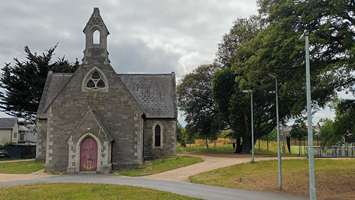
Key Facts & Highlights
- Eircode: D07 C972 (Grangegorman Campus)
- 250m2
- Built 1860 as an ancillary building to the Richmond Asylum
- Designed by George Wilkinson
- Not yet refurbished (possible student event space)
| Documents |
|---|
| An Croi Building Info Flyer 2020 (PDF) |
Campus Development
St. Laurence’s Church was initially built to serve both the Catholic and Church of Ireland congregations as part of the Richmond Asylum. Later in 1860 this chapel was built for the Church of Ireland congregation. Future plans include restoration and repurposing for cultural and community use, preserving its heritage while giving it new life. Currently unoccupied, the building is occasionally used for exhibitions and events.
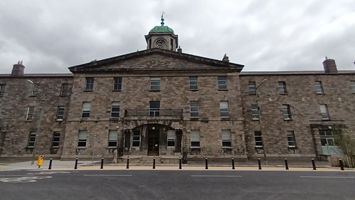
Key Facts & Highlights
- Eircode: D07 C972 (Grangegorman Campus)
- 1,488m2
- Built 1816
- Designed by Francis Johnson
- Had multitude of purposes throughout its lifetime - prison, fever hospital, part of the Richmond Asylum.
- The 4-sided clock on the top of the building is the oldest working flatbed mechanical clock in Britain & Ireland
- Launched in 2014 as administration offices for TU Dublin
Campus Development
Standing since 1816 and located across from An Croí and the East Quad, the Clock Tower Building is one of Grangegorman’s most iconic and historically significant structures. Designed by architect Francis Johnston as a penitentiary, it has served many roles—including a Fever Hospital, prison, Cholera Hospital, and the UK and Ireland’s first exclusively female penitentiary. It also functioned as a transportation depot for women sent to Tasmania until 1858, with male prisoners returning in 1874 due to overcrowding.
By 1897, the building became the administrative center for the Richmond Lunatic Asylum—later Grangegorman Mental Hospital and St. Brendan’s Hospital—a role it held for over a century. Its four-sided clock is the oldest flatbed mechanical clock in Britain and Ireland, fully restored and still chiming the hour.
Stabilisation and refurbishment began in 2014, with accessibility improvements in 2016 and further conservation works in 2022 protecting the building’s fabric. Supported by Dublin City Council grants, restoration efforts have preserved features such as the original sash windows and the historic Carriageway Gates.
© GDA
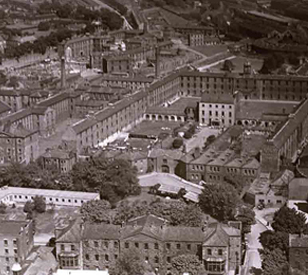
Aerial photo of Clocktower & Grangegorman c. 1880
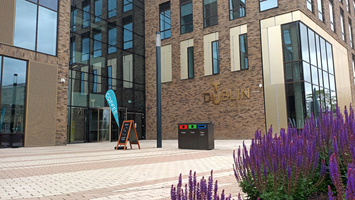
Key Facts & Highlights
- Eircode: D07 C972 (Grangegorman Campus)
- 16,300m2
- 5 floors
- Launched end of 2020
- Multi-functional building
- Home to 3,500 students & 160 staff covering Media, Social Sciences, Creative Arts, Music & Drama
- Facilities include
- EQ-010 Concert Hall (400 seats)
- EQ-009 Blackbox Theatre
- EQ-016 Recital Hall
| Documents |
|---|
| Building Info Flyer 2020 (PDF) |
Take a 3D virtual tour
- EQ-CS001 Foyer
- EQ-010 Concert Hall
- EQ-322 Film Studio
- EQ-502-504 Fine Art Studios
- 4th floor roof garden
Campus Development
2020 was a momentous year for TU Dublin as we prepared to welcome the first 10,000 students to our new state-of-the-art campus in Grangegorman. We packed over 16,000 office crates, carefully transported almost 90 pianos, and reassembled all types of specialist lab and technical equipment in our two new purpose-built learning hubs in Grangegorman. After over 100 years we said goodbye to our old homes in Kevin Street, Cathal Brugha Street, Chatham Row, Sackville Place and Mountjoy Square. This development phase at saw the East Quad open in late 2020 - you can see a video of the building here . 16,000 Students now enjoy a totally new and modern learning experience in dedicated Computing, Chemistry and Music Labs where every detail has been carefully researched, designed, and agreed at planning stage.
An overview of the Central & East Quads PPP project, delivered in collaboration with the National Development Finance Agency, Grangegorman Development Agency and Department of Further and Higher Education, Research, Innovation and Science
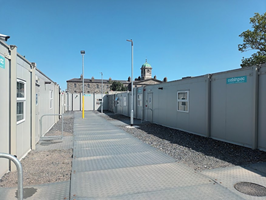
Key Facts & Highlight
- Eircode: D07 C972 (Grangegorman Campus)
- 500m2
- 1 floor
- Facilities include
- 6 changing rooms with showers & WC's
- 2 referee rooms
- 2 WC blocks
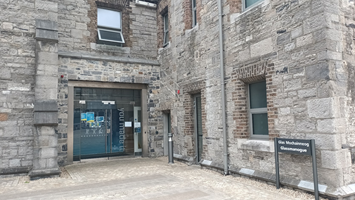
Key Facts & Highlights
- Eircode: D07 C972 (Grangegorman Campus)
- 374m2
- Built 1854 as an ancillary building to the Richmond Asylum
- 2 floors
- Designed by W. Murray, nephew of renowned architect Francis Johnson.
- Launched in 2014
- Gym Building
| Documents |
|---|
| An Croi building info flyer 2020 (PDF) |
Campus Development
Glassmanogue was originally built in 1854 as an infirmary, part of the Richmond Asylum. It was also used for the Richmond War Hospital 1916-1919, providing care for soldiers suffering from ‘shell-shock’ during the first world war. Today, it's a restored historic building located in An Croí (The Heart) of Grangegorman campus, serving as a modern gym facility for TU Dublin staff & students.
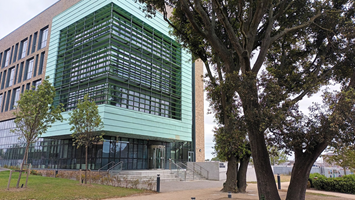
Key Facts & Highlights
- Eircode: D07 C972 (Grangegorman Campus)
- 4,655m2
- 5 floors
- Launched October 2015 - the first new TU Dublin building completed at Grangegorman
- Research & innovation facility includes a wide range of research labs, meeting spaces & open plan office spaces, including
- Environmental, Sustainability & Health Institute (ESHI)
- TU Dublin Hothouse
| Documents |
|---|
| Building Info Flyer 2020 (PDF) |
Campus Development
The Greenway Hub was the first building completed on the Grangegorman campus and serves as a symbol of innovation, sustainability, and academic enterprise. Positioned between the Central Quad and An Croí, this five-storey facility, houses two key elements of TU Dublin’s research infrastructure: the Environmental Sustainability and Health Institute (ESHI) and the TU Dublin Hothouse Incubation Centre (HHI).
The ESHI section of the Greenway Hub offers state-of-the-art labs and facilities dedicated to social and educational research, health informatics, bioengineering, molecular and cell biology, analytical chemistry, food safety and quality, energy research, and vision sciences, along with private one-to-one meeting rooms and larger rooms accommodating 6–8 people.
The Greenway hub was the first campus building constructed using Building Information Modelling (BIM), a state-of-the-art digital tool that allowed full virtual modelling during development. As part of the Grangegorman Masterplan, the Greenway Hub will be connected to the School of Engineering and form part of a landscaped pathway, reinforcing its role as a hub for collaboration across disciplines and its role as a hub for collaboration across disciplines.
© GDA
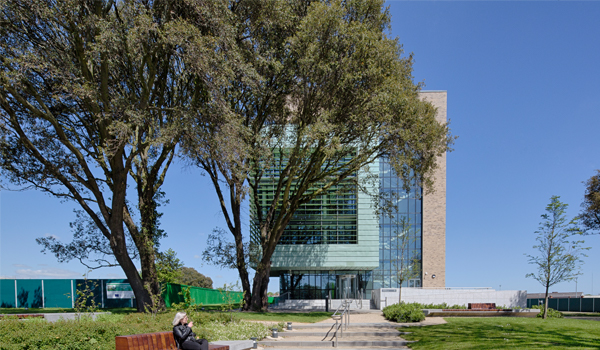
Photo Dated: March 2016
Key Facts & Highlights
- Eircode: D07 C972 (Grangegorman Campus)
- 172m2
- Built c. 1880
- Once formed part of a complex of buildings including a female orphan house and church
- Unrenovated (Office space)
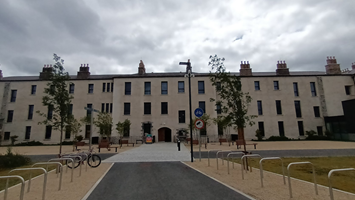
Key Facts & Highlights
- Eircode: D07 N6R2
- 4,392m2
- Original building was designed by Francis Johnson & dates from 1814/15 (oldest building on campus)
- Launched in 2020
- 3 floors
- Facilities include
- LH-043 Dance Studio
- LH-107 Spin Studio
- LH-216 Group Fitness Studio
- Music Practice Rooms
- Student Common (pool table, ...)
| Documents |
|---|
Campus Development
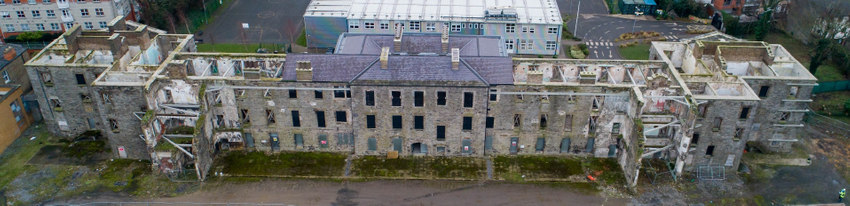
Photo: Before renovation
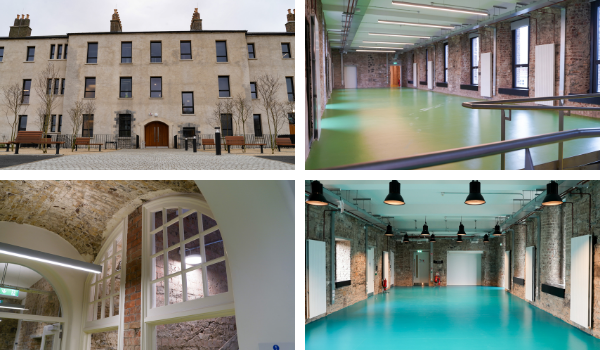
Photos: After renovation, Dated 2021
The Richmond Lunatic Asylum opened to patients in 1814/15 in the building we know today as the Lower House & became the largest psychiatric hospital in Ireland. Francis Johnston designed it with the southern range being retained and incorporated into the new campus on the East Quad. Throughout the 19th century, the site evolved to become a large regional mental hospital occupying over 30 hectares of land. Additional buildings were constructed stretching to the west of the original establishment. It was renamed Richmond District Lunatic Asylum in 1830 and eventually St. Brendan's Hospital. At its height, there were 2,375 inpatients in 1896, with this figure trickling down to under 100 in 2005.
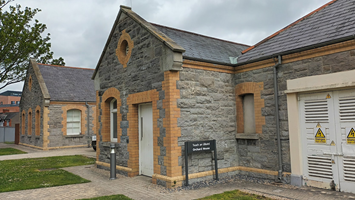
Key Facts & Highlights
- Eircode: D07 C972 (Grangegorman Campus)
- 268m2
- Built c. 1894 as the mortuary for the Richmond Asylum
- Designed by W.H. Byrne
- 1 floor
- Launched 2014
- Security
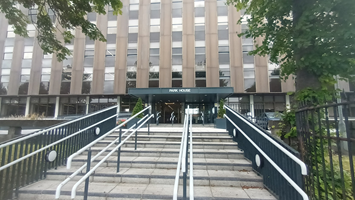
Key Facts & Highlights
- Eircode: D07 EWV4
- 10,230m2
- 7 floors plus basement
- Originally built in 1972 as a hotel
- Purchased in 2017 by TU Dublin
- Temporary home (moving to Academic Hub & Library):
- Academic Writing Ctr
- Careers Development Ctr
- Disability Support Ctr
- Maths Learning Centre
- Library
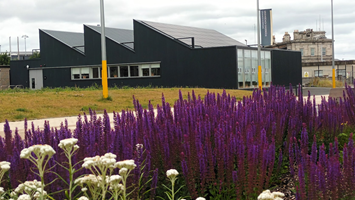
Key Facts & Highlights
- Eircode: D07 K2KR
- 315m2
- Built 2021
- 1 floor
- School of Art & Design building
Campus Development
Originally located in DIT's Mountjoy Square, the workshop was relocated to North House on the Grangegorman campus in 2015. The purpose-built Printmaking Workshop was completed in 2021 - a dedicated fine art printmaking studio.
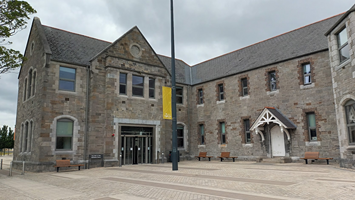
Key Facts & Highlights
- Eircode: D07 C972 (Grangegorman Campus)
- 2,314m2
- Designed by W. Murray, nephew of renowned architect Francis Johnson.
- Built 1866
- 2 floors
- Launched in 2014
- Facilities include
- RD-001B Student Hub (one-stop-shop) for all queries regarding Admissions, Registrations, Exams, International & Erasmus, Access & Civic Engagement, IT Support
- RD-118 Student Health Centre including Counselling
| Documents |
|---|
| An Croi Building Info Flyer 2020 (PDF) |
Campus Development
Rathdown House was originally built 1866 to serve as the female wards for the Richmond Asylum. Today, it's a restored historic building located in An Croí (The Heart) of Grangegorman campus, serving as TU Dublin’s Student Services Centre, supporting students across the university.
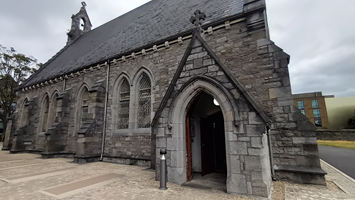
Key Facts & Highlights
- Eircode: D07 E244
- 287m2
- Built 1854 as an ancillary building to the Richmond Asylum
- 1 floor plus balcony
- Designed by W. Murray, nephew of renowned architect Francis Johnson
- Launched in 2014
- Serves as a multi purpose venue for prayer, worship, meditation, music & university events & conferences
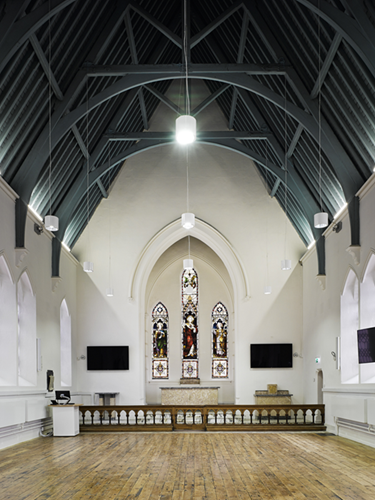
Campus Development
St. Laurence’s Church was originally built 1854 as part of the Richmond Asylum complex. Today, it's a restored historic building located in An Croí (The Heart) of Grangegorman campus, serving as a multi purpose venue for prayer and events, and continues to host Mass every Thursday at lunchtime.
-200pxl.png)
Key Facts & Highlights
- Unique functional sculpture by renowned artist Garrett Phelan
- Unveiled in July 2024
- Services as a central point for community interaction and cultural activities on the Grangegorman campus
Campus Development
TU Dublin and the Grangegorman Development Agency are thrilled to announce the inauguration of ‘THE GOLDEN BANDSTAND Sculpture’ – a unique functional sculpture by renowned artist Garrett Phelan. The sculpture is set to become a central point for community interaction and cultural activities on the Grangegorman campus in Dublin 7. The major visual art commission, part of ‘…the lives we live’ Grangegorman Public Art, aims to leave a lasting legacy for the Grangegorman site, reflecting the vibrant community and its evolving story.
‘THE GOLDEN BANDSTAND – Sculpture’ is more than just a sculpture; it is a dynamic and interactive space where, as artist Garrett Phelan describes, "all communities from the area will meet, dance, chat, sing, think, kiss, look, and listen." Influenced by the 19th-century Medical Superintendent Dr. Joseph Lalor, who believed in the therapeutic power of creativity and beauty, this bandstand aims to foster emotional well-being through artistic engagement.
Speaking at the grand unveiling, Professor John Doran, Interim President of TU Dublin, said. “THE GOLDEN BANDSTAND – Sculpture’ is a wonderful addition to TU Dublin’s Grangegorman campus that complements our existing theatre and concert hall and marks out our campus as a leading cultural and creative hub in Dublin City. It will provide our students, staff, and the wider community with an inspiring new place for creative expression. We are thrilled to host this work of art.”
Artist Garrett Phelan welcomed this inaugural event in the new sculpture, stating: “ ‘THE GOLDEN BANDSTAND – Sculpture’ connects the transformation of the Grangegorman site as a centre for new models for creative education and community activity. I have created the sculpture to respectfully acknowledge the past, fully embrace the present and act as a positive contemporary work of art for creative engagement and collective escapism into the future for everyone.”
Speaking at the event, Prof. Ciarán Benson, former Chair of the Grangegorman Public Art Working Group and part of the selection panel for this artwork said: “For an age, Grangegorman was a place of darkness in Dublin's heartland. Now, with Garrett Phelan's newly inaugurated THE GOLDEN BANDSTAND – Sculpture’, there is a glowing heart beating in the core of the ambitious new Grangegorman campus. Good public art can work wonders in enlivening a place and releasing new meanings and options for feeling. 'The Golden Bandstand - Sculpture' will do just this for Grangegorman and its constituent communities. The growing presence of singular public art in Ireland can now add this distinguished and ambitious work to the other fine works on the campus. This is confirmation of the value of the soon-to-be-expanded national Per Cent for Art Scheme advancing public art in Ireland.”
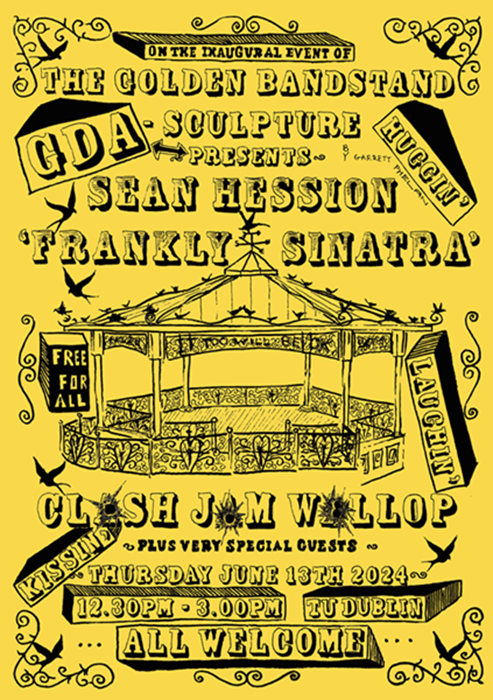
2024 Launch poster