
TU Dublin Secures Over €750,000 in Enterprise Ireland Funding to Advance Electric Vehicle Battery Thermal Management
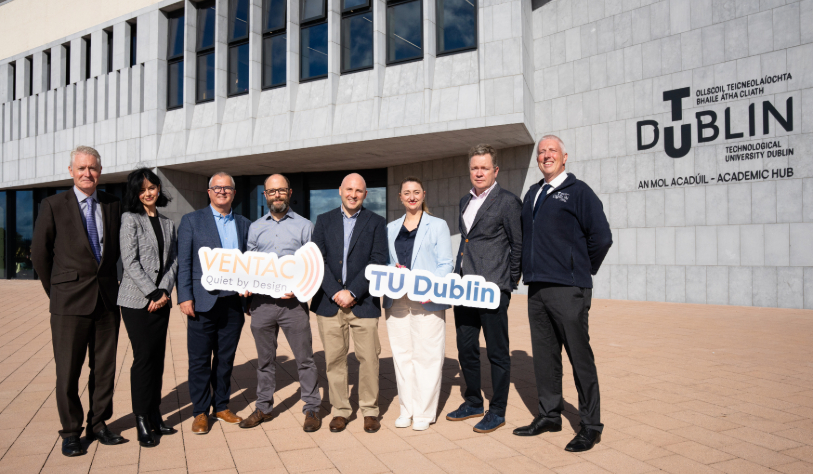
TU Dublin has secured over €750,000 in funding from Enterprise Ireland for a major research project led by Gerald Gallagher, Lecturer in the School of Mechanical Engineering, co-founder of TU Dublin's CFD Research Group, and Principal Investigator of the project. The research will advance electric vehicle battery thermal management while developing computational and experimental capabilities with potential applications across other engineering industries.
The research, undertaken in collaboration with Irish acoustic and thermal insulation engineering company Ventac, will investigate advanced battery thermal management technologies aimed at improving the safety, performance and efficiency of electric vehicles. Building on an earlier feasibility study, the project will focus on developing and optimising Ventac's innovative Battery Wrap technology, including the integration of advanced insulation materials and phase change materials (PCMs).
As electric vehicle adoption continues to accelerate worldwide, effective battery thermal management is increasingly important for battery longevity, reliability and safety. Through advanced computational fluid dynamics (CFD) simulations and experimental testing, researchers will investigate battery thermal behaviour under different operating conditions, exploring innovative material combinations and thermal management strategies to improve heat transfer, regulate temperatures and reduce the risk of thermal runaway.
A significant component of the funding will also support the development of advanced experimental and computational research infrastructure at TU Dublin. The proposed facilities will enable environmental testing, materials characterisation, battery performance evaluation and validation of computational simulations. These capabilities will strengthen the University's ability to investigate complex thermal management challenges and support future collaborations with Irish industry.
Although electric vehicle batteries are the immediate focus of the Ventac collaboration, the technologies, simulation methods and experimental capabilities developed could subsequently be applied across other sectors, including renewable energy, stationary energy storage, electronics, advanced manufacturing and bioengineering. Potential applications include thermal management of medical devices, temperature-sensitive bioengineering equipment and other engineering systems requiring precise thermal control.
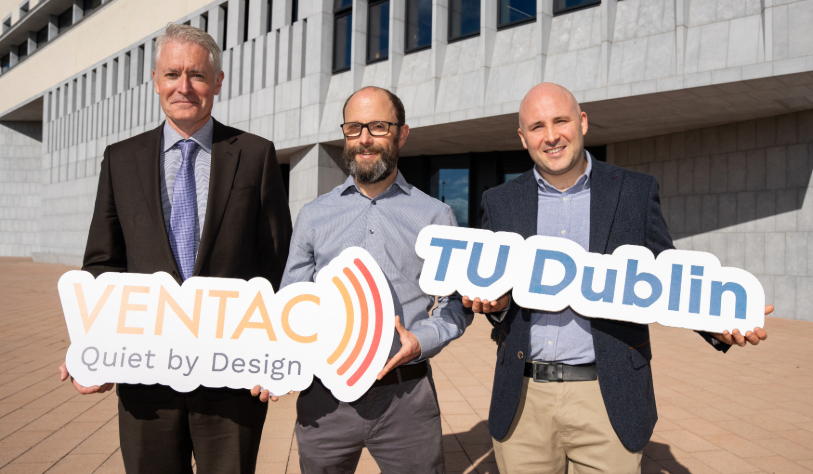
The project represents a significant milestone for TU Dublin's CFD Research Group, strengthening its research activities in advanced numerical simulation, heat transfer and multiphase flow modelling. The group applies CFD to complex engineering challenges across energy, environmental engineering, bioengineering and emerging technologies. Camila D’Bastiani, Lecturer in Mechanical Engineering and co-founder of the CFD Research Group, will also contribute to the coordination of the project’s simulation and experimental activities.
Gerald Gallagher, Principal Investigator and Lecturer in the School of Mechanical Engineering at TU Dublin, welcomed the funding announcement:
Securing this significant Enterprise Ireland funding is a fantastic achievement for TU Dublin and an important milestone for our CFD Research Group. This project provides an exciting opportunity to apply our expertise in advanced computational modelling and experimental validation to one of the key engineering challenges facing the electric vehicle industry. By working closely with Ventac, we aim to develop a deeper understanding of battery thermal behaviour and explore innovative approaches to improving thermal management. Ultimately, the research aims to contribute to safer and more efficient electric vehicles while demonstrating the impact that close collaboration between academia and industry can have in addressing real-world engineering challenges.
Charlie Cullen, Head of School of Mechanical Engineering at TU Dublin, said:
Using cutting edge simulation tools to solve new industrial problems is the reason why Ventac have partnered with Gerald to develop this research. Gerald's work will directly contribute to new revenue opportunities for Ventac, while helping to build a more sustainable future for industrial battery systems. The School is happy to support Gerald's research, also as it will directly translate into taught content on our new Integrated Masters in Mechanical Engineering
The research will bring together expertise in CFD, materials science, electrochemistry and thermal engineering. Advanced multiphase simulations will provide detailed insights into the interactions between battery components, insulation materials and thermal management systems. The resulting computational models will support design optimisation, reduce reliance on physical prototyping and accelerate the development of innovative battery technologies.
Mark Simms, Research and Development Director at Ventac, welcomed the collaboration:
We are delighted that TU Dublin has secured this significant grant to explore the next phase of development for our Battery Wrap technology. Battery thermal management is one of the key challenges facing the electric vehicle industry, and this research will provide valuable insights into how advanced materials and innovative engineering can contribute to safer and more efficient battery systems. We look forward to collaborating closely with the TU Dublin research team throughout the project, and hopefully more in the future
The project is supported through Enterprise Ireland's Innovation Partnership Programme, which encourages collaboration between Irish companies and research institutions to develop innovative technologies with strong commercial potential.
Tina O'Keeffe, Programme Manager of Enterprise Ireland's Innovation Partnership Programme, commented:
Enterprise Ireland is delighted to support this collaboration between TU Dublin and Ventac through our Innovation Partnership Programme. The project brings world-class engineering research to a real challenge facing the global electric vehicle industry. It also shows the value of Irish companies and research institutions working together to develop technologies with strong commercial potential in international markets
The investment further strengthens TU Dublin's position as a research partner for Irish industry, supporting the translation of advanced engineering research into commercially relevant technologies and creating opportunities for future industrial collaboration.
The work of TU Dublin's CFD Research Group was also recently highlighted in an RTÉ Brainstorm article, Flow and behold: how computers reveal the hidden world of fluids, exploring how computational fluid dynamics is helping researchers address complex challenges in healthcare and energy, including improving the safety and efficiency of electric vehicle batteries.
The initiative aligns with TU Dublin's Strategic Intent 2030 and complements the University's recognition as Europe's No. 1 university for sustainability in higher education. By advancing computational simulation, sustainable engineering design and industry collaboration, the project reinforces TU Dublin's commitment to supporting the digital and green transitions and contributing to the development of graduates equipped to address emerging engineering challenges.